

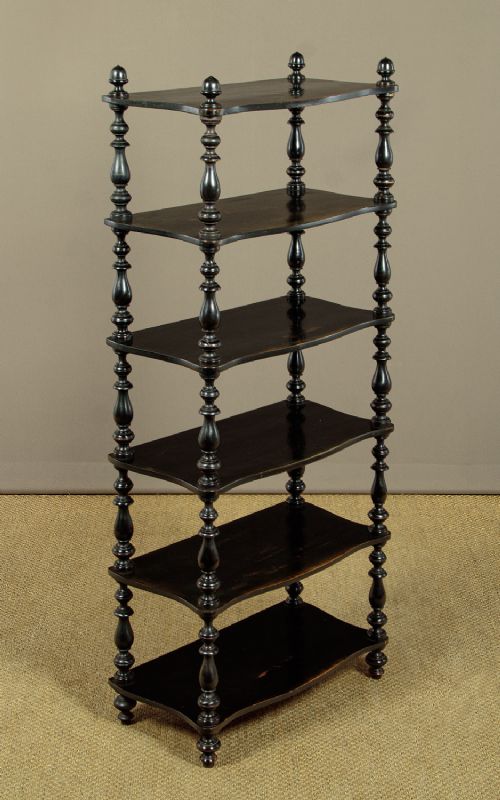


Black Lacquer Shelves
Black lacquer shelves bring depth and reflective surface to a room, offering a structured place to display small objects.
Black Lacquer Shelves
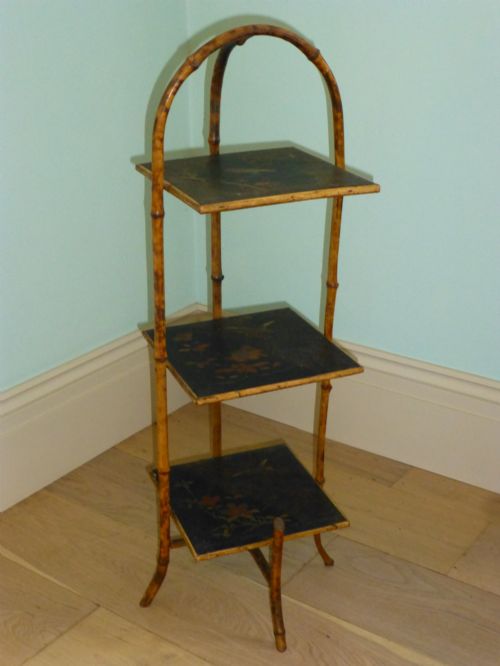
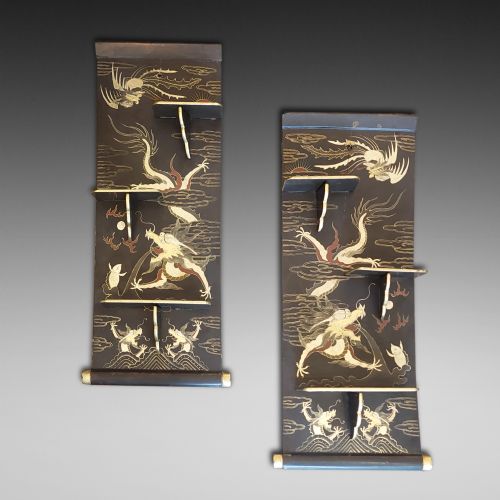
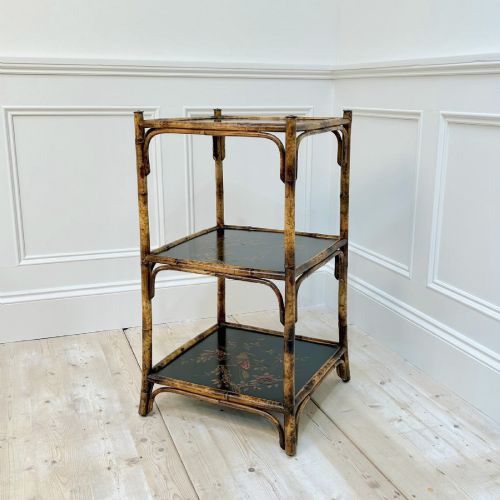
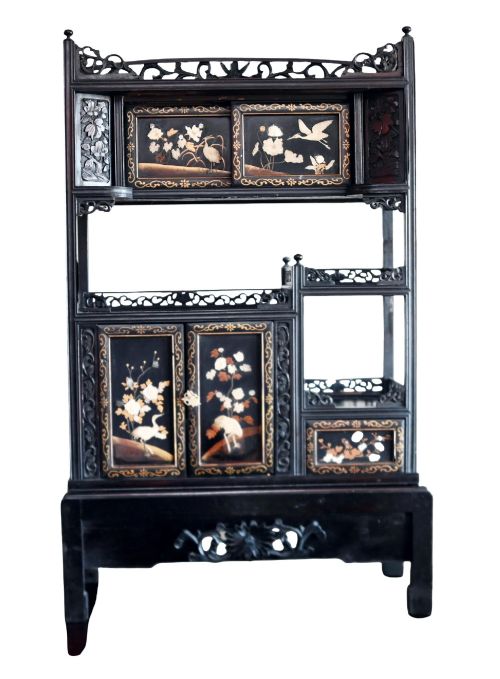
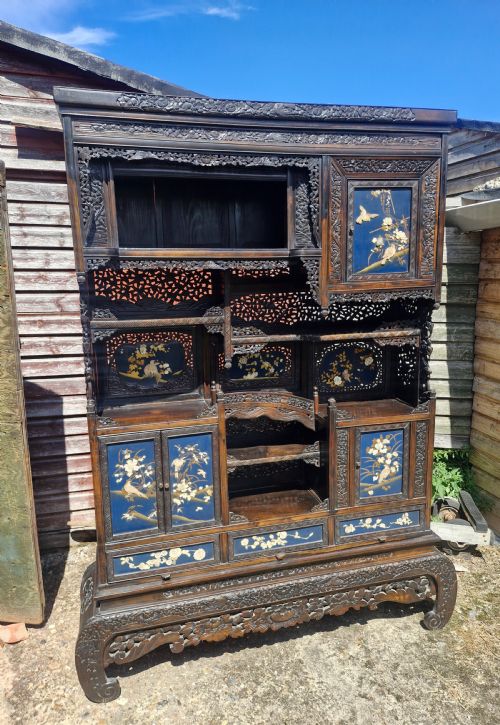
When searching for black lacquer shelves, buyers encounter a mix of hanging shelves, etageres, tiered stands, and cabinet bookcases spanning the nineteenth and early twentieth centuries. These pieces combine dark, lustrous surfaces with practical display tiers intended to hold ornaments, books, and small collectables.
How they were made
Construction relies primarily on wood, ebonised wood, and bamboo, forming the sturdy skeletons for delicate tiered platforms and hanging frames. Makers applied layers of lacquer or dark paint to achieve the signature glossy, dark finish characteristic of these display pieces.
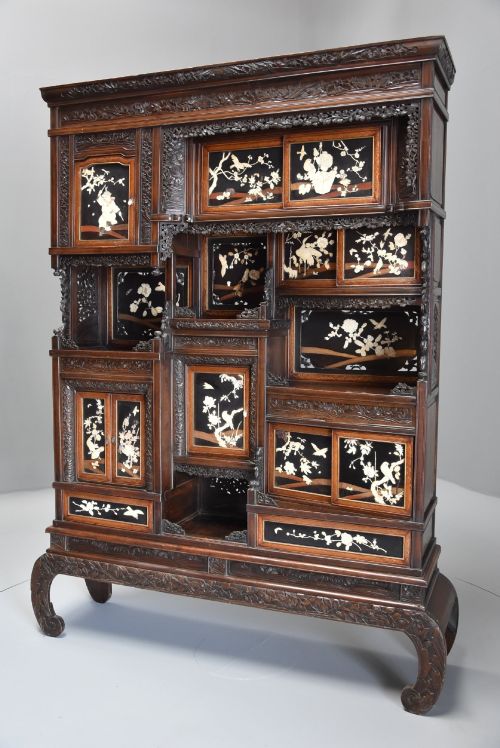
Detailing often incorporates glass panels, brass fittings, and occasional mother of pearl inlays to accent the dark surfaces. These materials are worked into multi-tier structures, wall brackets, and floor-standing etageres designed to support everyday decorative objects.
Black Lacquer Shelves Retail Price Guide 2026
Typical asking prices for black lacquer shelves among the pieces listed under this phrase on Sellingantiques today, from the lower quarter to the upper quarter. They describe what is for sale here now, not the wider market.
Listings feature periods spanning from the Victorian era and 1860 through to the Edwardian period, 1900, 1920, and George V.
What varies in quality
Quality shows in the depth and durability of the lacquer finish and the tightness of the joinery across multiple tiers. Pieces with hand-painted Chinoiserie motifs or intricate mother of pearl inlay demand greater skill than plain ebonised surfaces.
The choice of core material also distinguishes the range, with solid hardwoods and carefully selected bamboo holding up better over decades of use than simpler secondary woods.
The Black Lacquer Shelves Glossary
- Ebonised wood
- Timber treated with stain or paint to imitate the dark, dense appearance of true ebony. This technique was popular in Victorian and later furniture to provide a formal dark ground.
- Etagere
- A piece of furniture consisting of a set of open shelves for displaying small ornaments. Originating in France, these tiered stands became common in British interiors for decorative collections.
- Chinoiserie
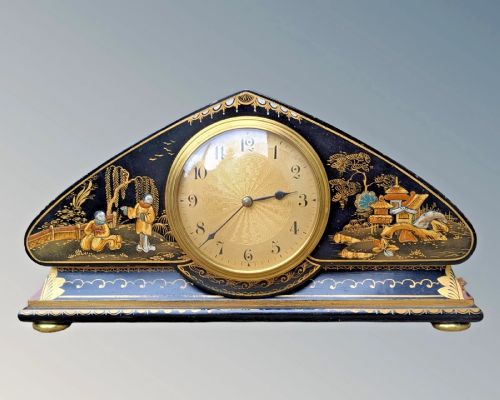
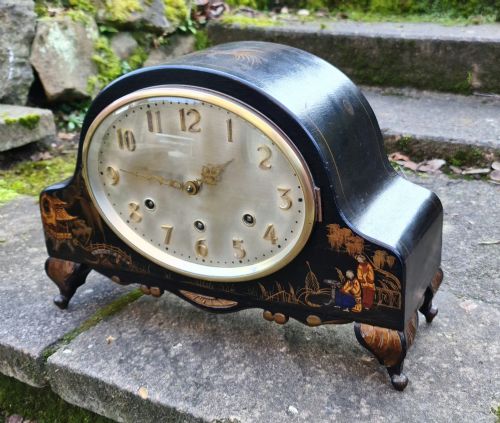
- European decorative style in the Chinese taste, featuring painted or lacquered motifs of figures, pagodas, and landscapes. It frequently appears on British furniture from the nineteenth and early twentieth centuries.
- Shodana
- A traditional Japanese cabinet featuring an asymmetrical arrangement of shelves, cupboards, and sliding doors. These display pieces showcase fine lacquerwork and joinery.
- Overmantel mirror
- A large looking glass designed to hang specifically above a fireplace mantelpiece. Some incorporate integrated shelving or display brackets alongside the central mirror plate.
Black Lacquer Shelves: Frequently Asked Questions
How do I hang wall shelves safely?
Wall-mounted shelves require sturdy fixings suited to the weight of the timber and the objects placed upon them. Ensure screws anchor directly into wall studs or appropriate masonry plugs.
Check that the hanging brackets or loops on the back of the frame are secure before loading the tiers with porcelain or metal items.
Can I put heavy books on these shelves?
Most hanging shelves and tiered etageres are built for ornaments, clocks, and light display rather than heavy volumes. Overloading fragile bamboo or multi-tier structures can strain the joints.
Reserve heavier collections for floor-standing cabinet bookcases and use lighter shelves for ceramics and small collectables.
How do I care for lacquer surfaces?
Dust regularly with a soft, dry cloth to prevent particles from scratching the glossy finish. Avoid harsh chemical cleaners and excessive moisture, which can damage aged lacquer.
Keep pieces away from direct sunlight and strong heat sources to prevent the dark finish from fading or cracking over time.
How do I date a piece?
Dating relies on examining the construction methods, hardware, and stylistic markers such as Victorian Chinoiserie or Edwardian fretwork. Materials like bamboo, ebonised wood, and specific lacquer types point to distinct periods.
Comparing the form with dated examples of etageres, mantel clocks, and wall cabinets helps narrow down the era of manufacture.