
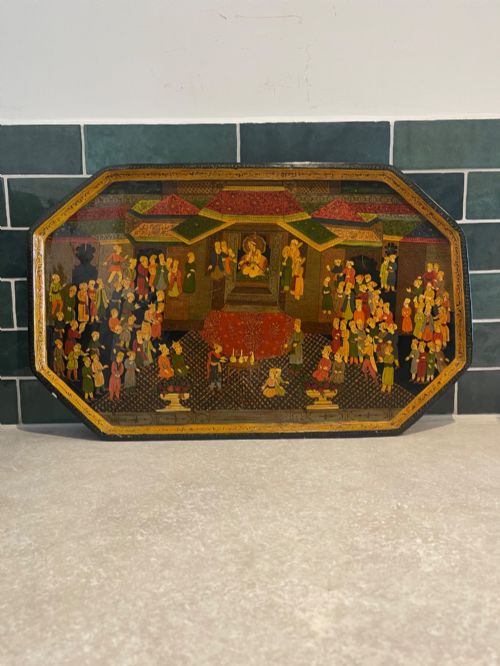
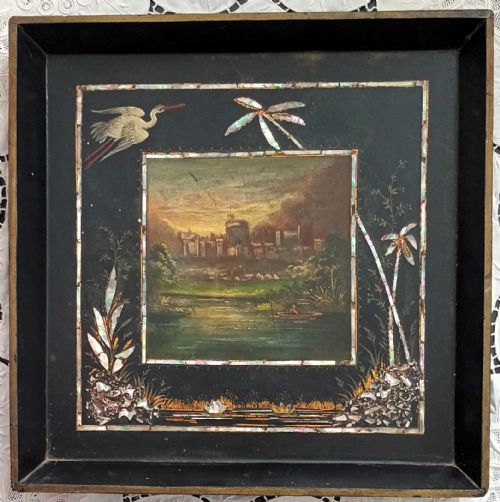
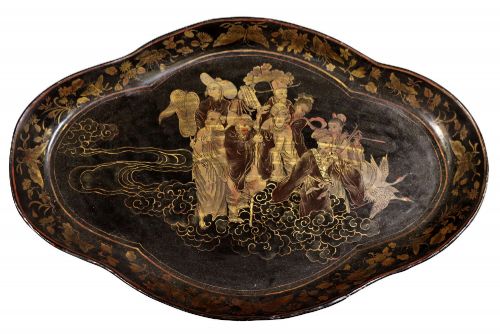
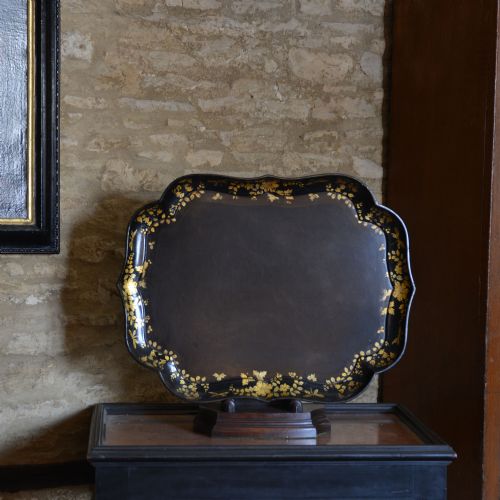




Black Lacquer Serving Tray
A black lacquer serving tray brings both deep sheen and utility to a room, offering a stable surface with a dark, polished finish.
What these trays are
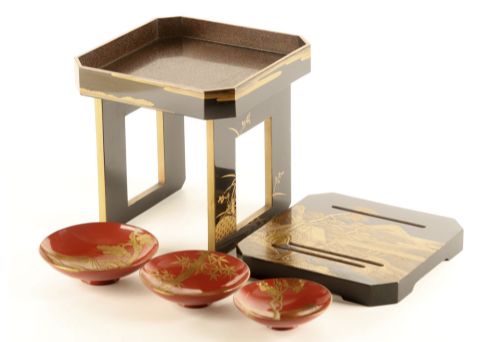
When you search for a black lacquer serving tray, you are looking at items designed to carry drinks or food while providing a decorative focal point. The examples here span from the Regency era through to the early twentieth century, showing various forms of dark surface treatment.
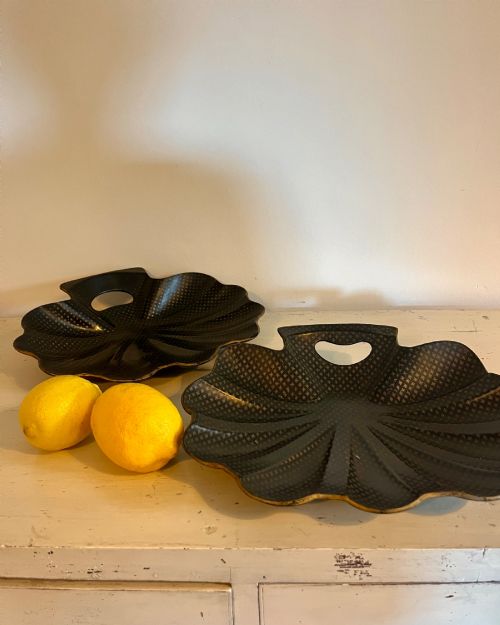
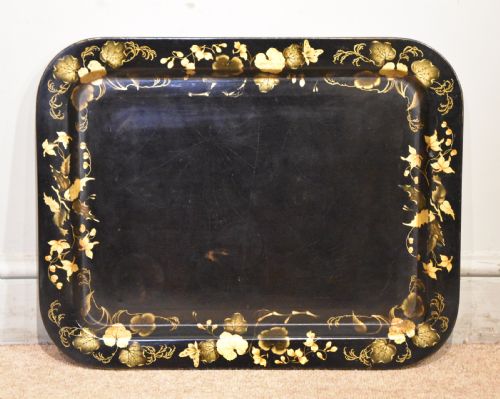
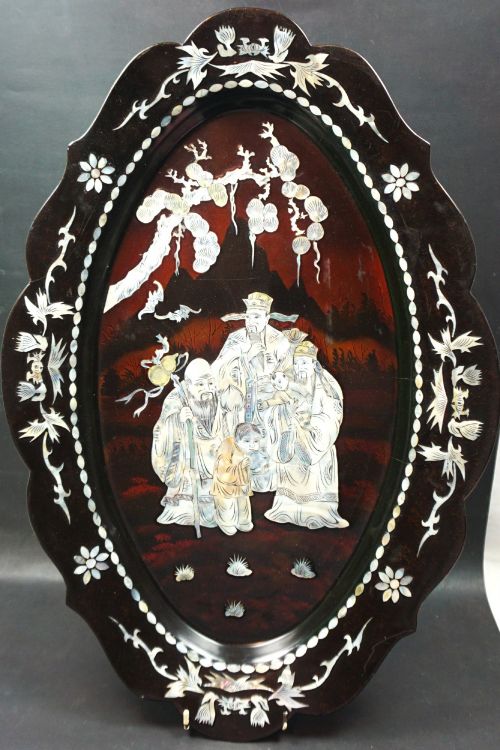
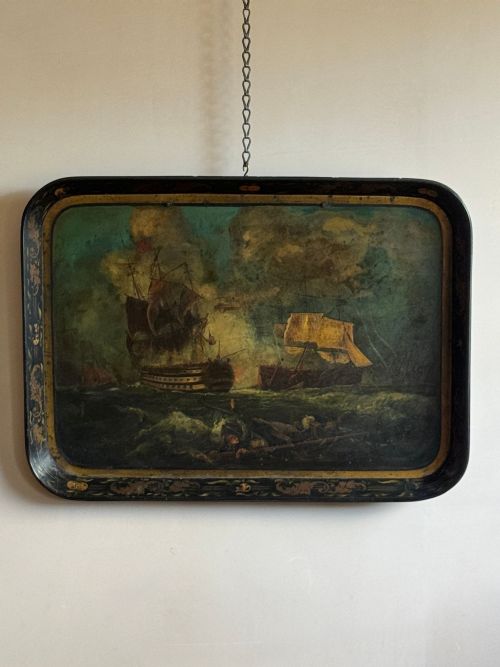
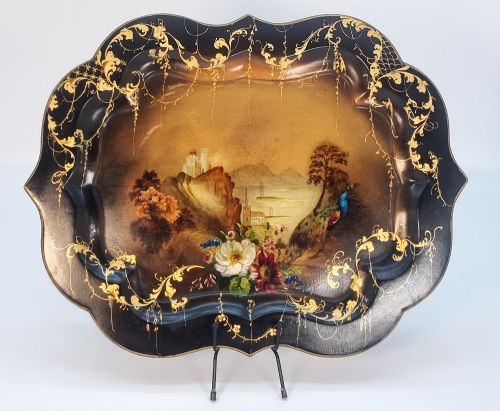
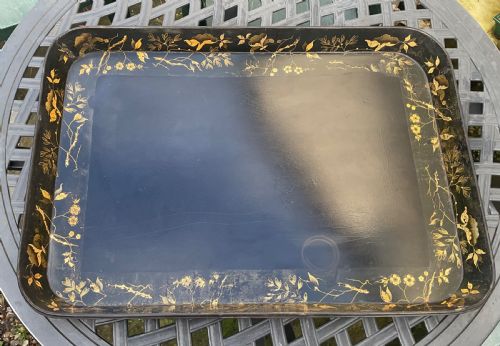
The pieces on this page include large papier-mâché examples from the nineteenth century alongside ebonised wood platter designs. You will also find Chinese Qing dynasty lacquered wood platters featuring mother-of-pearl inlay, as well as toleware trays and silver-plate gallery trays.
Originating from British workshops and Chinese production, these objects served both domestic utility and display. Their dark finishes range from traditional japanning to simple ebonising on wood bases.
How they were made
Maker construction relies heavily on papier-mâché foundations or solid wood bases, particularly ebonised wood. These core materials are built up and smoothed before receiving coats of lacquer to create a dark, reflective base.
Decoration involves applied gold leaf, intricate mother-of-pearl inlay, and silver-plate gallery edges. Artisans built up these layers painstakingly, sealing the materials to protect the underlying structure from moisture and wear.
Retail Price Guide 2026
Typical UK retail prices for black lacquer serving tray, calculated from the Sellingantiques database of over a million retail prices indexed since 2003. This retail price guide relies exclusively on Sellingantiques data; no external sources or auction records are used, so the figures do not describe the wider market.
One exceptional papier-mâché tray bears the signature of Jennens and Bettridge, proving that nineteenth-century desks were not the only things needing sturdy paper.
What varies in quality
Quality rests in the depth of the lacquer finish and the precision of the applied decoration, such as gold leaf or mother-of-pearl. Superior pieces exhibit meticulous attention to detail in their inlay work and structural integrity.
The weight and rigidity of the papier-mâché or wood base also distinguish fine examples from simpler utilitarian objects. Better items maintain their finish and form without excessive surface crazing.
Jennens and Bettridge
The Black Lacquer Serving Tray Glossary
- Papier-mâché
- A composite material made of paper pulp or sheets of paper mixed with glue, pressed and dried to form a sturdy base for lacquer. It allows for lightweight yet strong serving vessels.
- Ebonised wood
- Timber treated with a chemical stain or dye to give it the appearance of expensive ebony. This technique provides a dark, uniform surface alternative to natural hardwoods.
- Mother-of-pearl inlay
- The embedding of iridescent inner shell material into a lacquered surface to create shimmering decorative patterns. This technique adds pictorial depth and visual contrast to dark trays.
- Toleware
- Painted or lacquered metalware, typically tin or iron, produced in domestic settings. These items provide durable surfaces finished with decorative varnish or paint.
- Gallery tray
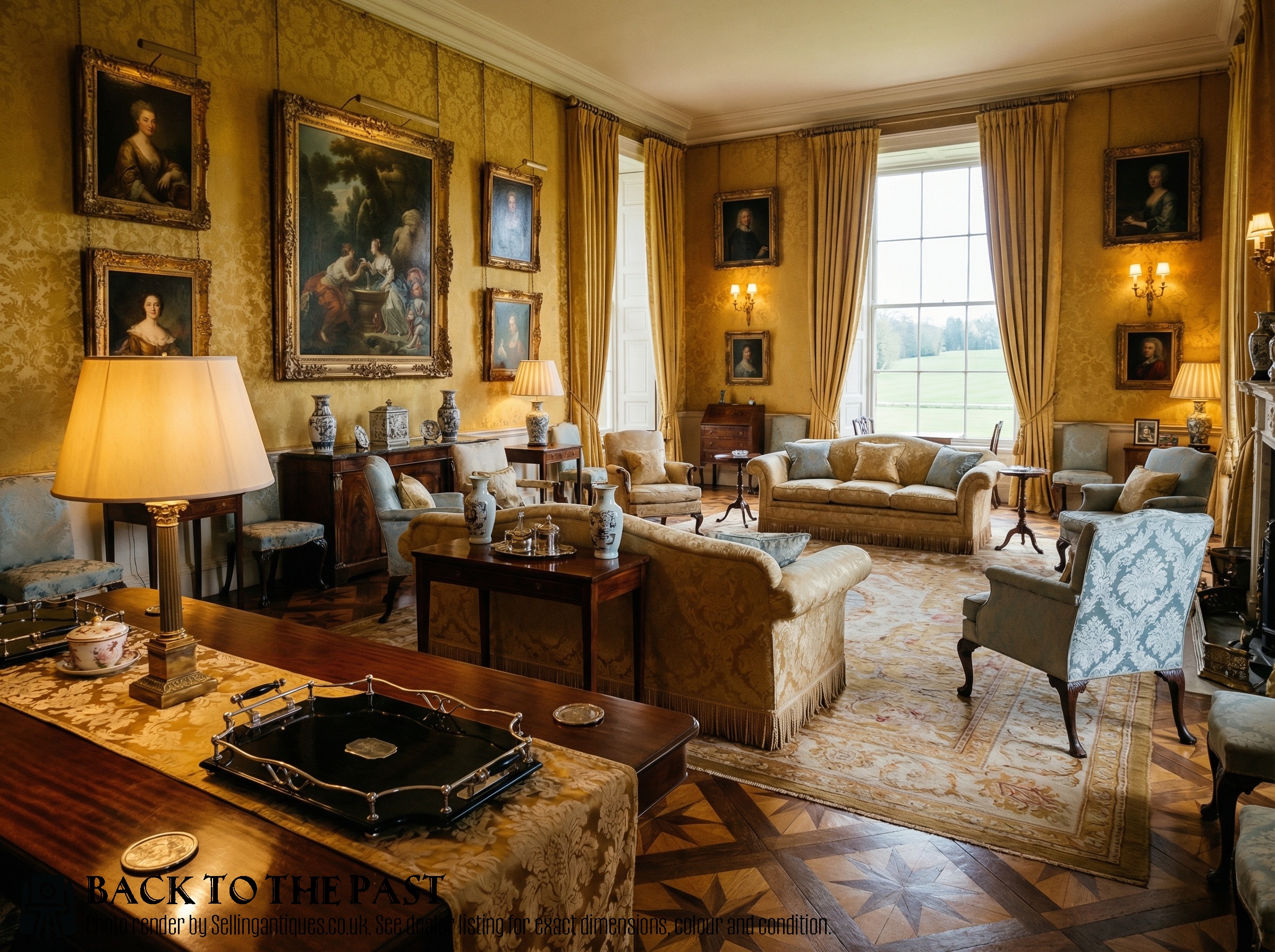
- A tray featuring a raised pierced metal or wood railing around its edge to secure items during transit. The gallery adds architectural definition to the flat base.
Frequently Asked Questions
Can I use these trays for serving food?
While historically utilised for serving beverages and food, older lacquered and papier-mâché surfaces benefit from gentle handling. Many owners prefer using them for display or dry items.
Direct contact with hot dishes or wet food can harm historic finishes. Placing a cloth or doily underneath items offers extra protection.
How do I date a papier-mâché tray?
Examination of the underside, weight, and any maker stamps helps determine the period of manufacture. Regency and nineteenth-century pieces often feature specific material densities and hand-painted or gilt motifs.
Construction methods evolved over the decades, moving from dense pressed paper layers to later industrial variations. Comparing edge finishes and wear patterns provides further clues.
What is the difference between lacquer and ebonised wood?
Lacquer involves applying multiple coats of resin or varnish to build a deep, glossy protective barrier over a base. Ebonised wood is simply timber stained black to mimic ebony.
True lacquer yields a distinctive reflective depth that responds differently to light compared to stained wood. Each material creates a dark aesthetic through entirely separate craft processes.