



Black Lacquer Credenza
These black lacquer credenza designs bring together rich oriental finishes and sturdy timber cabinetry for a striking interior statement.
Black Lacquer Credenza
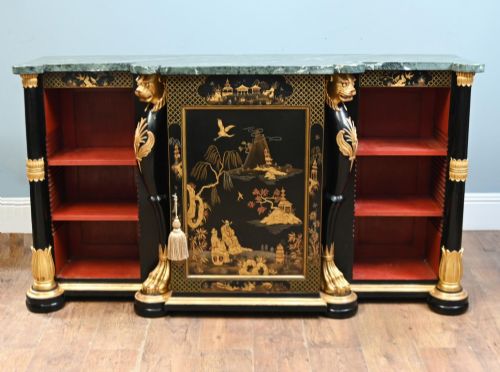
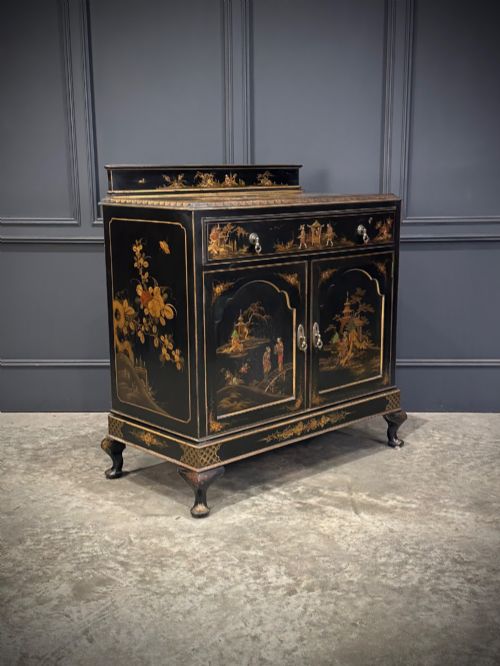
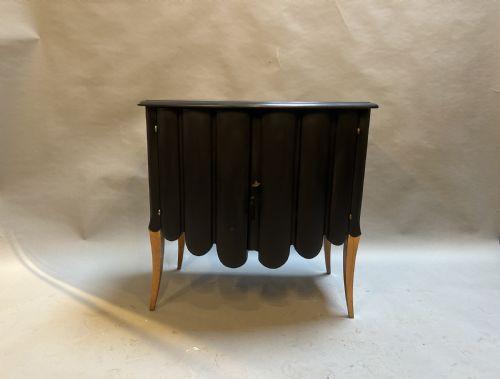
A black lacquer credenza bridges several distinct historical periods, drawing heavily on Chinoiserie and Regency styles alongside Art Deco and Victorian interpretations. Buyers encountering this search phrase find various forms including side cabinets, display cabinets, chiffoniers, and commodes.
The pieces span from the nineteenth century into the early decades of the twentieth century, with notable examples from the Regency period, eighteen-eighties, and nineteen-twenties. These cabinets often feature oriental black lacquering, Japanned finishes, or ebonised wood structures.
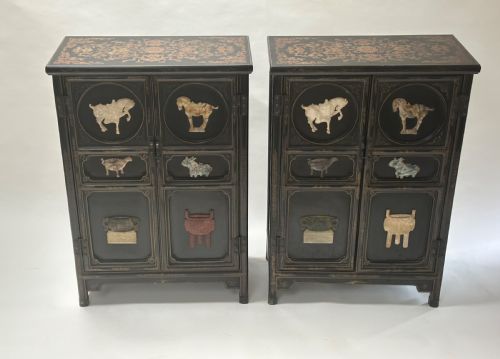
Most items on this page lean towards Chinoiserie decoration or Regency revival designs, often incorporating stands or mounted ornamentation. The selection offers substantial storage formats ranging from traditional sideboards to elaborate display cabinets with ceramic plaques.
How they were made
Construction relies upon solid timber and ebonised wood surfaces treated with specialised lacquer finishes and Japanning techniques. Artisans applied layers of black lacquer to achieve a deep, reflective surface often embellished with gold leaf details.
Metal mounts in brass, ormolu, and silver frequently accent the wooden structures, while marble tops and Sevres porcelain plaques appear on specific nineteenth-century pieces. Carved wooden stands support several of the oriental cabinets, lifting the main body off the floor.
Black Lacquer Credenza Retail Price Guide 2026
Typical asking prices for black lacquer credenza among the pieces listed under this phrase on Sellingantiques today, from the lower quarter to the upper quarter. They describe what is for sale here now, not the wider market.
Several cabinets include delicate porcelain plaques that survived centuries of domestic dusting without a single chip.
What varies in quality
The depth and execution of the lacquer work differentiate standard production from finer workmanship, particularly where hand-painted Chinoiserie scenes are present. The crispness of carved details on stands and the integration of decorative mounts also indicate the level of craftsmanship involved.
Materials selection plays a significant role, distinguishing simple ebonised timber carcasses from those featuring genuine ormolu mounts, marble slabs, or intricate pen-work decoration. The structural integrity of the main cabinet body and the preservation of original surface finishes dictate the overall standard of the piece.
The Black Lacquer Credenza Glossary
- Chinoiserie
- European decorative style reflecting Chinese artistic influences, frequently seen in lacquer work and painted motifs. This aesthetic dominated several periods of cabinet making.
- Japanning
- European imitation of Japanese and Chinese lacquerwork involving layered varnishes and heat curing. It produced a glossy black finish popular on nineteenth-century cabinets.
- Ormolu
- Gilded bronze ornamentation applied to furniture pieces, adding metallic highlights to wooden surfaces. It appears frequently on nineteenth-century side cabinets.
- Ebonised wood
- Timber treated to resemble ebony through staining or painting, providing a dark matte or gloss finish. This technique was common in Victorian furniture production.
- Chiffonier
- A small sideboard or tall locker with drawers and shelves, developed during the nineteenth century. These items offer compact storage for dining rooms and drawing rooms.
Black Lacquer Credenza: Frequently Asked Questions
What periods do these cabinets come from?
The pieces span from the nineteenth century through the early twentieth century, encompassing Regency, Victorian, and Art Deco eras.
Specific dates within the listings include the eighteen-sixties, eighteen-eighties, nineteen-hundreds, and nineteen-twenties.
How do Chinoiserie and Japanned finishes differ?
Chinoiserie specifically denotes European interpretations of Chinese art and motifs, often featuring painted landscapes and figures.
Japanning refers more broadly to the lacquering and varnishing technique used to simulate East Asian lacquerware on European furniture.
Where were side cabinets used in historical homes?
These cabinets typically served in dining rooms for storing silver and linen, or in drawing rooms for display purposes.
Tall display variations and chiffoniers also functioned in parlours to showcase porcelain plaques and decorative objects.
How do I identify a Regency revival piece?
Regency revival items date from later periods, such as around nineteen-hundred, but deliberately copy the classical lines and motifs of the original Regency era.
They often combine earlier decorative vocabularies like Chinoiserie with the robust construction methods of the twentieth century.