



Black Lacquer Accent Table
A black lacquer accent table brings rich Orientalist depth and polished dark reflection to any room.
Black Lacquer Accent Table
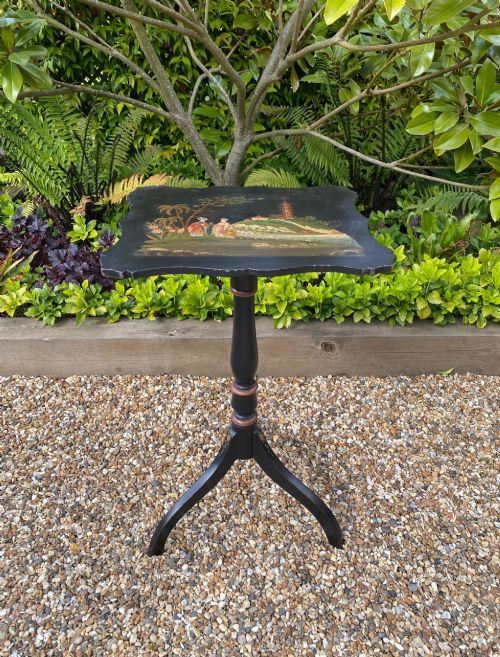
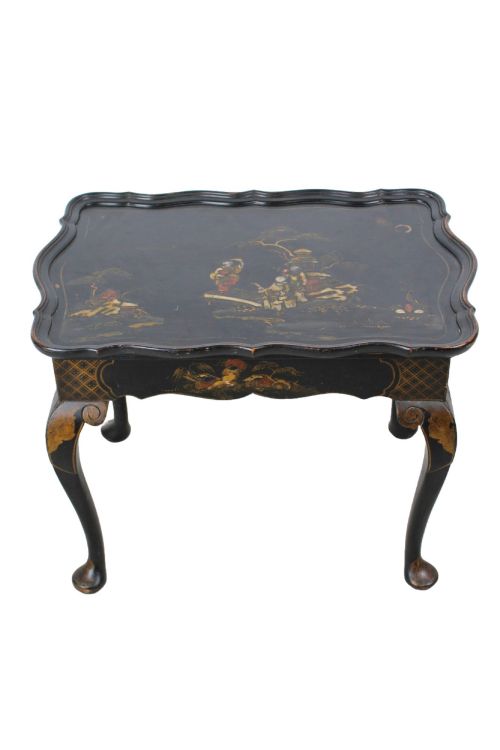
A black lacquer accent table combines utility with ornamental surface design, most frequently appearing as occasional, side, or coffee tables. These pieces emerge predominantly from the nineteenth and early twentieth centuries, spanning Victorian, Edwardian, and early twentieth-century periods.
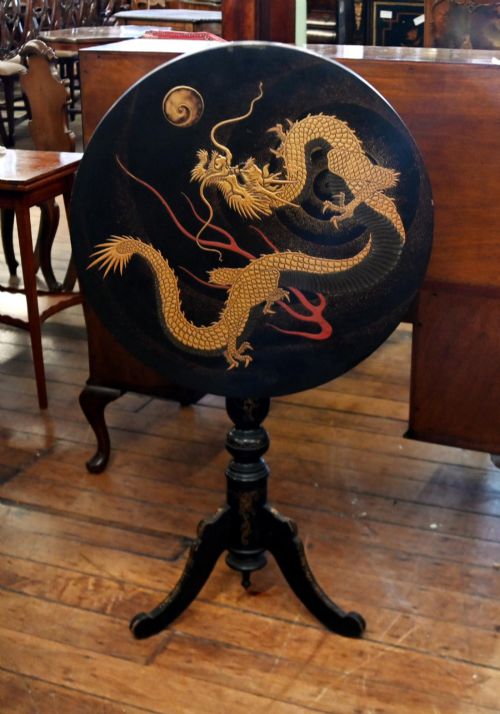
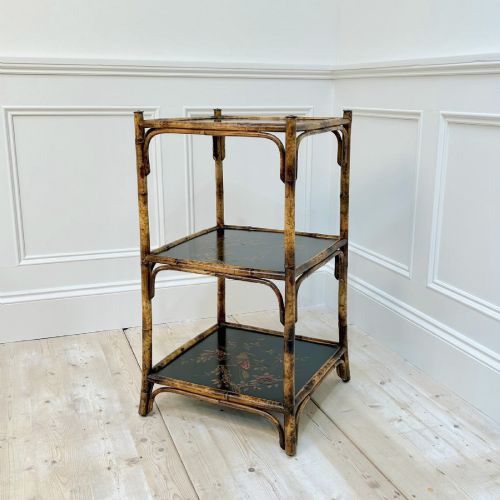
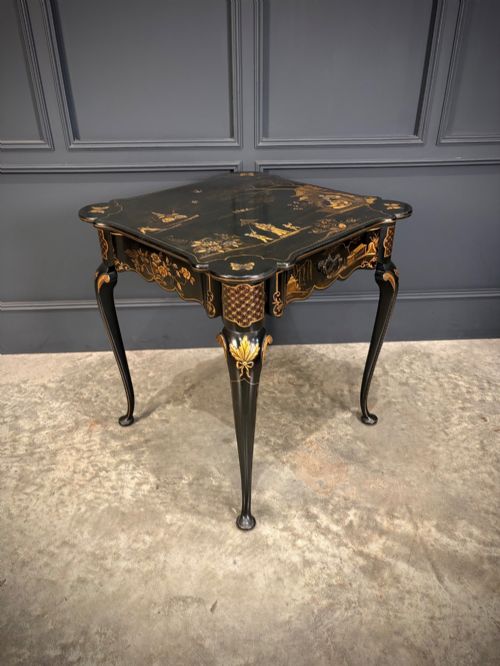
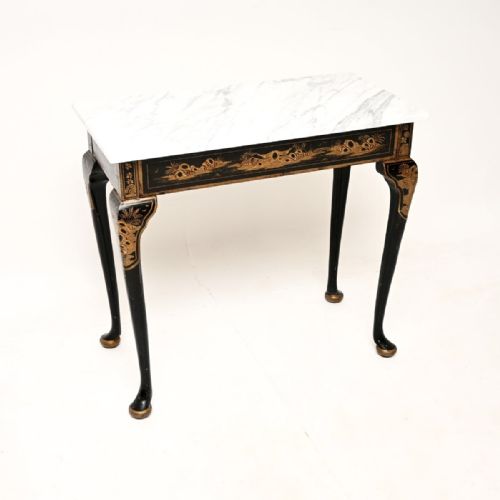
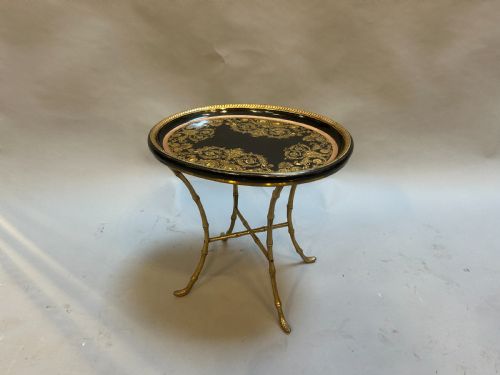
The form stretches from simple tripod wine tables and tray-top tables to nests of tables, etageres, and tilt-top designs. Buyers encountering this selection on the page will frequently find Chinoiserie decoration applied to wood, papier-mache, or lacquered surfaces.
Origin and regional styles diversify the selection, incorporating Anglo-Indian, Kashmiri, Burmese, and Moorish Revival influences alongside standard English Sheraton and Regency adaptations. Surfaces alternate between deep black grounds and painted or gilt details.
Materials and construction methods
Construction relies upon traditional timber framing, papier-mache pressed cores, and bamboo supports finished with multiple layers of dark lacquer. Artisans built up the deep sheen through repeated application and polishing of resinous coatings.
Surface ornamentation involved hand painting, gold leaf application, and japanning, alongside mother-of-pearl inlay embedded directly into papier-mache surfaces. Metal elements such as brass mounts, gilt brass frames, and cloisonne accents completed the structural embellishment.
Black Lacquer Accent Table Retail Price Guide 2026
Typical asking prices for black lacquer accent table among the pieces listed under this phrase on Sellingantiques today, from the lower quarter to the upper quarter. They describe what is for sale here now, not the wider market.
The selection spans from the eighteenth-century Sheraton period through Victorian papier-mache designs to early twentieth-century Chinoiserie lamps and tables.
Assessing quality in lacquer furniture
Quality rests upon the depth of the lacquer finish and the precision of the hand-painted or gilt decoration. Superior examples display crisp detail in Chinoiserie scenes and integrated inlay work that remains flush with the surrounding material.
Structural integrity differentiates standard production from finer workshop pieces, particularly in the joinery of tripod bases, nest frames, and tilt-top mechanisms. The preservation of original painted surfaces without excessive modern overpainting commands greater interest.
The Black Lacquer Accent Table Glossary
- Chinoiserie
- European artistic interpretation of Chinese and East Asian decorative styles, widely utilised on furniture throughout the eighteenth and nineteenth centuries.
- Japanning
- European imitation of East Asian lacquerwork achieved through varnishing and painting techniques on wood or papier-mache.
- Papier-mache
- A composite material made from paper pulp or layers of paper bound with glue, pressed into moulds, and dried to form rigid table tops.
- Tilt-top table
- A table featuring a hinged top that pivots vertically to allow compact storage against a wall when not in active use.
- Etagere
- A piece of furniture consisting of a set of open shelves for displaying small objects, often built as a side table or stand.
Black Lacquer Accent Table: Frequently Asked Questions
What is a black lacquer accent table?
A black lacquer accent table is a small functional surface finished with dark resinous coating and frequently decorated with gold leaf or painted Oriental motifs.
These pieces serve as portable stands for lamps, drinks, or decorative objects within a residential interior.
How do I style a black lacquer table?
The dark, reflective surface works effectively beside neutral upholstery or contrasting wood tones to anchor a room's colour scheme.
Keep decorative items minimal on the top surface to allow the painted or gilt Chinoiserie details to remain visible.
How do I date a lacquer table?
Dating relies upon examining the underlying construction materials, such as early papier-mache cores versus later twentieth-century wood framing.
Stylistic markers like Victorian proportions or Edwardian tray designs also provide clear indicators of the manufacturing era.
Are these tables fragile?
The lacquer surfaces require careful handling to prevent scratching, moisture damage, and impact to the delicate painted borders.
Routine maintenance involves dusting with a soft, dry cloth rather than applying harsh modern chemical cleaning agents.