








Black Japanned Tea Tray
A black japanned tea tray brings dark lacquered depth and gilt detail to a room, serving as both a functional surface and a display piece.
Black Japanned Tea Tray
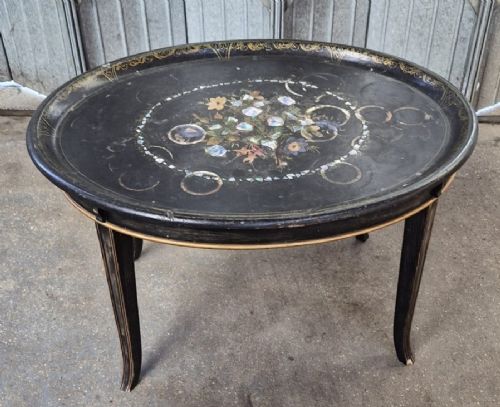
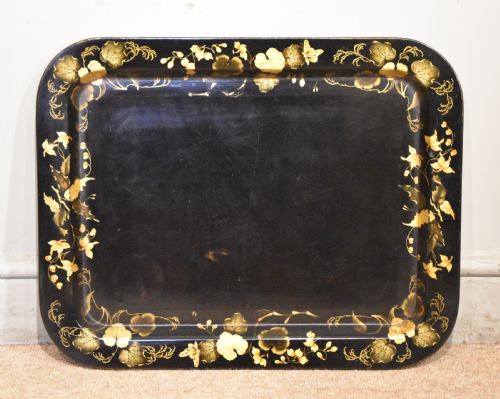
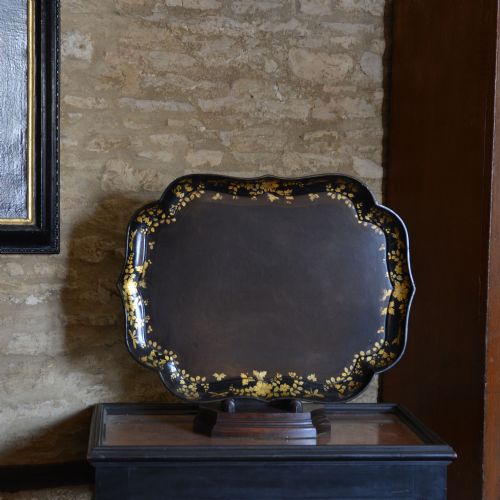
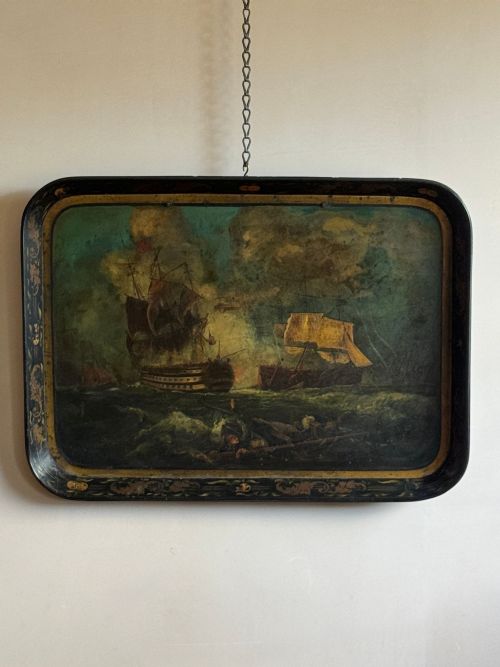
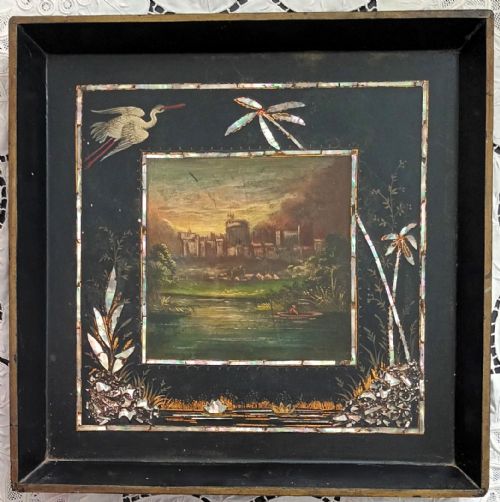
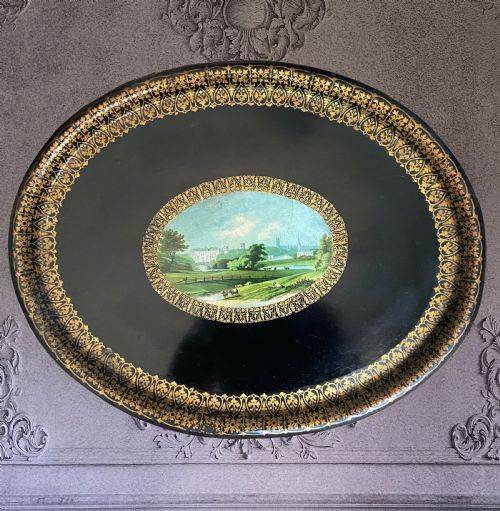
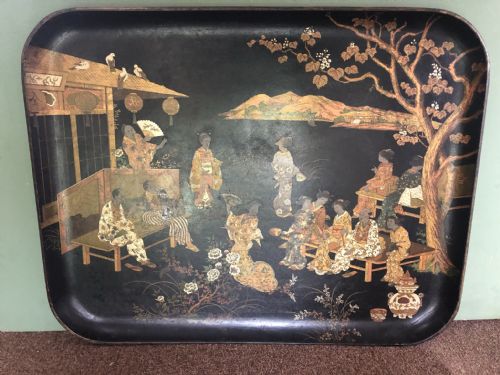
A black japanned tea tray is a dark, lustrous surface designed for serving or display, most frequently encountered here in papier-mâché and painted metal forms originating from the Georgian, Regency, and Victorian periods. These pieces often feature Chinoiserie scenes, gilt embellishments, or mother-of-pearl inlay, reflecting the high fashion for Asian-inspired design across the eighteenth and nineteenth centuries.
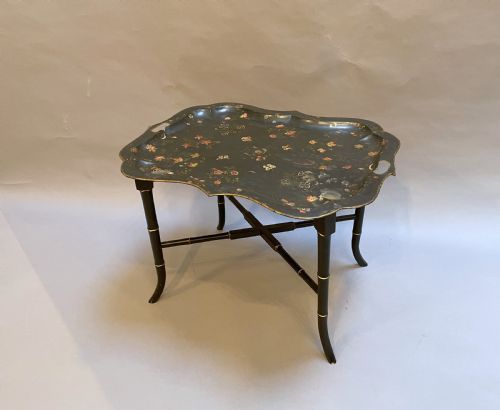
The selection ranges from large oval serving trays to rectangular waiter formats, with many examples later mounted onto custom stands to function as occasional tables, side tables, or coffee tables. Buyers encounter everything from early Georgian lacquered trays to mid-nineteenth-century French Napoleon III toleware and Japanese export pieces.
Makers such as Henry Clay and Jennens and Bettridge dominated this craft, producing robust papier-mâché cores that took exceptionally smooth lacquer finishes. Whether found in its original flat format or elevated on a later stand, each tray offers a resilient surface steeped in historical decorative techniques.
Distinctions in craftsmanship and design
Quality rests in the depth of the lacquer finish, the crispness of the hand-painted or gilded details, and the structural integrity of the papier-mâché or metal base. Superior examples exhibit intricate artistry - such as finely detailed hunting scenes or elaborate Chinoiserie borders - executed by skilled hands rather than hurried brushwork.
The reputation of the maker heavily influences distinction, with signed pieces from established workshops like Henry Clay or Jennens and Bettridge commanding particular attention for their superior material composition and refined proportions. Furthermore, the retention of original gilding and the integrity of any conversion stand dictate the overall standing of the piece.
Black Japanned Tea Tray Retail Price Guide 2026
Typical asking prices for black japanned tea tray among the pieces listed under this phrase on Sellingantiques today, from the lower quarter to the upper quarter. They describe what is for sale here now, not the wider market.
Jennens and Bettridge·Henry Clay
The Black Japanned Tea Tray Glossary
- Japanning
- European imitation of East Asian lacquerwork, created by applying layers of varnish and heat-curing them on a dark ground. This technique produced a hard, glossy black surface that resisted heat and moisture.
- Papier-mâché
- A composite material made from paper pulp or layers of paper bound with glue, pressed into moulds, and dried until rigid. It formed a lightweight yet remarkably strong base for lacquered tea trays.
- Toleware
- Painted or lacquered sheet metal, typically tinplate or iron, fashioned into trays and household vessels. Pontypool was a renowned British centre for this production.
- Chinoiserie
- European artistic style incorporating imaginary Chinese motifs, landscapes, and figures. It appeared frequently in the gilt decoration of black japanned trays.
- Tôle peinte
- French term for painted sheet metal ware, often featuring delicate hand-painted floral or figural compositions. These pieces served decorative and functional roles in nineteenth-century interiors.
Black Japanned Tea Tray: Frequently Asked Questions
How were black japanned tea trays used?
These trays served primarily for carrying tea service sets from the kitchen to the parlour, utilising their durable lacquered surfaces to protect against spills and heat. Their decorative qualities also made them suitable for display on sideboards when not in active service.
Over time, many owners repurposed these large trays by mounting them onto wooden stands to create functional occasional tables, coffee tables, or side tables in domestic interiors.
What is the difference between papier-mâché and toleware trays?
Papier-mâché trays utilise a compressed paper pulp core that offers a lightweight, sturdy, and warp-resistant body for heavy lacquer finishes. They often feature moulded rims and deep, dark wells suited to intricate gilt decoration.
Toleware trays are constructed from sheet metal, providing a rigid iron or tinplate foundation that takes painted and japanned decoration differently. They include notable regional varieties such as Pontypool and French Napoleon III productions.
How do I care for a lacquered tea tray?
Maintain the surface by dusting gently with a soft, dry cloth and avoiding any exposure to excessive moisture, direct heat, or harsh cleaning chemicals. Keeping the lacquer out of strong direct sunlight prevents the dark finish from fading.
When using a tray table for daily placement of items, employ coasters or protective mats to safeguard the delicate hand-painted motifs and original gilt borders from scratching.
Can I use a tray table as a coffee table?
Many historical trays are mounted onto appropriately proportioned wooden stands, making them stable and practical heights for use as coffee tables or occasional surfaces. Their generous proportions provide ample space for books, decorative objects, and daily use.
Buyers should ensure the stand is secure and that the junction between the tray and the base respects the structural integrity of the original piece.