

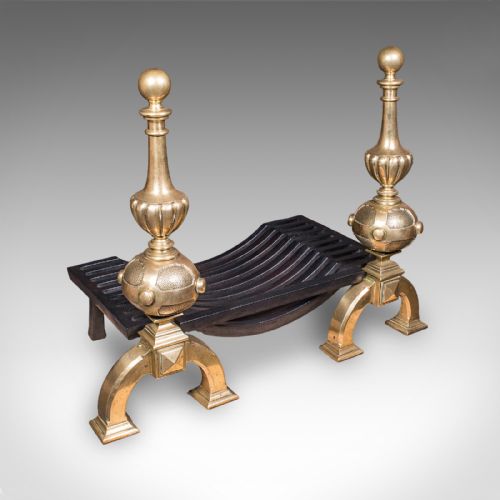
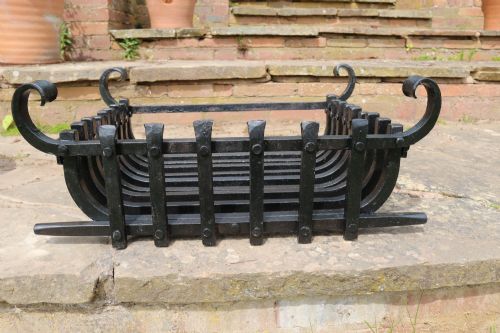


Black Iron Log Grate
A black iron log grate brings immediate architectural gravity to a hearth, anchoring coal and timber fires with robust metalwork.
Black Iron Log Grate
A black iron log grate serves as the central receptacle for solid fuel within an open fireplace, designed to hold burning timber safely above the hearth floor. These heavy iron baskets facilitate proper airflow beneath the logs, ensuring a steady draw and efficient combustion.
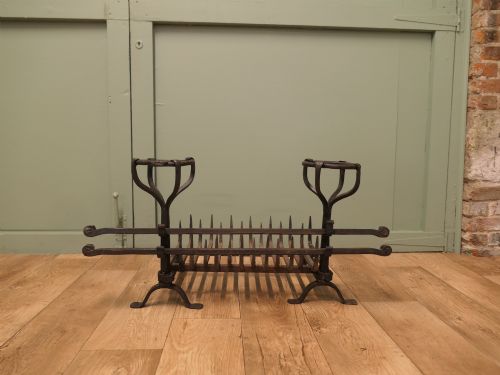
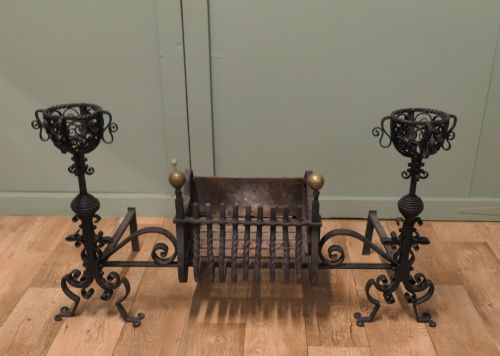
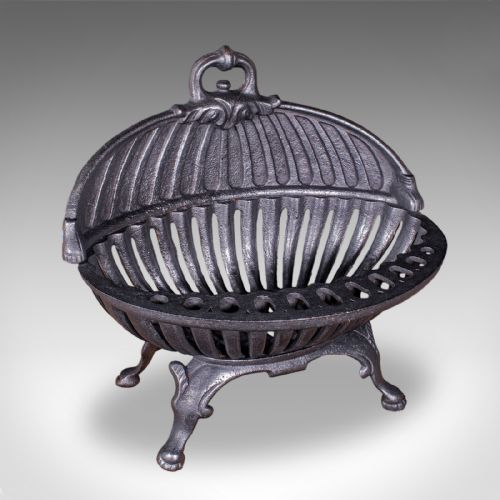
The pieces appearing on this page span several centuries of British domestic heating, with particular emphasis on Victorian examples and robust nineteenth-century forms. Buyers frequently encounter free-standing fire baskets, often accompanied by matching andirons or integrated fire backs.
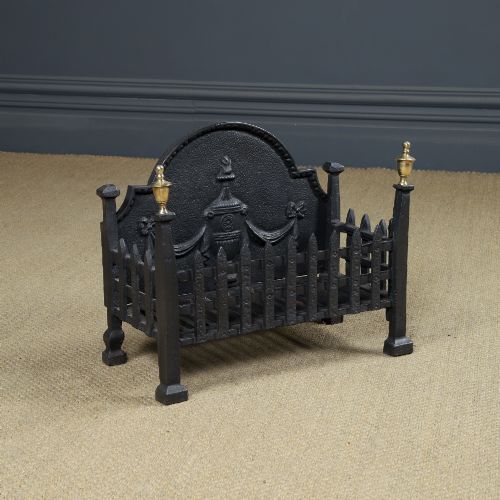
Designs range from simple utilitarian country house grates to ornate Gothic Revival and Adams style hearth furniture. Many incorporate brass highlights or heavier cast iron frames suited for large inglenook fireplaces.
What varies in quality
The distinction between standard utility grates and superior examples lies in the thickness of the metal and the integrity of the casting. Heavier, dense ironwork resists thermal warping far better than thin commercial castings.
Artistic execution dictates the upper tier of the range, where hand-forged wrought iron joins finely chased cast components. Pieces retaining original matching andirons or integrated fire backs represent a more cohesive design standard.
Black Iron Log Grate Retail Price Guide 2026
Typical asking prices for black iron log grate among the pieces listed under this phrase on Sellingantiques today, from the lower quarter to the upper quarter. They describe what is for sale here now, not the wider market.
Several heavy inglenook grates arrive bearing the literal scars of enthusiastic nineteenth-century cinder shovelling.
The Black Iron Log Grate Glossary
- Fire basket
- A metal container designed specifically to hold burning logs or coal within an open hearth. These baskets sit elevated on legs or andirons to permit air circulation.
- Andirons
- Supporting metal firedogs placed on either side of a hearth to hold logs or support the front of a fire grate. They often feature decorative cast or brass terminals.
- Fire back
- A heavy iron plate placed against the rear wall of a fireplace to radiate heat back into the room and protect the masonry. They frequently display cast pictorial reliefs.
- Inglenook
- A large recessed fireplace alcove designed to accommodate seating alongside the fire basket. Grates built for these spaces are typically of substantial proportions.
- Gothic Revival
- An architectural and decorative style drawing on medieval ecclesiastical motifs, heavily represented in nineteenth-century cast iron hearth furniture.
Black Iron Log Grate: Frequently Asked Questions
What is a black iron log grate used for?
A black iron log grate holds burning timber safely off the floor of an open hearth. It elevates the fuel to allow air to circulate underneath for an efficient fire.
These grates also protect the surrounding masonry from direct heat and contain the embers as the wood burns down.
How do I know if a grate is Victorian?
Victorian grates often feature heavy cast iron construction with distinct period styling such as Gothic Revival motifs or classical Adams details. Many pieces from this era incorporate brass highlights or come paired with matching andirons.
Examining the weight, casting texture, and construction methods helps determine the nineteenth-century origins of the metalwork.
Can I use an antique log grate in a working fireplace?
Many antique grates are cast from robust iron designed to withstand high temperatures and can function in open hearths. It is essential to check the thickness of the metal and ensure the structure has no deep thermal fractures.
Professional inspection of the hearth and chimney is recommended before lighting any fire in a historic grate.
What is the difference between cast iron and wrought iron on a grate?
Cast iron is poured molten into moulds, allowing for complex decorative patterns and thick, rigid forms that handle intense heat. Wrought iron is heated and hammered by hand into tough, fibrous bars and structural shapes.
Many antique pieces combine both materials, using cast iron for backs and ornamentation while employing wrought iron for the load-bearing bars of the basket.