

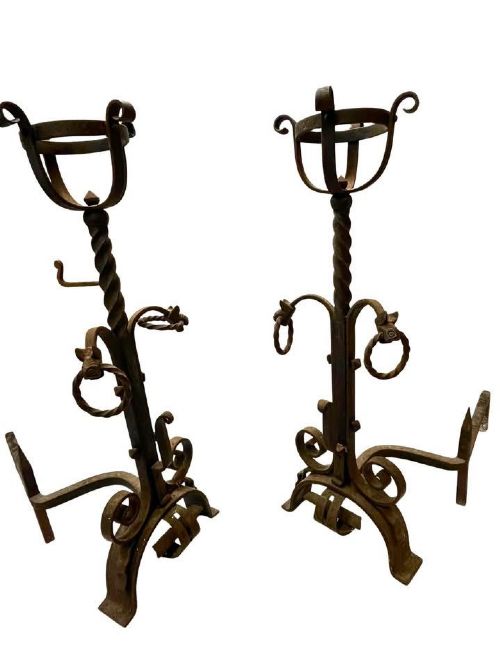


Black Iron Fireplace Dogs
Black iron fireplace dogs anchor an open hearth, holding logs steady and bringing sturdy forge work to the grate.
Black Iron Fireplace Dogs
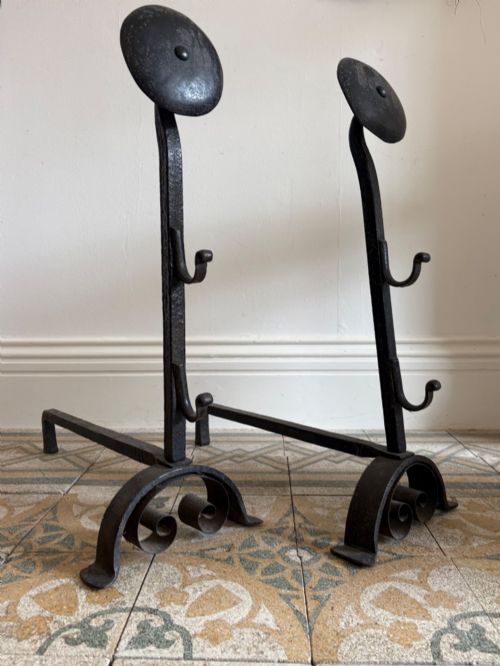
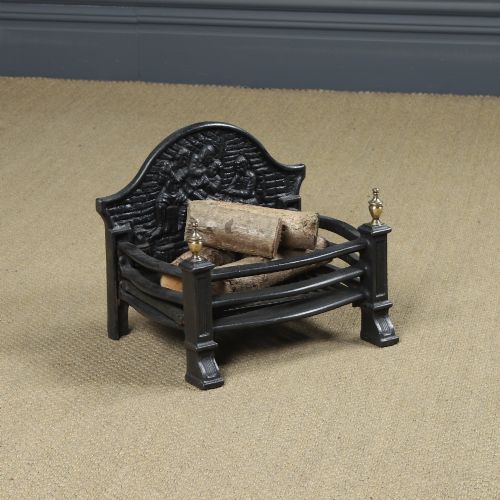
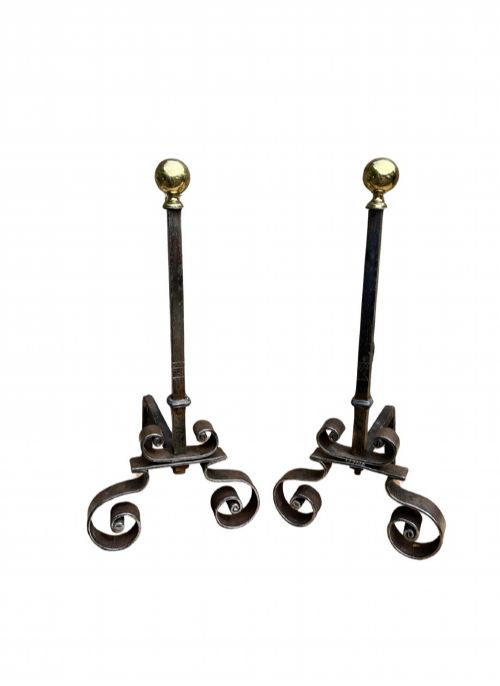
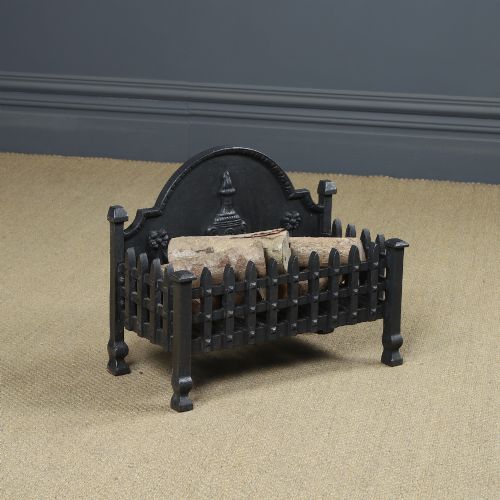
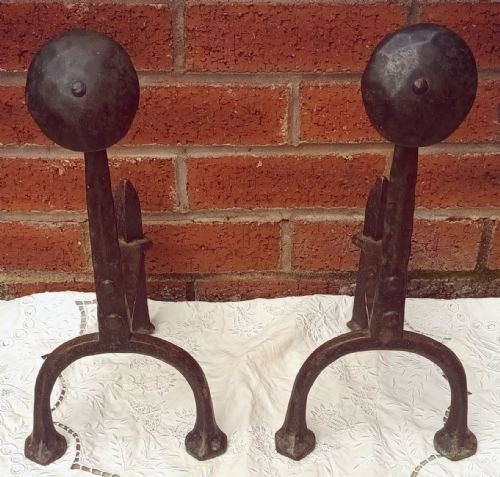
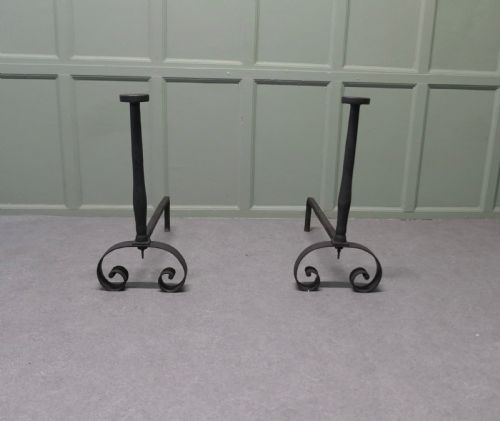
Black iron fireplace dogs stand as the structural pillars of the hearth, designed to support burning logs above the hearth floor and improve airflow beneath the fire. When exploring black iron fireplace dogs, buyers encounter substantial pairs forged or cast in sturdy metal, often accompanied by matching grates or fire baskets.
The examples gathered here span centuries of British and continental metalwork, moving from sixteenth-century Elizabethan castings through Victorian interpretations to Arts and Crafts and neo-Gothic creations. Most pieces date from the nineteenth and early twentieth centuries, reflecting the heavy domestic ironfounding and blacksmithing traditions of those periods.
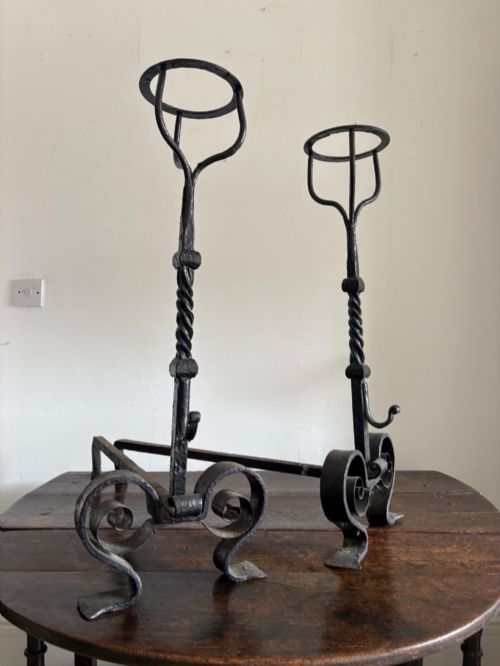
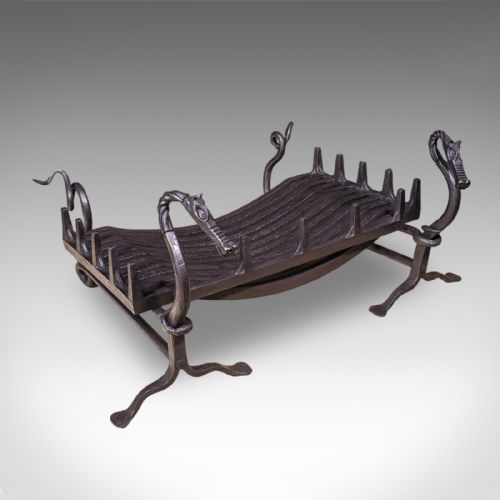
Form follows function closely in these hearth accessories, ranging from simple wrought iron uprights to monumental pairs featuring dragon motifs or geometric finials. Buyers frequently select them to complete an active hearth or to frame an empty period fireplace with authentic metalwork.
Materials and Working Methods
The construction relies primarily upon wrought iron, cast iron, and hand-forged iron, sometimes accented with brass or copper details. Wrought iron yields to the hammer and anvil, allowing smiths to twist bars and shape scrolls while the metal glows white-hot.
Cast iron involves pouring molten metal into sand moulds, a method that captures intricate surface textures like neo-Gothic tracery or embossed dragon motifs. Many pairs combine cast components for structural weight with forged iron shafts built to endure intense hearth heat.
Listings feature periods spanning from the sixteenth century through the Victorian and Edwardian eras, executed in cast and wrought iron.
Judging the Quality of Hearth Irons
Quality rests in the integrity of the blacksmith's hand or the crispness of the foundry mould. Superior pairs show careful hammer work with clean lines at the joints, whereas lesser pieces can display heavy, clumsy pouring or crude repairs.
Proportion and gauge dictate the presence of a truly fine set of andirons. Heavier, thicker metal stock resists the warping forces of long-term coal and wood fires, ensuring the uprights maintain their stance and alignment on the hearth.
The Black Iron Fireplace Dogs Glossary
- Andiron
- A horizontal metal support raised on legs, used in pairs to hold logs in an open fireplace. They often feature decorative vertical pillars at the front.
- Fire Dog
- An alternative term for an andiron, originating from the animal-like or upright stance of the metal supports. They share the same structural purpose of elevating wood.
- Fire Basket
- A metal grate designed to hold burning fuel within a fireplace, frequently paired with andirons or integrated into a larger hearth set.
- Wrought Iron
- Iron that has been heated and shaped by a blacksmith using tools, identifiable by its fibrous grain and hand-worked character.
- Cast Iron
- Iron melted and poured into a mould to set, allowing for repeatable decorative patterns and solid structural weight.
Black Iron Fireplace Dogs: Frequently Asked Questions
How do I choose the right size fireplace dogs?
Measure the width and depth of your hearth opening before selecting a pair. The uprights need enough clearance to support logs comfortably without crowding the space.
Larger monumental pairs suit deep inglenook hearths, while smaller sets balance shallow grates and period rooms.
Can these iron dogs be used in a working fire?
Most antique iron dogs were built specifically for burning wood or coal and withstand high heat well. Solid wrought and cast iron structures handle active fires reliably.
Inspect the metal for deep structural cracks or heavy flaking before lighting a real fire in older pieces.
What is the difference between andirons and fire dogs?
There is no functional difference between the two terms, as both describe the metal supports placed in pairs inside a hearth. Regional preferences and historical makers simply favoured one name over the other.
Catalogues often use the terms interchangeably to describe the same upright log-supporting irons.
How do I clean and maintain antique iron?
Dust the surface regularly with a dry cloth and apply a light coat of grate polish or natural wax to prevent surface oxidation. Avoid using harsh chemical cleaners that strip the historic finish.
Gentle maintenance preserves the deep dark patina accumulated over centuries of fireside use.