

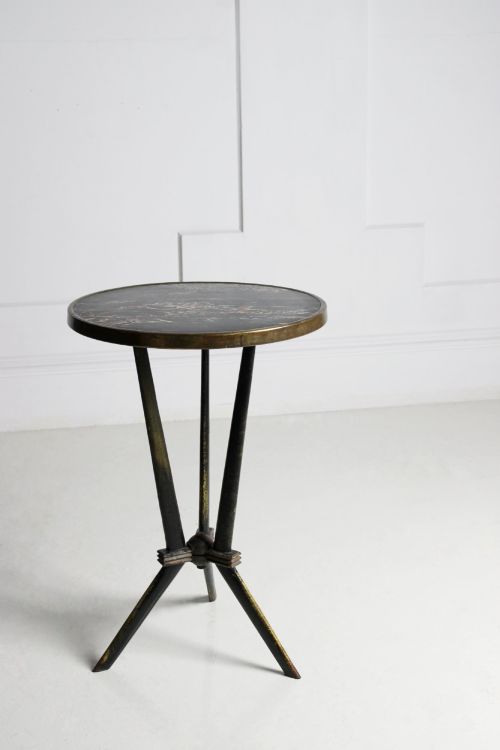
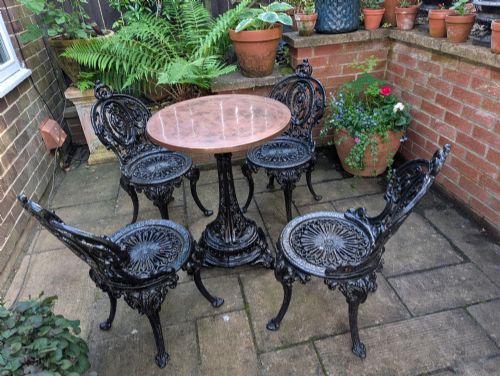
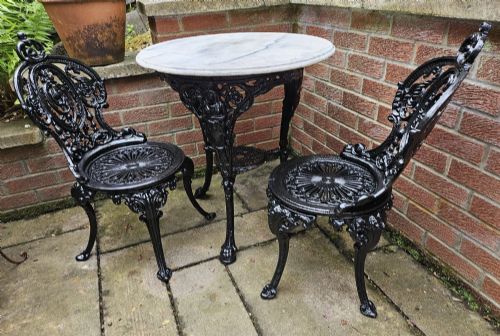
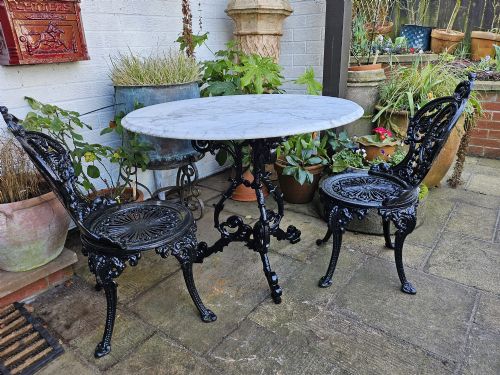
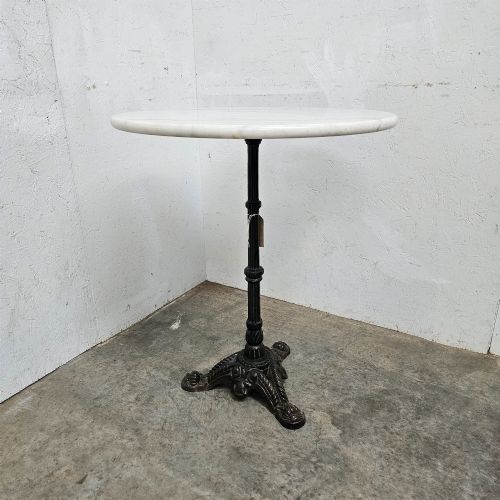


Black Iron Bistro Table
These black iron bistro tables bring practical metalwork and enduring utility to any terrace or interior, offering the exact surface you need for daily dining.
Black Iron Bistro Table
A black iron bistro table combines a robust metal base with a fitted top, designed originally for commercial hospitality spaces and compact domestic settings. When you search for a black iron bistro table, you encounter Victorian examples alongside French café pieces dating from the nineteenth and early twentieth centuries.
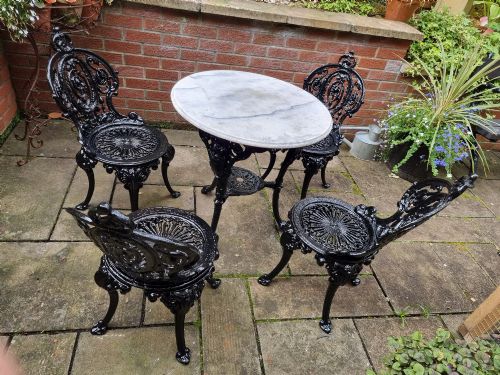
The format typically spans smaller garden tables, occasional tables, and pub tables alongside complete sets with matching chairs. These forms originate from diverse periods including the Victorian era and the nineteen-thirties, reflecting both British pub traditions and continental European café culture.
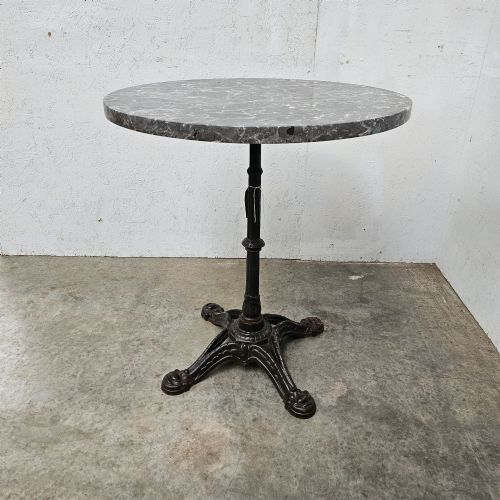
Surviving examples range from heavy cast-iron garden furniture to slender commercial cafe pieces intended for urban terraces. The underlying metal frames provide sturdy support while the overall dimensions remain compact enough for modern living spaces.
Materials and Construction
Makers utilised durable metals for the structural bases, employing cast iron and wrought iron to form intricate scrollwork and heavy pedestal supports. These metal components were frequently cast in moulds, creating ornate patterns that withstand rigorous daily use.
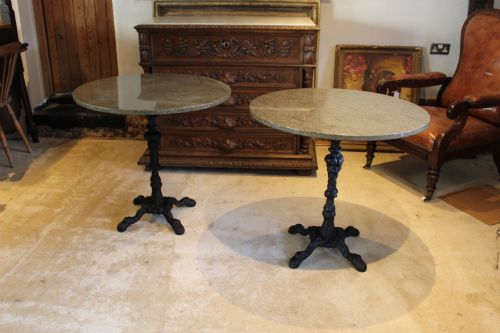
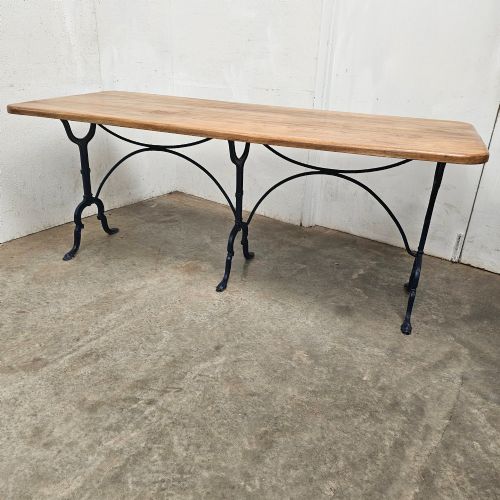
Table tops utilise a diverse selection of materials matched to the metal bases, including smooth marble, polished granite, and zinc alongside traditional timbers like mahogany, oak, elm, and copper. This varied combination of heavy metal and contrasting upper surfaces defines the structural integrity of each piece.
Black Iron Bistro Table Retail Price Guide 2026
Typical asking prices for black iron bistro table among the pieces listed under this phrase on Sellingantiques today, from the lower quarter to the upper quarter. They describe what is for sale here now, not the wider market.
Current listings feature materials ranging from heavy cast iron and marble to elm, mahogany, copper, and zinc across the nineteenth and early twentieth centuries.
Assessing Quality
Quality rests upon the crispness of the metal casting and the proportion between the heavy iron base and the fitted top. Superior pieces display finely detailed scrollwork and substantial weight without clumsy proportions.
The connection between the iron framework and the upper surface determines the structural success of the piece. Well-made examples feature stable top mountings and retain their original materials rather than mismatched replacements.
The Black Iron Bistro Table Glossary
- Cast iron
- A strong, heavy alloy poured into moulds to create intricate bases and scrollwork. This material forms the primary structural support for the majority of these tables.
- Bistro table
- A small café table designed for compact dining spaces. These pieces originated in French establishments and British pubs.
- Britannia table
- A specific Victorian pub table style featuring a heavy cast-iron base moulded in the form of a seated figure. This design provided stability in busy nineteenth-century hostelries.
- Scrollwork
- Decorative curved metal patterns shaped into iron bases. This ornamentation defines much of the Victorian aesthetic found on these tables.
Black Iron Bistro Table: Frequently Asked Questions
Where were these tables originally used?
These tables served primarily in nineteenth-century French cafes, British public houses, and domestic gardens. Their compact footprint made them suitable for tight spaces both indoors and outdoors.
Commercial establishments required sturdy furniture that could withstand heavy daily use by patrons. This practical origin explains the enduring combination of heavy iron bases and wipe-clean tops.
Can these tables stay outside year-round?
Cast iron and stone surfaces tolerate outdoor conditions well, though wooden or zinc tops benefit from shelter during harsh weather. Regular maintenance helps preserve the metal finishes against moisture.
Garden settings suit the heavier cast-iron designs, while marble and polished granite tops often find placement inside domestic kitchens or conservatories.
How do I identify a Victorian piece?
Victorian examples often feature distinct manufacturer motifs, heavier cast-iron bases, and traditional timber tops like mahogany or elm. Stylistic cues include ornate scrollwork and specific pedestal designs.
Comparing the construction methods and material patination helps distinguish nineteenth-century production from later twentieth-century interpretations.
What top materials are available?
Surviving tables feature a wide variety of upper surfaces, ranging from cool marble and polished granite to zinc, copper, and traditional hardwoods. Each material alters the visual weight and practical use of the table.
Stone tops provide a smooth, durable surface for dining, while timber versions introduce warmth and traditional cabinet-making details to the metal base.