



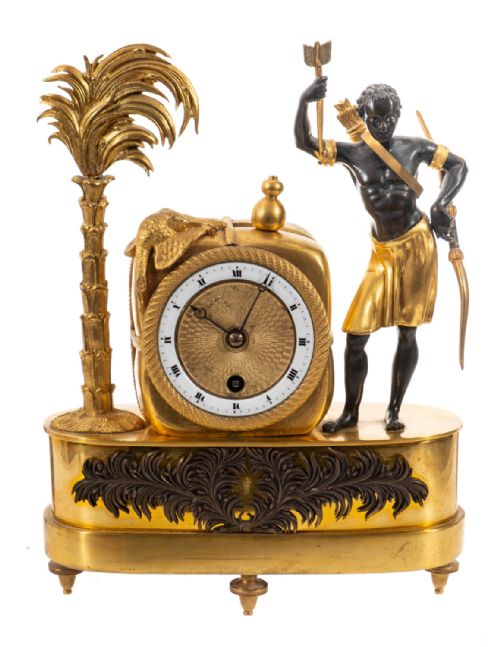


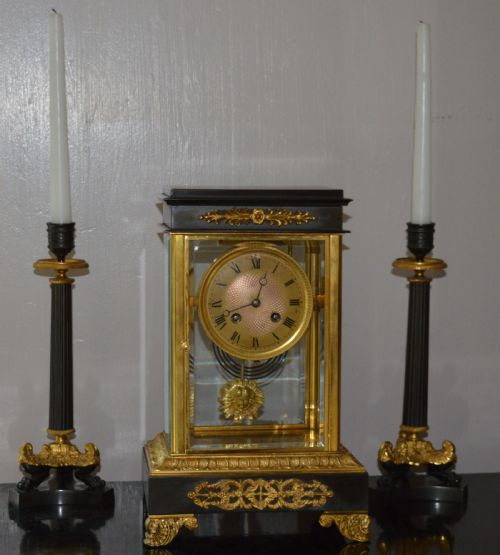
Black Gold Mantel Clock
These black gold mantel clock pieces bring architectural presence and striking movement into a room, spanning periods from the nineteenth century to mid-century modern.
Black Gold Mantel Clock
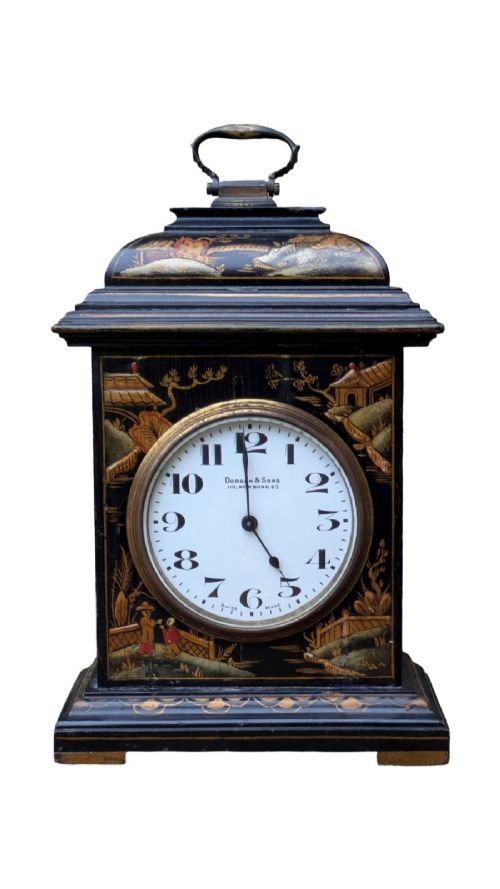
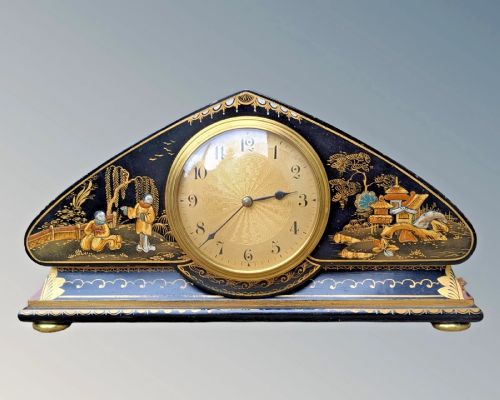
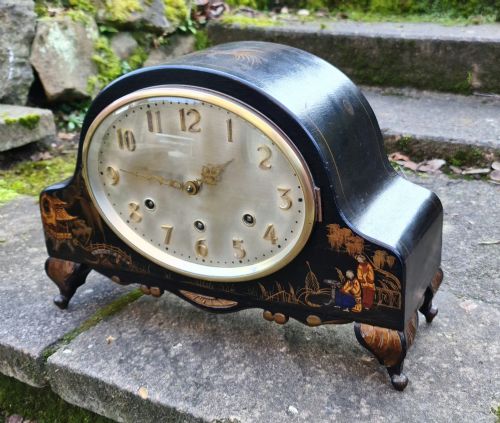
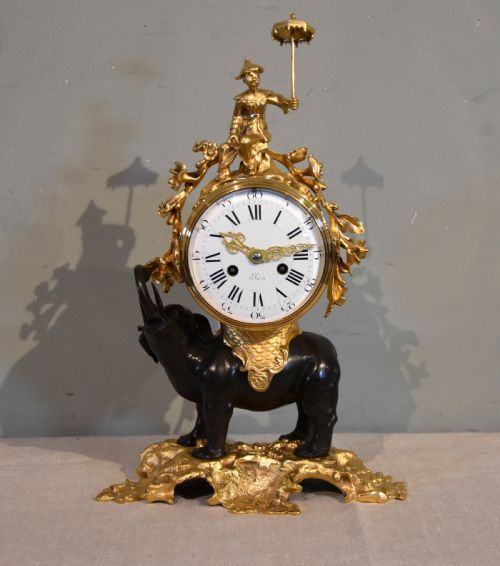
When searching for a black gold mantel clock, a buyer encounters a diverse range of horological objects primarily originating from French and English workshops. These pieces take various forms, from portico designs and four-glass cases to figural bronze sculptures and lacquered bracket clocks.
The selection on this page demonstrates styles running through French Empire, Victorian, and Chinoiserie aesthetics. Most examples integrate dark patinated surfaces or ebonised wood with contrasting gilt bronze and ormolu details.
What varies in quality
Quality differences emerge in the crispness of the bronze casting and the depth of the original gilding or patination. Finer examples display meticulously chased figural details, such as animal forms and botanical motifs, rather than soft or smoothed-over metalwork.
The sophistication of the internal movement and the preservation of original components also distinguish superior pieces. Intricate striking mechanisms and signed movements by known makers elevate the standing of a clock within its period.
Black Gold Mantel Clock Retail Price Guide 2026
Typical asking prices for black gold mantel clock among the pieces listed under this phrase on Sellingantiques today, from the lower quarter to the upper quarter. They describe what is for sale here now, not the wider market.
Periods represented range from the Regency era through Victorian, Edwardian, and mid-century modern designs.
Jaeger LeCoultre·Pons De Paul·Wm. Gilbert U.S.A.
The Black Gold Mantel Clock Glossary
- Ormolu
- Gilt bronze ornamentation applied to furniture and clock cases. This technique involves amalgamating gold and mercury onto a bronze base.
- Portico clock
- A distinct architectural clock style featuring a dial suspended between vertical pillars. These pieces often date from the French Empire period.
- Fusee
- A conical pulley used in clock movements to maintain even driving force as the mainspring unwinds. It ensures consistent timekeeping accuracy across the power reserve.
- Four glass clock
- A mantel clock housed within a glazed brass frame that reveals the movement from all sides. This design gained popularity during the late nineteenth century.
- Chinoiserie
- European artistic style reflecting Chinese motifs, frequently expressed through lacquer and hand-painted decoration on clock bodies.
Black Gold Mantel Clock: Frequently Asked Questions
How do I wind a mechanical mantel clock?
Most mechanical mantel clocks utilise a key inserted into the dial face to tension the springs. Care must be taken not to overwind the mechanism.
Ensuring the clock sits on a level surface keeps the pendulum beating evenly and maintains accurate timekeeping.
Where should I place a heavy bronze clock?
These dense metal and marble clocks require a sturdy mantelpiece or console table capable of supporting significant weight. Placement away from direct heat sources protects internal oils and wooden components.
Positioning them at eye level or slightly below allows proper viewing of the dial and decorative chasing.
How do I identify a French movement?
French movements often feature distinct serial numbers, maker stamps on the backplate, and bell or gong striking arrangements. They frequently use silk suspension threads or pendulum adjustments peculiar to nineteenth-century continental workshops.
Examining the rear access door usually reveals the brass housing characteristic of these mechanisms.
What is an ebonised finish?
Ebonising involves treating timber, such as fruitwood or mahogany, to mimic the dark, dense appearance of ebony wood. This treatment creates a deep black surface that contrasts sharply with gilt bronze mounts.
Cabinetmakers utilised this finish heavily in nineteenth-century decorative pieces to achieve a formal aesthetic.