

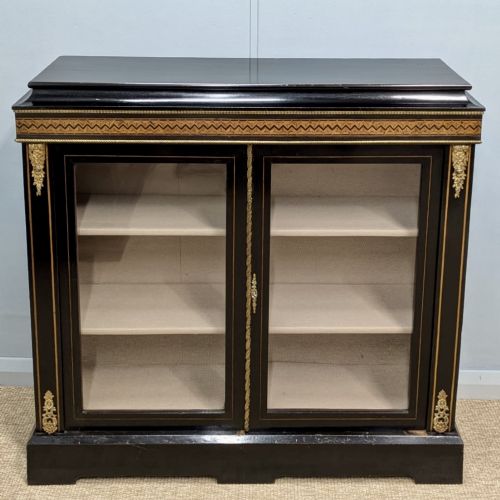
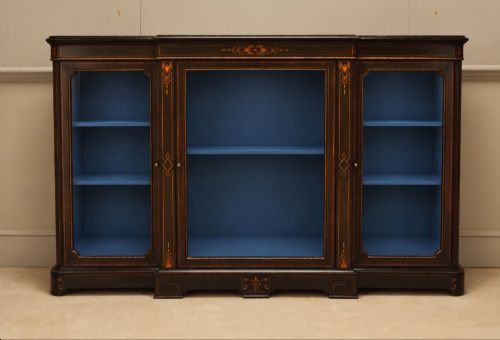
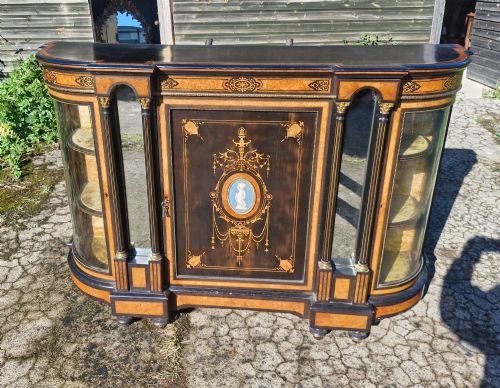
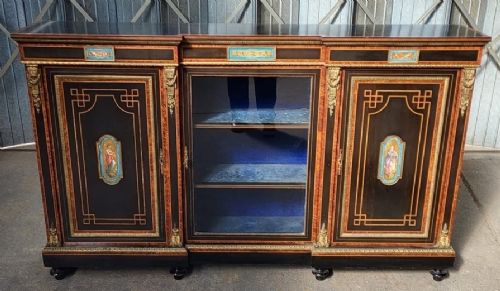
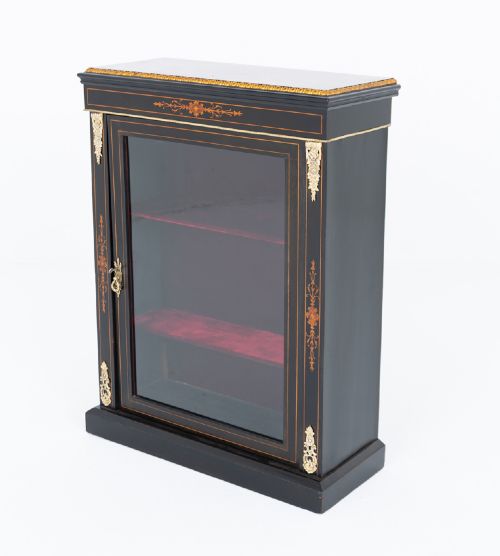
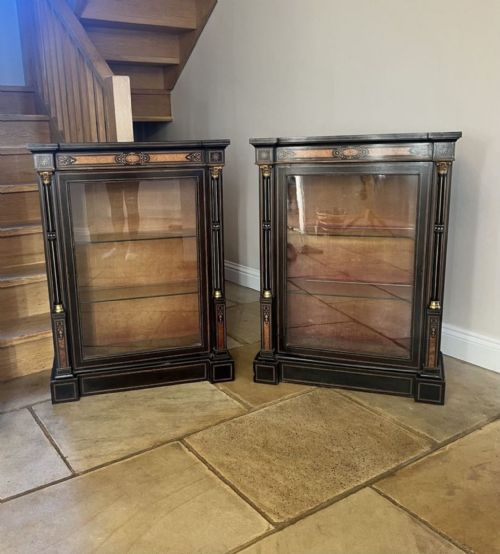


Black Glazed Credenza
These black glazed credenza examples bring Victorian ebonised timber and brass inlay into the home for refined display.
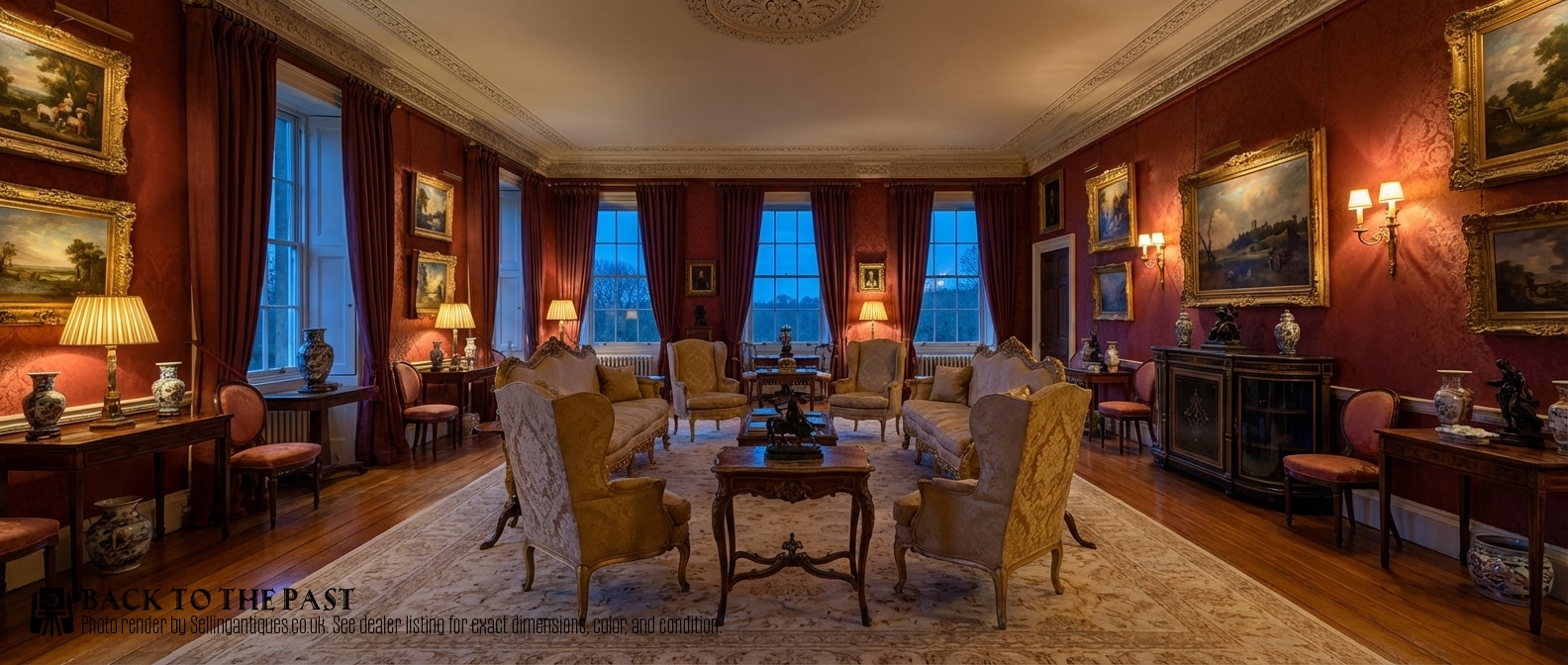
Black Glazed Credenza
A black glazed credenza is primarily a nineteenth century Victorian or French Napoleon III display piece, often utilising ebonised wood to achieve its dark finish. These cabinets combine glass doors with enclosed shelving, serving as both side cabinets and display cabinets within the home.
The version most commonly encountered on this page is the Victorian ebonised credenza, frequently incorporating inlaid marquetry, ormolu mounts and glazed sections. Forms range from three door breakfront credenzas to smaller pier cabinets and sideboards.
Originating largely from the nineteenth century, particularly around the 1850s to 1880s, these pieces reflect Victorian Aesthetic Movement and Boulle Revival styles. Buyers select them to store and exhibit porcelain, books and decorative objects behind glass.
How they were made
Cabinet makers utilised ebonised wood, walnut, amboyna and ebony as the primary timber foundations, often applying black finishes to resemble costly exotic hardwoods. Surfaces received intricate marquetry inlay using contrasting woods, tortoiseshell and metal stringing.
Metalwork played a structural and decorative role, with ormolu mounts, brass inlay and gilt details applied to corners, borders and panels. Glass panels were fitted into wooden doors to create display spaces, accompanied by velvet linings in some interior compartments.
Black Glazed Credenza Retail Price Guide 2026
Typical asking prices for black glazed credenza among the pieces listed under this phrase on Sellingantiques today, from the lower quarter to the upper quarter. They describe what is for sale here now, not the wider market.
Materials recorded in current stock include ebonised wood, walnut, ormolu, brass, porcelain, tortoiseshell, velvet and glass.
What varies in quality
The refinement of the marquetry and the crispness of the ormolu mounts determine the grade of the piece, with finer examples showing precise hand-cut brass and tortoiseshell work. The quality of the ebonised finish and the choice of secondary timbers such as amboyna or burr walnut also distinguish superior items.
Proportion and scale dictate the visual success of the cabinet, ranging from compact single door pier cabinets to substantial multi-door breakfront credenzas. Integrated decorative elements like Sevres style porcelain plaques elevate the execution and visual complexity of the design.
The Black Glazed Credenza Glossary
- Ebonised
- Wood treated with a dark stain or finish to imitate true ebony. This technique was widely utilised in nineteenth century Victorian cabinet making.
- Ormolu
- Gilded bronze mounts applied to furniture for decorative effect. These metallic embellishments catch the light against dark ebonised surfaces.
- Boulle
- A style of marquetry using brass and tortoiseshell inlaid in intricate patterns. It appears frequently on French Napoleon III and Victorian revival pieces.
- Marquetry
- Decorative veneer patterns assembled from various woods and materials on a carcase. Craftsmen used this technique to create floral and geometric motifs.
- Pier cabinet
- A narrow display cabinet designed to fit wall spaces between windows. These glazed pieces house porcelain and small collections.
Black Glazed Credenza: Frequently Asked Questions
What is a black glazed credenza?
A black glazed credenza is a nineteenth century display cabinet featuring dark ebonised wood, glass doors and decorative mounts. These pieces were designed for formal reception rooms to store and exhibit valuables.
They combine closed storage with glazed shelving, making them practical for modern living while retaining their historical character.
How do I date these cabinets?
Dating relies on stylistic clues such as the presence of Victorian Aesthetic Movement motifs, Boulle revival brass work or specific construction methods. Most examples on this page originate from the mid to late nineteenth century.
Examining the secondary timbers and interior linings also helps establish the era of manufacture.
Where were these pieces used?
These credenzas and side cabinets were placed in nineteenth century drawing rooms and dining rooms. Their glazed doors protected delicate porcelain and ornaments from dust.
Today, they serve a similar function in domestic interiors, holding books, ceramics and collections.
What materials are typical?
Common materials include ebonised wood, walnut, amboyna and ebony, accented with ormolu mounts and brass inlay. Glass panels provide visibility for displayed items.
Some examples incorporate tortoiseshell, velvet linings and porcelain plaques to enhance their decorative appeal.