
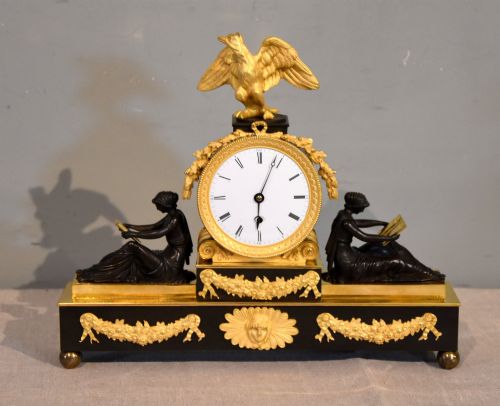
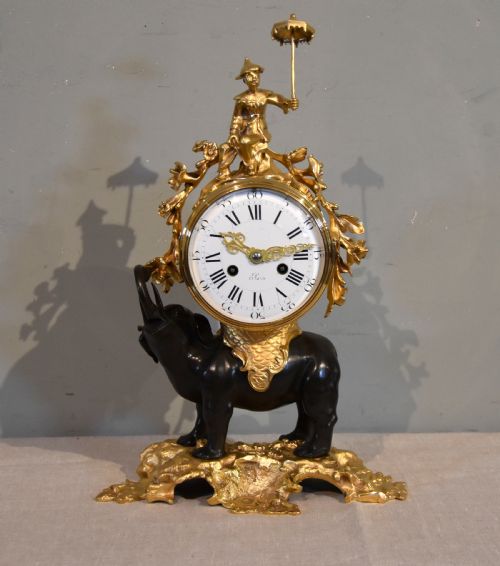
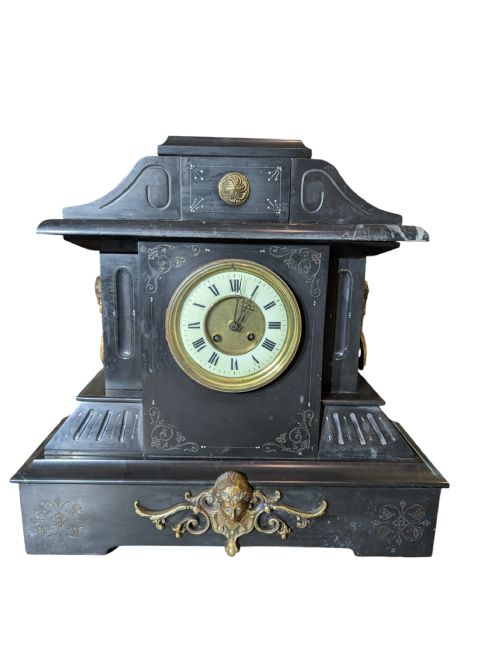


Black Gilt Table Clock
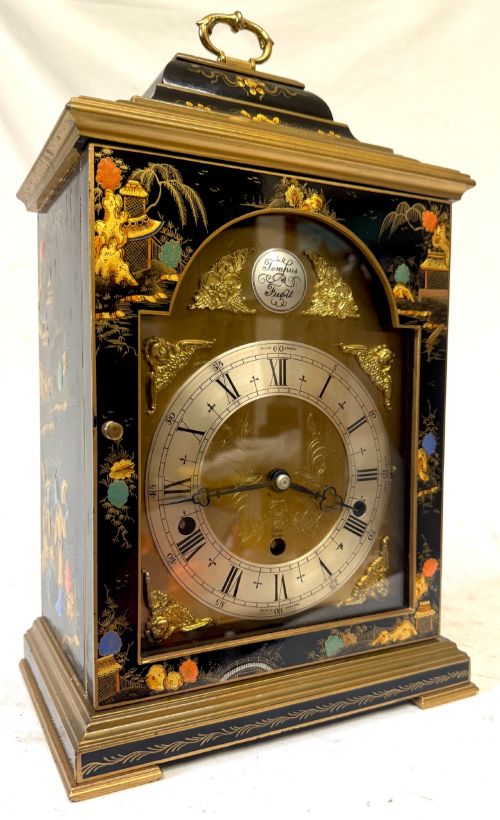
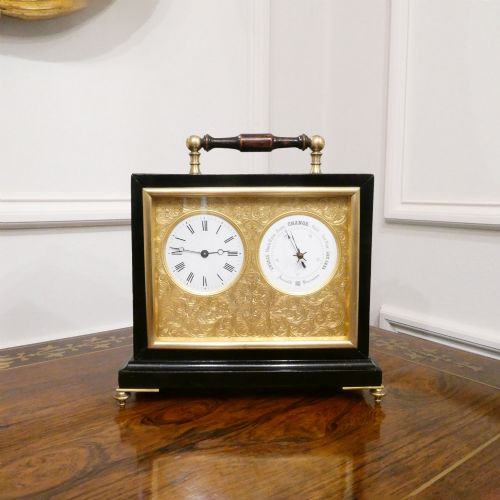
A black gilt table clock brings together dark cases of slate, marble or ebonised wood with luminous mounts of ormolu and brass.
Black Gilt Table Clock
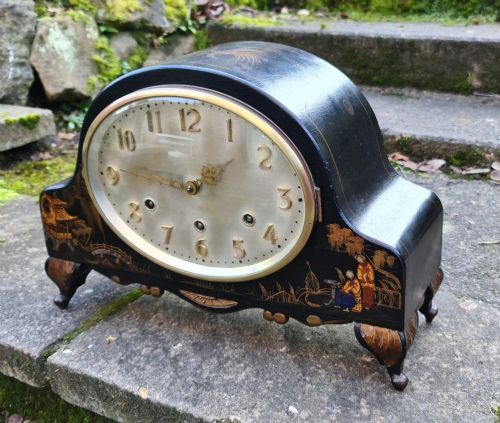
A black gilt table clock combines deep stone or ebonised timber with contrasting metal ornamentation. These pieces appear in mantel, bracket and desk formats across various periods.
The selection ranges from Victorian marble garnitures and ebonised bracket clocks to Regency brass timepieces and French Empire ormolu designs. Pieces stretch from seventeenth century London makers to mid-century Swiss models.
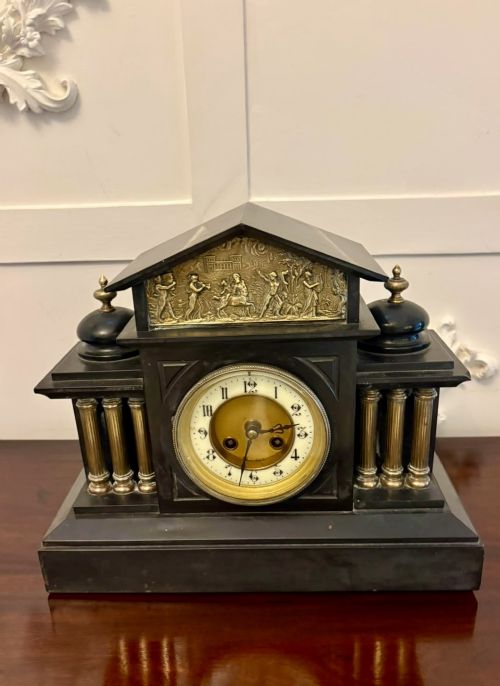
Mantel clocks form a large part of the selection, often featuring architectural slate or black marble cases paired with gilt dials and decorative mounts.
Materials and Construction
Cases utilise dense natural stone, slate and marble alongside ebonised wood and lacquered finishes. Metal components rely on cast brass, ormolu, patinated bronze and gilt bronze.
Dials and movements combine enamelled chapters, delicate hands and complex mechanical gear trains. Ormolu mounts are fire-gilded or cast and polished to create bright highlights against dark cases.
Listings feature clocks spanning from the seventeenth century through to mid-century modern designs, utilising marble, slate, bronze and ebonised wood.
Craftsmanship and Proportion
Superior examples show crisp casting in the ormolu mounts and careful selection of marble or slate. Movement quality depends on the maker's reputation and the precision of the gear trains.
Proportion and balance between the dark case and the gilt ornamentation dictate visual success. Signed dials and original movements elevate a piece above standard production models.
Philippes Paris·Sacre·William Speakman·Payne and Co·Pons de Paul·John Leroux·Barraud and Lunds·Jaeger Le Coultre
The Black Gilt Table Clock Glossary
- Ormolu
- Gilt bronze produced by applying a mercury and gold amalgam to cast bronze. This technique creates a rich, lasting metallic lustre.
- Ebonised
- Wood treated to imitate ebony. Fruitwood or other timbers are stained and polished to achieve a deep black finish.
- Fusee
- A conical pulley used in clock movements to maintain even force as the mainspring unwinds. It ensures consistent timekeeping throughout the power reserve.
- Garniture
- A set of matching decorative objects designed to be displayed together. These often consist of a central clock flanked by matching urns or candelabra.
- Bracket clock
- A portable clock designed to sit on a bracket or table. Early versions frequently featured swinging handles and elaborate wooden or ebonised cases.
Black Gilt Table Clock: Frequently Asked Questions
Where should I place a heavy marble clock?
These dense stone and slate pieces require sturdy furniture capable of supporting considerable weight.
Position them away from direct sunlight and damp environments to protect the internal metalwork and enamel dials.
How do I wind an antique mechanical clock?
Use the appropriate key gently, turning it only until you feel resistance.
Avoid over-winding, as this can damage the mainspring and internal gear mechanisms.
What is the difference between a mantel clock and a bracket clock?
Bracket clocks originated as portable timepieces with carrying handles designed for wall brackets or tables. Mantel clocks generally sit directly on a fireplace shelf or surface as a permanent architectural feature.
Both categories utilise similar striking and chiming movements housed within decorative cases.
How do I identify the period of an ebonised clock?
Examine the case style, dial ornamentation and movement type for period-specific clues. Victorian ebonised pieces often incorporate architectural revival motifs or Aesthetic Movement details.
Earlier examples from the seventeenth or eighteenth centuries display distinct wood joinery and fusee movements.