


Black French Commode
A black french commode brings serious architectural presence to a room, offering deep dark surfaces paired with crisp mounts.
Black French Commode
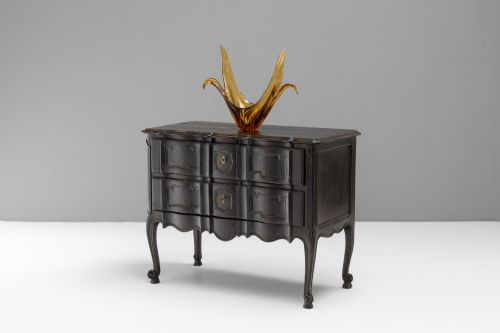
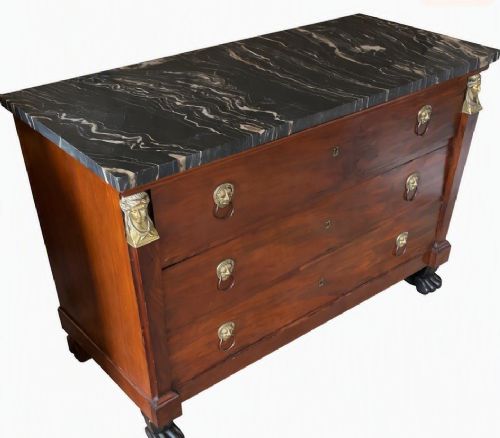
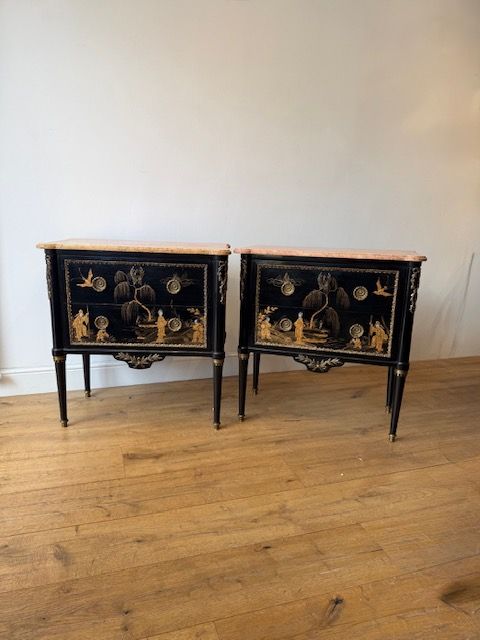
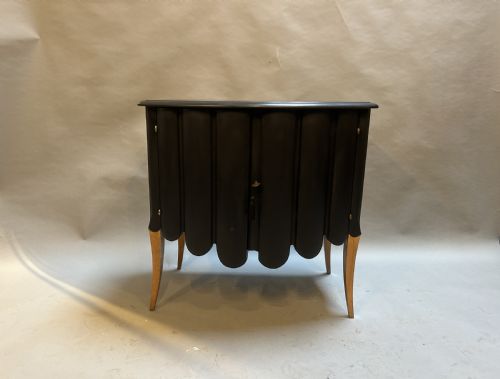
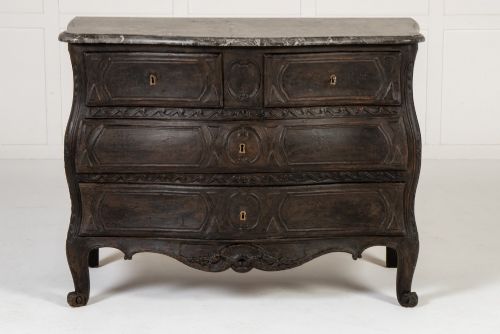
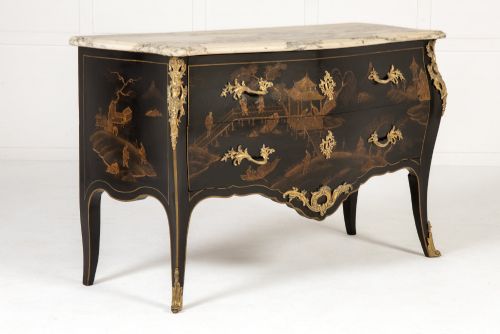
A black french commode is a substantial storage piece defined by continental forms and dark finishes, ranging from eighteenth-century serpentine shapes to twentieth-century art deco lines. Buyers seeking a black french commode will find various iterations, including ebonised timber surfaces, japanned lacquer, and painted finishes set beneath contrasting marble tops.
The selection encompasses diverse regional interpretations and historic revivals, from nineteenth-century napoleon iii ebonised cabinets to provincial oak chests. These pieces function as prominent side cabinets and drawer units, often accented with gilt metal, brass, or ormolu mounts that punctuate the dark silhouette.
What varies in quality
Quality rests in the handling of the dark surface and the crispness of the applied metalwork. Finer commodes exhibit deep, hand-finished ebonisation or expertly applied lacquer that retains a rich lustre, whereas lesser examples show flat, uniform modern spraying.
The integration of the marble top and the precision of the drawer joints dictate the structural integrity. Superior pieces feature heavy, well-fitted marble slabs and hand-cut dovetailing that aligns smoothly within the frame.
The listings span from eighteenth-century ebonised bombe forms to twentieth-century art deco lacquer and provincial oak.
The Black French Commode Glossary
- Ebonised wood
- Timber treated with stain or polish to mimic the dark, dense qualities of ebony. This technique was widely utilised during the nineteenth century on revival cabinets.
- Bombe
- A swelling, outward-curved contour found on the front and sides of case furniture. This dramatic profile is typical of eighteenth-century rococo pieces.
- Ormolu
- Gilded bronze mounts applied to furniture for decorative contrast. These cast metal elements highlight the corners and handles of finer commodes.
- Japanned lacquer
- European imitation of Asian lacquerwork built up in layers and polished. This technique appears on decorative commodes with figurative motifs.
- Serpentine
- A curved line featuring a convex centre flanked by concave ends. This contour gives chests of drawers a flowing, organic appearance.
Black French Commode: Frequently Asked Questions
Where does a black french commode work best?
These pieces anchor a hallway or living room, providing a dark focal point against lighter walls. Their generous surface area also suits a bedroom or study.
They pair effectively with modern minimalist interiors as well as traditional period settings, adding grounded weight to the room.
How do I clean a marble top safely?
Use warm water and a soft cloth, avoiding acidic cleaners that etch the polished stone surface. Dry the marble thoroughly after wiping.
Wax can be applied periodically to protect the stone from staining while maintaining its soft sheen.
What is the difference between ebonised and lacquered wood?
Ebonisation treats the actual timber grain with stain or black polish to alter its natural colour. Lacquering builds a thick resin or varnish coating over the wood base.
Lacquered surfaces often feature reflective sheens or painted decoration, whereas ebonised timber retains the underlying texture of the wood.
How do I care for antique ebonised surfaces?
Dust regularly with a dry microfibre cloth and avoid placing the commode in direct sunlight. Excessive heat can cause the dark polish to dry out.
Apply a neutral furniture wax occasionally to nourish the finish and preserve the deep dark tone.