





Black Forest Statues
These black forest statues bring the fierce wildlife and rustic charm of alpine forests straight into the home through intricate hand carving.
Black Forest Statues
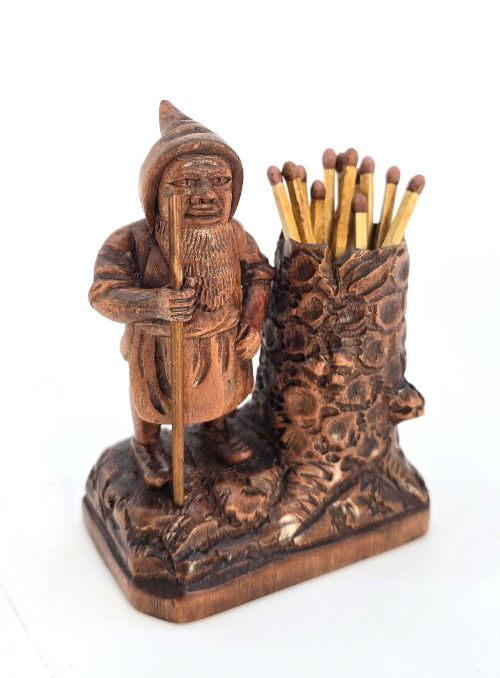
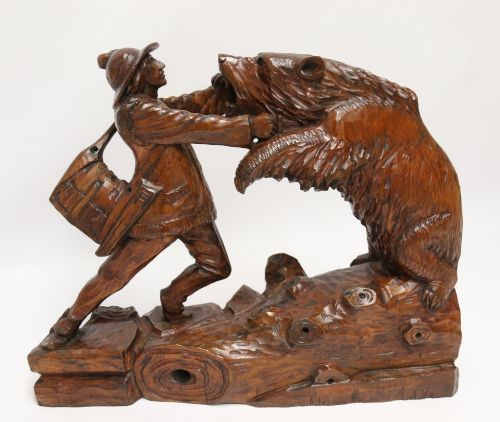
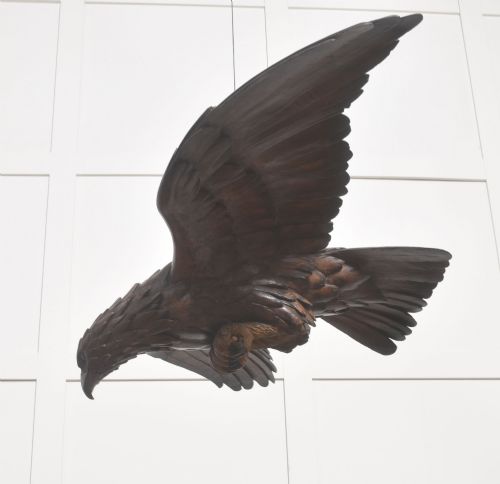
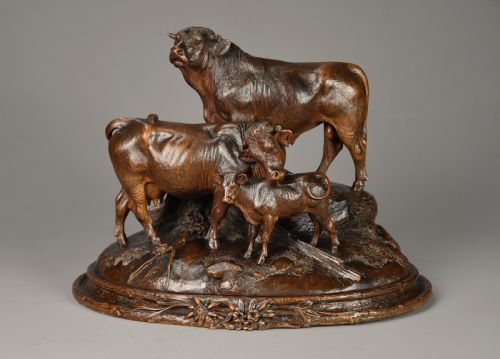
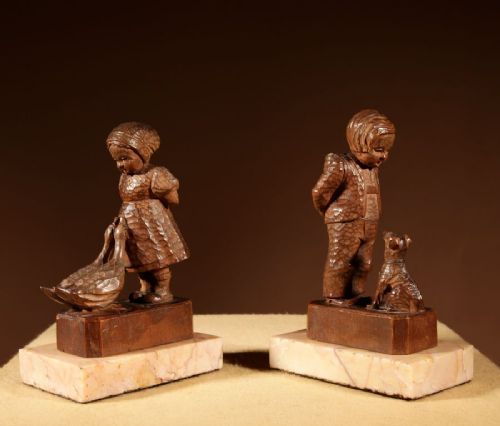
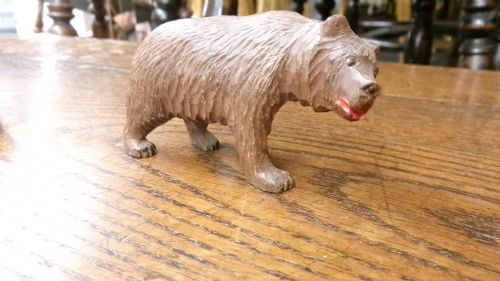
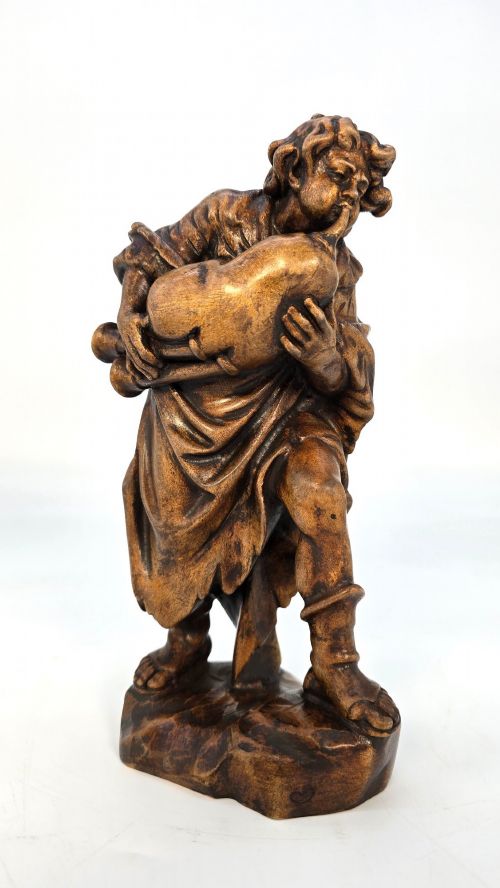
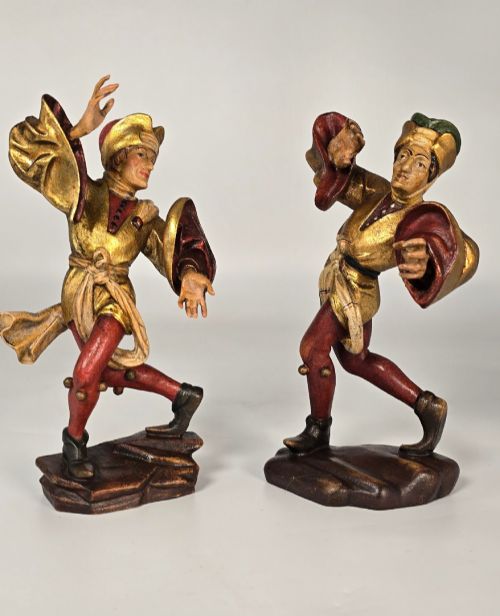
When you search for black forest statues, you encounter hand carved wooden sculptures and figures originating mainly from the nineteenth century and the early decades of the twentieth century. These pieces encompass detailed studies of bears, deer, birds of prey, and domestic cattle, alongside human subjects like peasants, herdsmen, and figures from folklore such as William Tell and the Pied Piper of Hamelin.
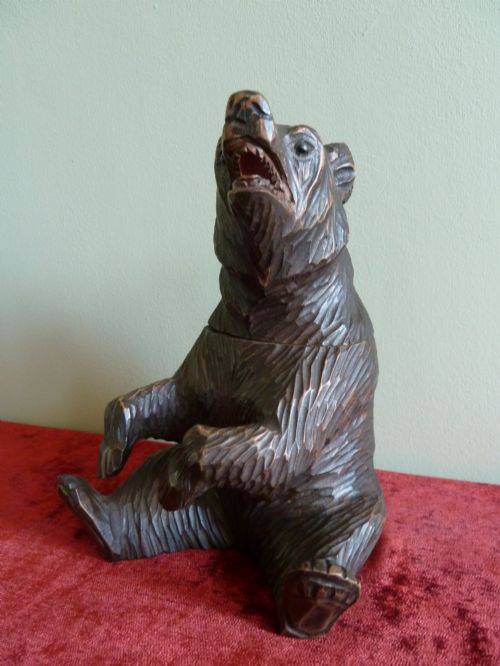
The most common forms on this page include solitary bears, pairs of bookends, match holders, lamps, and figurative groups depicting animals or human figures in characteristic alpine poses. They stem from the Swiss and wider European folk art tradition, where woodcarving workshops produced both decorative objects and functional desk accessories.
Most examples date from the Victorian era up to the nineteen-forties, capturing a distinct regional aesthetic that combines naturalistic observation with stylized rustic charm. Buyers look for these statues to add texture, character, and a sense of history to interior spaces.
How they were made
Carvers shaped these pieces primarily from domestic European timbers, notably linden wood, limewood, walnut, and oak, which allowed for crisp detail and deep undercut foliage. The wood was selected for its grain and uniform texture, enabling artisans to render soft fur, feathered wings, and detailed facial expressions without splitting.
Makers utilised traditional hand gouges, chisels, and knives to build up form and texture directly from the block, occasionally incorporating glass eyes or paint to heighten realism. Many pieces were left in the natural waxed timber finish, while others received gentle staining to accentuate the muscular definition of animals or the folds of peasant clothing.
Black Forest Statues Retail Price Guide 2026
Typical asking prices for black forest statues among the pieces listed under this phrase on Sellingantiques today, from the lower quarter to the upper quarter. They describe what is for sale here now, not the wider market.
Listings feature carved wood works in linden wood, limewood, walnut, and oak, spanning the nineteenth century up to nineteen-forty.
What varies in quality
The distinction between ordinary and superior black forest statues lies in the depth of anatomical understanding and the vitality of the carving. Master carvers captured tension in the muscles of a stag, the fluid movement of dancing figures, or the convincing weight of a bear, whereas lesser pieces remain stiff and formulaic.
Surface finish and detailing also set pieces apart, with finer works displaying crisp undercutting, expressive glass eyes, and delicate tool marks that demonstrate the hand of a skilled artisan rather than hurried production.
J Huggler
The Black Forest Statues Glossary
- Limewood
- A pale timber favoured by alpine carvers for its soft texture and lack of pronounced grain, making it ideal for intricate, detailed figures.
- Undercutting
- A carving technique where the artisan removes wood from beneath a projection to create depth, shadow, and three-dimensional realism.
- Folk art
- Objects created within a traditional community culture, often by self-taught or regionally trained artisans, prioritising utilitarian or decorative function over academic artistic convention.
- Match holder
- A small desk accessory or household container integrated into the carving, often featuring a textured striking surface for lighting matches.
Black Forest Statues: Frequently Asked Questions
What animals appear most often?
Bears dominate the subject matter, appearing singly, in pairs as bookends, or as part of larger lamp bases and tobacco holders. Stags, chamois, ibex, owls, and eagles also feature prominently across the selection.
These creatures reflect the alpine environment that inspired the nineteenth century carvers, translating local wildlife into decorative household objects.
How were these carved objects used?
Many pieces served a dual purpose as decorative sculptures and functional items such as bookends, match holders, candlesticks, and lamps. Others were purely ornamental figures designed for display on mantelpieces or cabinets.
Their practical utility made them popular souvenirs for travellers visiting European mountain regions during the Victorian period.
How do I care for wooden statues?
Keep the carved wood away from direct heat sources and strong sunlight to prevent the timber from drying out or splitting over time. Dust gently with a dry, soft brush rather than using wet cloths or chemical polishes.
Applying a light coat of natural beeswax periodically will help maintain the lustre of the historic finish.
Are all these pieces from Switzerland?
While the style is rooted strongly in Swiss folk art and the Brienz carving tradition, workshops across the broader European alpine region produced similar figures. Attribution often relies on stylistic traits rather than explicit geographic markers.
Some pieces bear stamps or signatures from specific workshops, though many remain anonymous.