




Black Forest Hall Stand
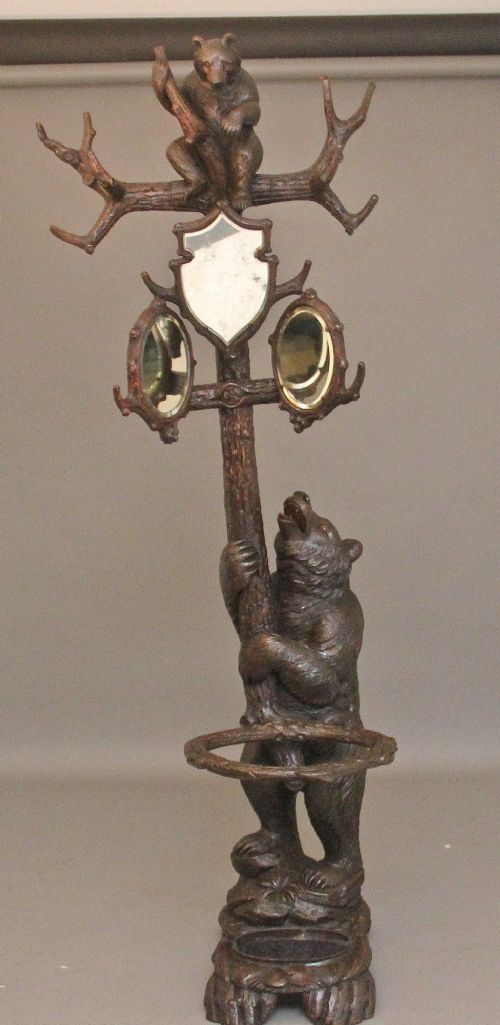
A black forest hall stand brings deep woodland carving and sculptural animal figures directly into the entranceway.
Black Forest Hall Stand
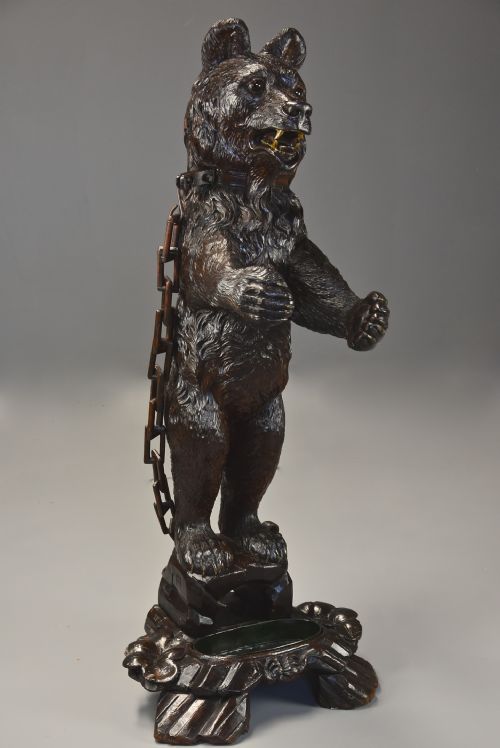
A black forest hall stand combines practical entryway storage with intricate sculptural carving, most frequently taking the form of standing bears holding card trays or umbrella rings. These pieces emerge primarily from the nineteenth century and the early twentieth century, spanning Victorian examples alongside pieces dated around eighteen eighty and nineteen twenty.
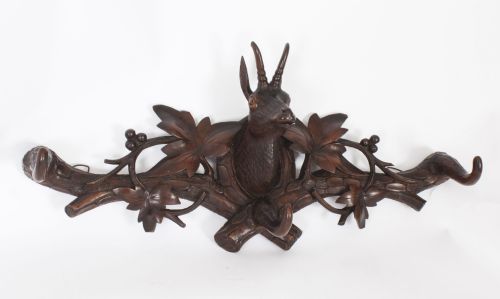
The objects function variously as coat racks, stick stands, and umbrella stands, with some incorporating mirrors or deer antlers and horn into the wall-hanging or freestanding timber structure. While bears dominate the regional output, other wildlife subjects such as foxes, eagles, and chamois goats appear in the evidence alongside oak and walnut longcase clocks.
Materials and Construction
Carvers utilise linden wood, lindenwood, oak, walnut, and general carved hardwood to shape these sculptural pieces, often combining hand carving with metal elements and glass components.
Makers construct the larger structures from solid timbers while employing meticulous hand-chiselling techniques to render realistic fur, musculature, and foliage details on the animal figures.
Listings span the nineteenth century, eighteen eighty, eighteen ninety, nineteen ten, nineteen twenty, and the Victorian period.
Assessing Quality
Quality rests in the depth and anatomical precision of the carving, distinguishing lifelike animal sculpture from stiffer, more generic regional work. The ambition of the composition - such as exhibition pieces featuring oak trees and multiple figures - separates standard hallway furniture from exceptional examples.
The Black Forest Hall Stand Glossary
- Black Forest
- A style of ornate wood carving originating from the wooded mountain region of Central Europe, famous for naturalistic animal figures. These works often depict bears engaged in human activities or standing as functional furniture.
- Linden wood
- A soft, pale timber frequently utilised by carvers for its fine, even grain and suitability for intricate detail. It allows deep undercut carving without splitting.
- Stick stand
- A designated piece of furniture designed to hold walking sticks and canes upright in a hallway. They frequently incorporate metal drip pans at the base to catch moisture.
- Chamois
- A goat-antelope native to European mountains, occasionally appearing carved in high relief on regional hat and coat racks. The horns and heads serve as natural hooks for garments.
Black Forest Hall Stand: Frequently Asked Questions
What is a black forest hall stand?
A black forest hall stand is a carved wooden entryway furnishing that typically incorporates animal figures, such as bears, to hold coats, hats, and walking sticks.
These functional sculptures combine decorative regional woodworking with practical utility for the home.
How were they used historically?
These pieces stood in entrance halls to receive wet umbrellas, walking sticks, hats, and heavy winter coats upon entering a home.
The integrated trays caught drips from umbrellas while the animal forms provided sturdy wooden pegs for garments.
What woods are commonly found?
Carvers utilised linden wood, walnut, and oak to construct these substantial entrance furnishings.
Linden wood offered a particularly receptive medium for deep, detailed animal carving.
How do I date these pieces?
Dating relies on examining the style of the carving, the timber used, and documented periods ranging from Victorian times through to the early twentieth century.
Exhibition pieces and specific stylistic markers help narrow down the decade of manufacture.