

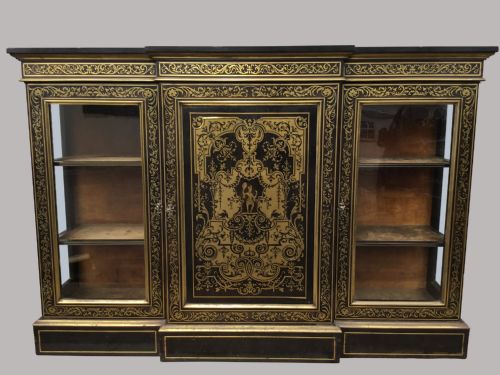


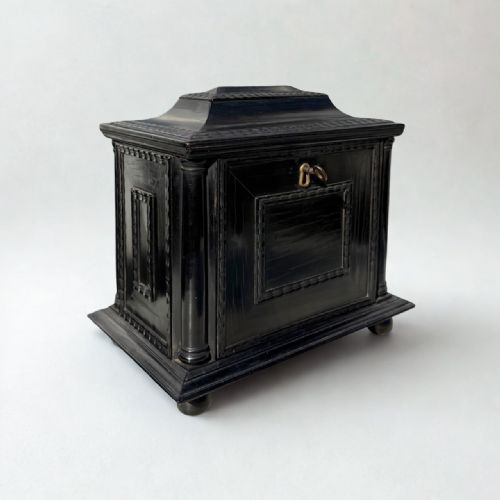


Black Ebony Cabinet
A black ebony cabinet brings architectural depth and rich dark tones to a room, offering serious presence for collectors.
Black Ebony Cabinet
When buyers search for a black ebony cabinet, they encounter dark, dense timbers spanning several centuries of cabinet-making. These pieces range from small table cabinets and caskets to grand side cabinets, credenzas, and bureau bookcases.
The selections available here lean heavily towards nineteenth-century interpretations, alongside earlier seventeenth and eighteenth-century examples. Forms vary from Flemish Baroque table cabinets to Regency collectors pieces and Victorian side cabinets.
Origins stretch across England, France, Flanders, and Dutch colonial territories, bringing diverse regional joinery traditions to the market. Walnut, kingwood, and ebonised woods frequently support or accompany the primary ebony surfaces.
Materials and construction methods
Construction relies on dense tropical hardwoods paired with supportive secondary timbers like walnut and standard wood carcasses. Artisans applied solid ebony veneers or utilised ebonisation techniques to achieve deep black finishes on alternative woods.
Fine decorative highlights incorporate contrasting brass, ormolu mounts, intricate parquetry, and Boulle marquetry work. Glass panels appear in display formats, while specialised pieces utilise porcelain inserts and delicate penwork.
Black Ebony Cabinet Retail Price Guide 2026
Typical asking prices for black ebony cabinet among the pieces listed under this phrase on Sellingantiques today, from the lower quarter to the upper quarter. They describe what is for sale here now, not the wider market.
One notable nineteenth-century piece carries the specific moniker of Samuel Pepys, linking heavy colonial cabinetry directly to famous British history.
Assessing quality and craftsmanship
Quality rests in the crispness of the parquetry, the integration of metal mounts, and the stability of the timber veneer over centuries. Superior examples display meticulous attention to detail in surface contrasting and structural joinery.
The sophistication of the hardware and the complexity of the internal arrangement separate standard utility pieces from exceptional collector items. Original mounts and uncompromised surface patination elevate the standing of any piece.
The Black Ebony Cabinet Glossary
- Ebony
- A dense, heavy black hardwood prized for its dark colour and smooth finish when polished. It forms the primary visual identity of these dark cabinets.
- Ebonised Wood
- Timber treated with stain, dye, or varnish to simulate the appearance of solid ebony. This technique allowed makers to achieve dark surfaces without using scarce solid exotic lumber.
- Boulle
- A form of marquetry employing tortoiseshell and brass inlay developed in France. It creates shimmering metallic patterns across dark cabinet doors and friezes.
- Parquetry
- Geometric mosaic woodwork arranged in patterns such as cubes or stripes. It decorates the flat surfaces of table cabinets and coffers.
- Ormolu
- Gilt bronze mounts applied to furniture for decorative enrichment. These metallic highlights contrast sharply against dark ebony grounds.
Black Ebony Cabinet: Frequently Asked Questions
How do I date a black ebony cabinet?
Dating relies on examining the secondary timbers, construction joints, and decorative vocabulary associated with specific periods like the seventeenth century or the Victorian era.
Stylistic markers such as Flemish Baroque parquetry or Regency Chinoiserie penwork also anchor pieces firmly in their respective decades.
Were these cabinets used for display or storage?
Function varied widely depending on the specific form, ranging from small table caskets for precious items to large sideboards and credenzas for dining rooms.
Display cabinets and shelves were built to showcase porcelain and curiosities, while bureau bookcases combined writing surfaces with enclosed storage.
How do I care for antique ebony and ebonised surfaces?
Maintenance requires stable indoor humidity and temperature to prevent timber movement, shrinkage, or veneer lifting across large flat panels.
Gentle dusting with a soft, dry cloth preserves the polished dark finish without stripping the historical wax patination.
What is the difference between solid ebony and ebonised wood?
Solid ebony utilises the naturally heavy, dark tropical hardwood throughout the visible decorative elements of the construction.
Ebonised wood uses a domestic or alternative timber painted, stained, or chemically treated to mimic the dark tone of true ebony.