

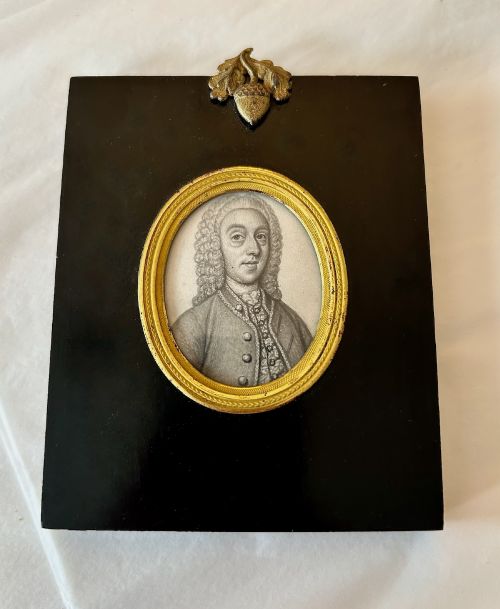
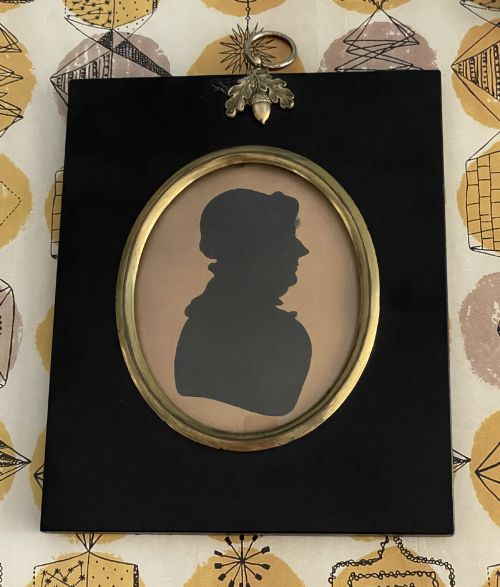
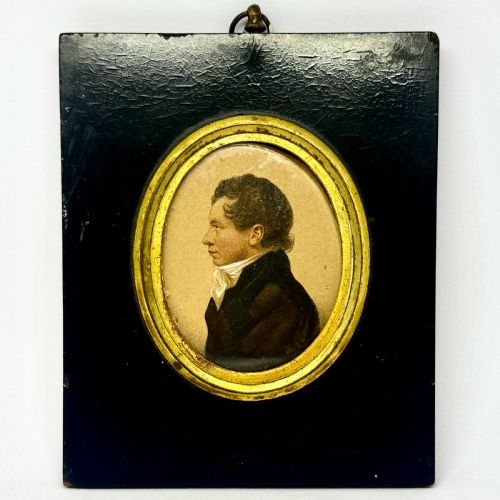


Black Ebonised Silhouette Frame
A black ebonised silhouette frame holds the sharp profile likenesses that defined Georgian and Regency portraiture long before photography arrived.
Black Ebonised Silhouette Frame
When you search for a black ebonised silhouette frame, you are looking at dark-toned surrounds that house intimate 18th and 19th century profile portraits. These pieces capture sitters from the Georgian, Regency, and wider 19th century periods in striking monochrome.
The versions you are most likely to meet on this page include framed wall art and miniature portraits executed on paper, glass, or painted surfaces. They present distinct historical subjects, ranging from named individuals like Mrs Grace Williams to anonymous gentlemen and children.
Materials and construction
These items rely on ebonised wood to create the dark, high-contrast borders that frame the inner artwork. Artisans also incorporated glass to protect delicate paper cutouts or reverse-painted glass panels.
Makers added subtle depth to the dark profiles using gold leaf for uniform detailing on garments and jewellery. Brass elements and ink or paint completed the construction of these intimate framed wall pieces.
Black Ebonised Silhouette Frame Retail Price Guide 2026
Typical asking prices for black ebonised silhouette frame among the pieces listed under this phrase on Sellingantiques today, from the lower quarter to the upper quarter. They describe what is for sale here now, not the wider market.
One cheerful piece captures the likeness of a small child framed for posterity.
Judging quality in silhouette frames
The distinction between standard examples and superior pieces rests on the precision of the cut or the fineness of the paintwork. Skill in applying gold leaf highlights determines whether a profile possesses true character or flat uniformity.
Historical documentation and clear provenance elevate individual works significantly, transforming a simple likeness into a piece with recorded identity. The integration between the ebonised wood surround and the protective glass further indicates the original maker's standard of finish.
George Atkinson·James Gillespie·Thomas London·John Miers
The Black Ebonised Silhouette Frame Glossary
- Ebonised wood
- Timber treated to imitate ebony, providing the deep black finish characteristic of these frames. This process allowed makers to achieve a uniform dark surface using more accessible woods.
- Reverse painted glass
- A technique where the artist paints directly onto the rear side of the glass so the image is viewed through the front. This method produced a glossy, preserved surface for delicate silhouette details.
- Cut paper picture
- A portrait or decorative scene created entirely by snipping paper with scissors or a knife. These cutouts were often mounted against a contrasting light background inside the frame.
- Portrait miniature
- A small-scale painting or likeness designed for personal contemplation rather than grand display. These works required immense precision due to their restricted physical dimensions.
Black Ebonised Silhouette Frame: Frequently Asked Questions
What periods do these silhouette frames come from?
The pieces span the 18th century, the Georgian era, the Regency period, and the broader 19th century. Each era brought subtle shifts in framing styles and portrait techniques.
Collectors can often date pieces by examining the framing materials, the hairstyle of the sitter, and the style of the handwritten identification on the reverse.
How were original silhouettes created?
Makers either cut profiles directly from black paper or painted the likeness onto card, plaster, or glass. Some artists painted directly onto the reverse of the glass for a luminous finish.
Gold leaf was frequently added by hand to highlight buttons, lace, and uniform details after the main silhouette was fixed.
Are the sitters usually identified?
Many pieces remain anonymous, showing simply a gentleman, lady, or child from the period. However, surviving examples sometimes record the sitter's name and the date directly on the backing.
Named portraits provide a direct link to historical individuals, which adds considerable interest for researchers and collectors.
How do I display these frames at home?
These compact works suit small wall spaces where they can be viewed closely at eye level. Grouping several frames together creates a traditional gallery effect that mirrors historic interior arrangements.
Keep them away from direct sunlight to protect the fragile paper, paint, and ink used within the ebonised surrounds.