



Black Dress Oil Portrait
A black dress oil portrait captures the quiet gravity and texture of historical sitters, bringing centuries of painted presence directly into a room.
Black Dress Oil Portrait
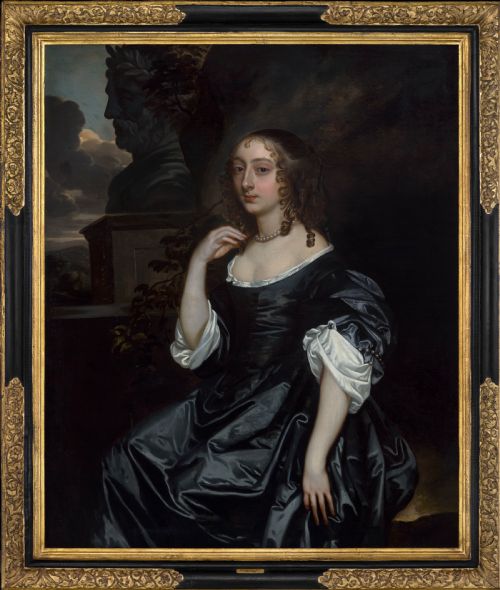
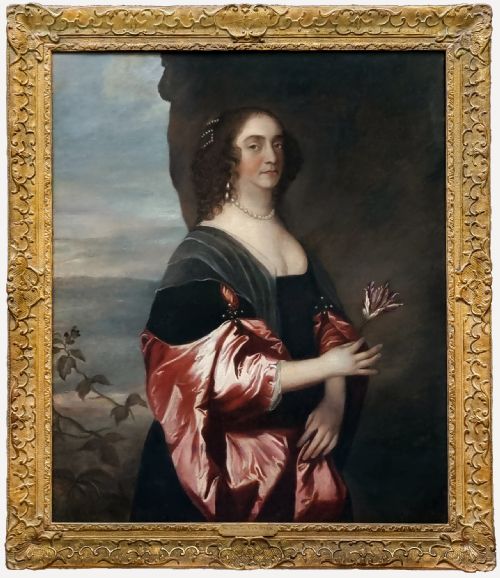
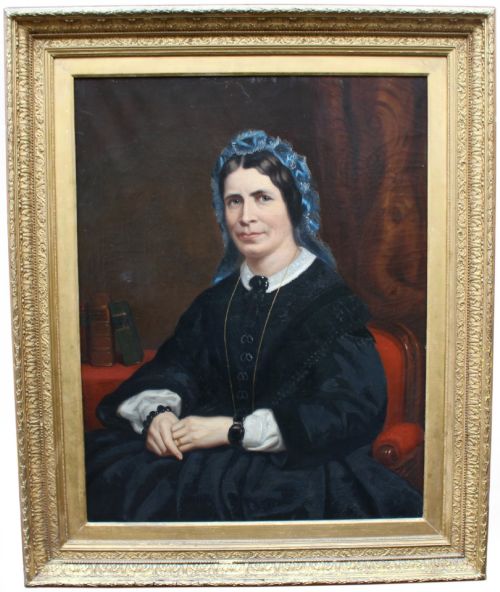
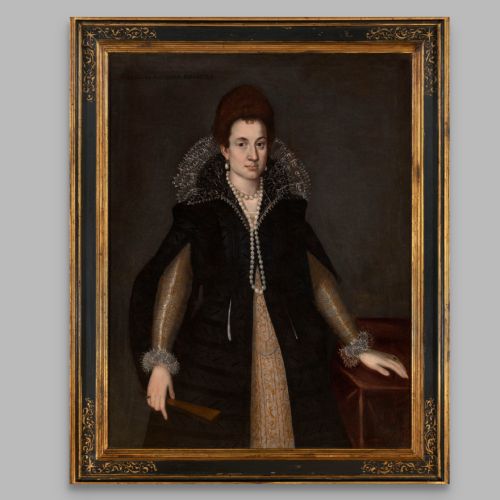
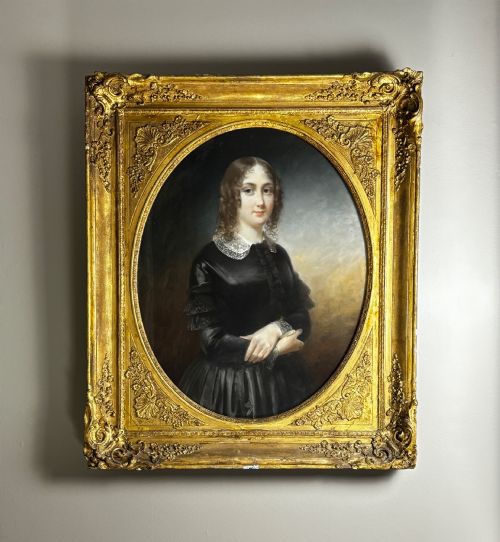
A black dress oil portrait brings together historic subjects rendered in sombre attire, spanning centuries from the seventeenth century through the Victorian era. The selection ranges from Jacobean depictions of noblewomen in ruffs to nineteenth-century canvases showing sitters in lace caps and shawls.
Jacobean and seventeenth-century pieces present sitters with precise collars and dark garments, while Victorian works often feature softer brushwork on wood panel or canvas. Each piece captures a distinct social standing through the rendering of dark fabric and subtle ornamentation.
Materials and technique
Paintings in this group are executed in oil paint upon prepared canvas, wood panel, or cradled panel surfaces. Artisans applied pigments to build depth in heavy garments, sometimes setting the work within decorative giltwood frames finished with gold leaf.
Execution involves layering oil medium to capture the sheen of dark textiles, lace cuffs, and pearls against subdued backgrounds. Many surviving works retain their original timber supports and period frames.
Black Dress Oil Portrait Retail Price Guide 2026
Typical asking prices for black dress oil portrait among the pieces listed under this phrase on Sellingantiques today, from the lower quarter to the upper quarter. They describe what is for sale here now, not the wider market.
Several solemn ladies share wall space with small dogs and children wearing immaculate lace caps.
Judging quality and depth
The preservation of the original paint surface and the stability of the wood panel or canvas dictate the structural integrity of the piece. Works that retain their period gilt frames carry greater historical cohesion.
Sir Peter Lely·Cornelius Johnson·Pietro Fachetti·John Raphael Smith·Walter Emsley
The Black Dress Oil Portrait Glossary
- Oil on canvas
- A painting technique where pigment mixed with drying oil is applied to stretched woven fabric. This method allows for subtle blending of tones across large surfaces.
- Wood panel
- A flat timber support used instead of canvas for early paintings. Panels provide a rigid base that often survives centuries with minimal distortion.
- Giltwood
- Timber carved and coated with gold leaf or metallic powder. This material frames many traditional portraits to accent the dark tones within the composition.
- Lace ruff
- A stiffened pleated collar worn in the sixteenth and seventeenth centuries. Its intricate geometry demands careful brushwork from the artist.
Black Dress Oil Portrait: Frequently Asked Questions
How do I date a black dress oil portrait?
Dating relies heavily on the sitter's clothing, particularly the style of collars, lace, and bonnets shown in the canvas. Examining the construction of the wood panel or canvas support provides further chronological clues.
Comparative study with known studio works from the seventeenth or nineteenth centuries helps narrow the decade of creation. Secondary records or inscriptions on the reverse of the frame often confirm the sitter's identity and year.
Where should I hang an oil portrait?
Oil portraits require stable indoor environments away from direct sunlight and sudden temperature shifts. Placing them on interior walls protects the canvas and gilt frame from environmental stress.
Lighting should be gentle and indirect to prevent glare on the varnished surface. Allowing adequate wall space lets the heavy dark tones of the attire anchor the room's decor.
What is the difference between panel and canvas portraits?
Panel portraits utilise solid wood blocks as a support, which was common in earlier centuries such as the Jacobean period. Canvas supports became more widespread later, offering flexibility and lighter weight for larger formats.
Both methods require specific conservation approaches to manage cracking or warping over time. The choice of support often reflects the prevailing workshop practices of the artist's era.
How should I clean an antique oil painting?
Surface dust should be removed very gently using a soft, dry brush without touching the painted layer. Professional conservators should handle deeper cleaning or the removal of aged varnish.
Applying domestic cleaning solutions or water can permanently damage the delicate oil pigments and underlying gesso. Regular monitoring by eye is the safest way to maintain the artwork's condition.