


Black Display Table
A black display table brings dark polish and sculptural height to a room, holding small treasures with quiet authority.
Black Display Table
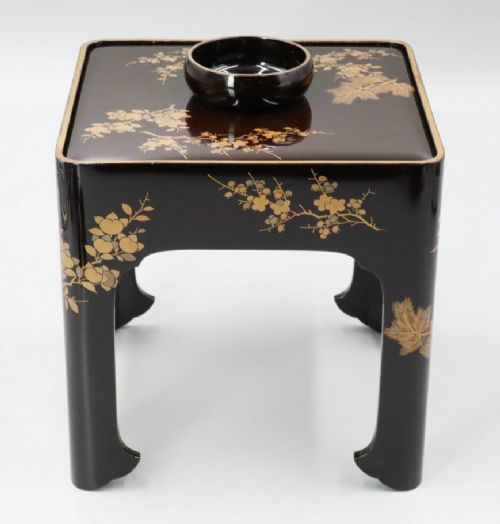
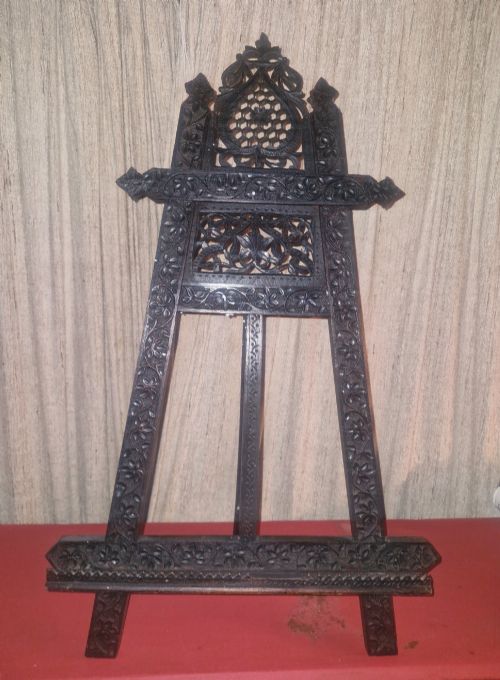
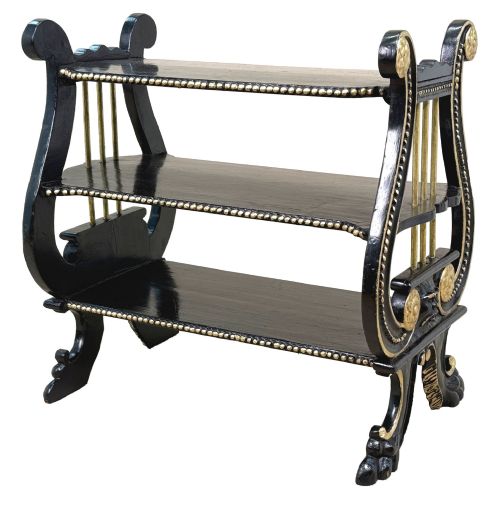
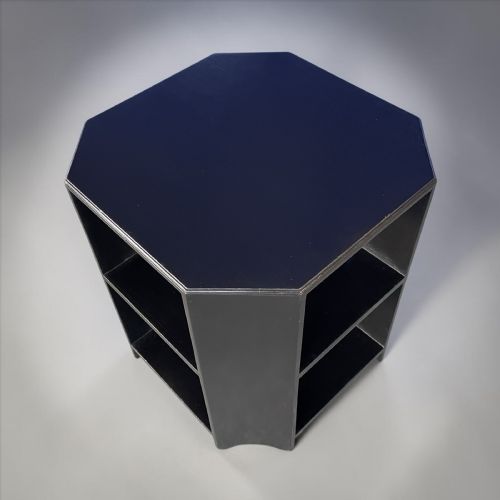
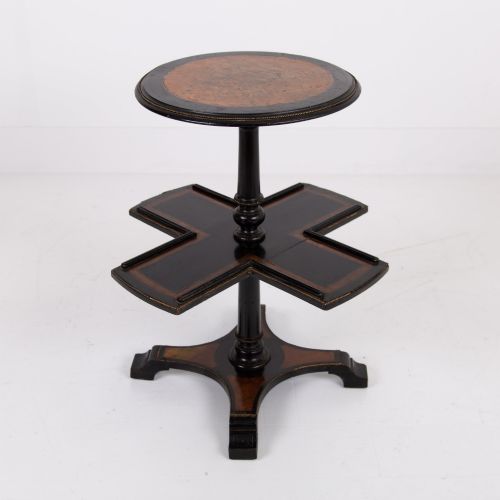
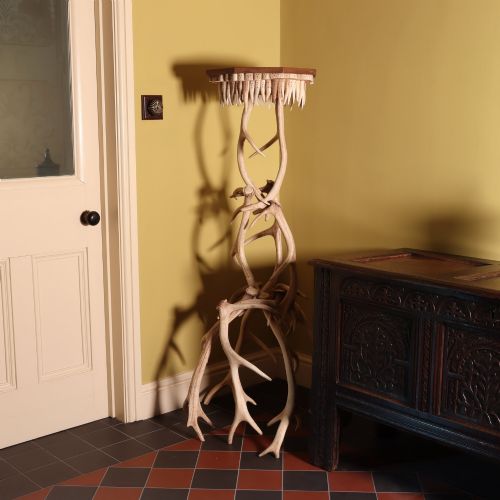
A black display table encompasses ebonised side pieces, plant stands, and étagères designed to elevate ornaments and plants. These surfaces emerge across the Victorian and Edwardian eras, drawing on Japanese Meiji design, Aesthetic Movement ideals, and Regency forms.
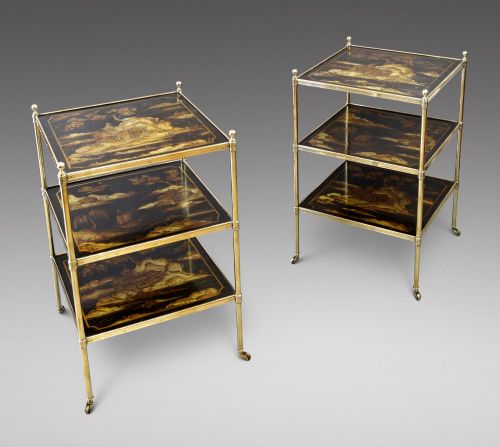
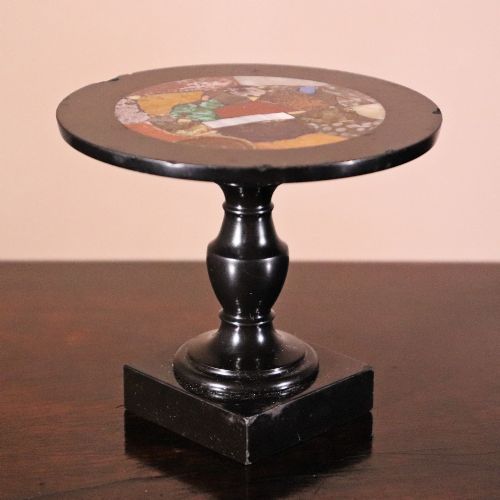
Most examples rely on ebonised wood or lacquer to achieve their dark finish, sometimes set with porcelain panels, marble inserts, or brass mounts. They function as staging points for collections, carrying everything from miniature tables to tall pedestals.
The selection here favours timber surfaces treated with dark finishes, alongside Oriental lacquerware and bamboo frames. Buyers encounter side tables and display stands that span nineteenth-century workshops to early twentieth-century production.
How they were made
Cabinetmakers utilised hardwoods like elm, rosewood, and amboyna, applying ebonising treatments to mimic costly ebony. Surface decoration frequently involved parcel gilding, penwork, or painted lacquer layers sealed to a hard sheen.
Assemblers integrated brass handles, ormolu mounts, iron frames, and glass panels into the wooden structures. Marble tops, including Ashford specimen marble and rouge marble, provided heavy, cool surfaces inset into wooden frames.
Materials range from ebonised elm and rosewood to brass, statuary iron, and Ashford specimen marble.
What varies in quality
The distinction between ordinary and exceptional work rests on the depth of the ebonising and the precision of the joinery. Finer tables display crisp carving, secure parcel gilding, and well-fitted marble or porcelain inserts that sit flush with the surrounding wood.
Material choice dictates the standing of a piece, with solid hardwoods and genuine lacquer outperforming softer secondary timbers given a simple dark stain. Details such as brass inlay, hand-carved plant stands, and signed maker stamps elevate specific examples above standard production.
Liberty of London·Bertram & Son·Jennens & Bettridge·Quincy Showcase Works
The Black Display Table Glossary
- Ebonised
- Wood treated with stain or paint to imitate ebony. This finish became widespread in Victorian cabinetmaking.
- Étagère
- A set of open shelves for displaying small objects. These pieces often feature slender ebonised supports.
- Meiji
- The period in Japanese history spanning from 1868 to 1912. Japanese export pieces from this era heavily influenced European Aesthetic design.
- Jardiniere
- A decorative pot or stand for holding plants and flowers. They frequently incorporate waterproof inserts of metal or porcelain.
- Ormolu
- Gilded bronze mounts applied to furniture. These decorative elements add metallic contrast to dark wooden surfaces.
Black Display Table: Frequently Asked Questions
How do I style a black display table?
Pair the dark surface with pale ceramics, glass objects, or bright botanicals to create visual contrast. Keep surrounding furniture lighter so the ebonised wood stands out as a deliberate focal point.
Allow enough clearance around taller plant stands and pedestals so their silhouettes remain clear. Use multi-tiered étagères to group small collections without cluttering the main surface.
Are these tables sturdy enough for plants?
Many of these pieces were specifically built as plant stands, jardiniere supports, and torchieres to hold heavy pots. Solid hardwood and iron frames provide adequate stability for daily use.
Protect vulnerable lacquer and ebonised finishes from moisture by using saucers beneath pots. Wipe away spills promptly to preserve the dark polish.
How do I care for ebonised wood?
Dust regularly with a soft, dry cloth to prevent grit from scratching the dark finish. Avoid placing tables near direct heat sources or strong sunlight, which can fade the ebonised treatment over time.
Apply a minimal amount of appropriate furniture wax only when the wood appears dry. Buff gently to maintain the soft sheen characteristic of nineteenth-century surfaces.