



Black Display Shelving
These black display shelving options offer versatile platforms for display, uniting dark finishes with practical tiered storage across nineteenth and early twentieth century designs.
Black Display Shelving
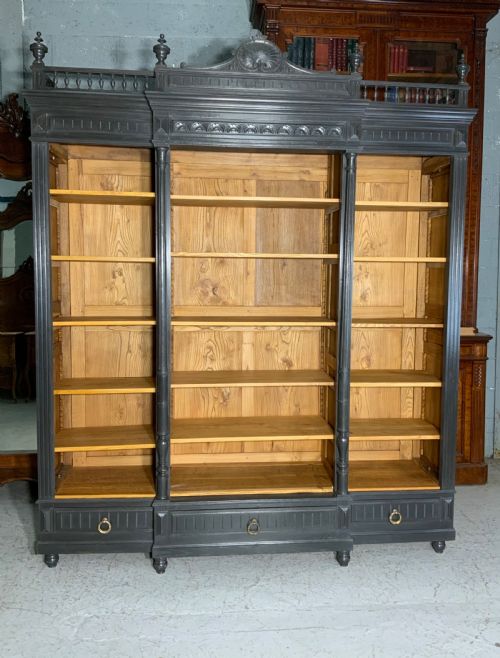
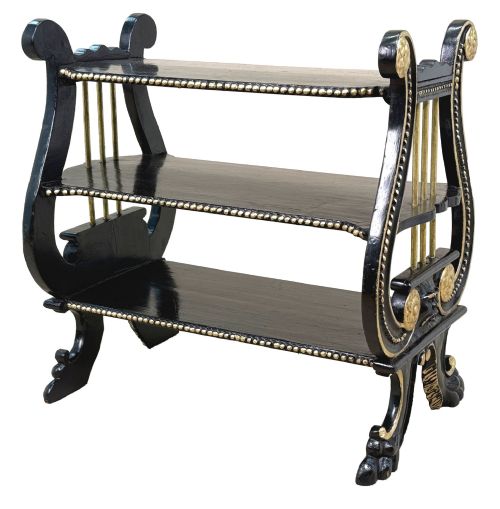
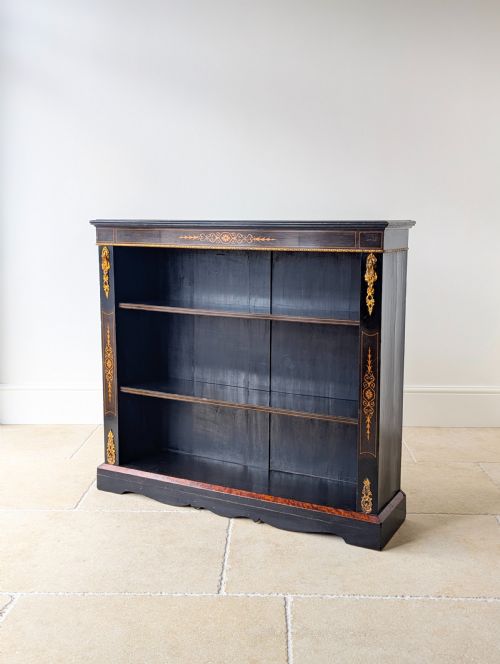
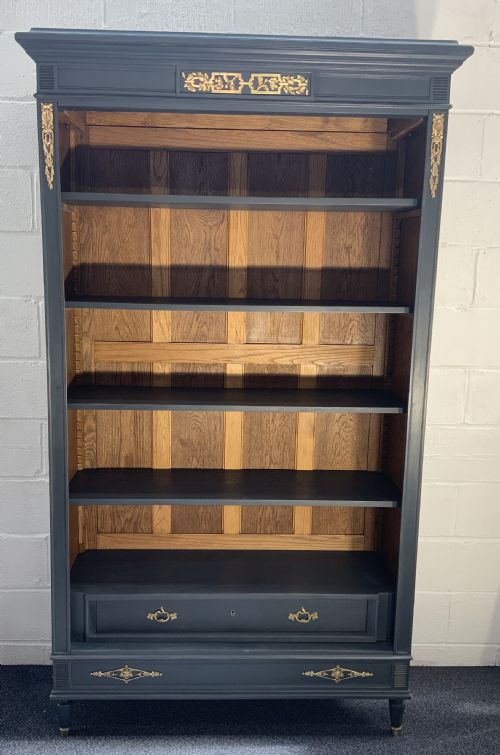
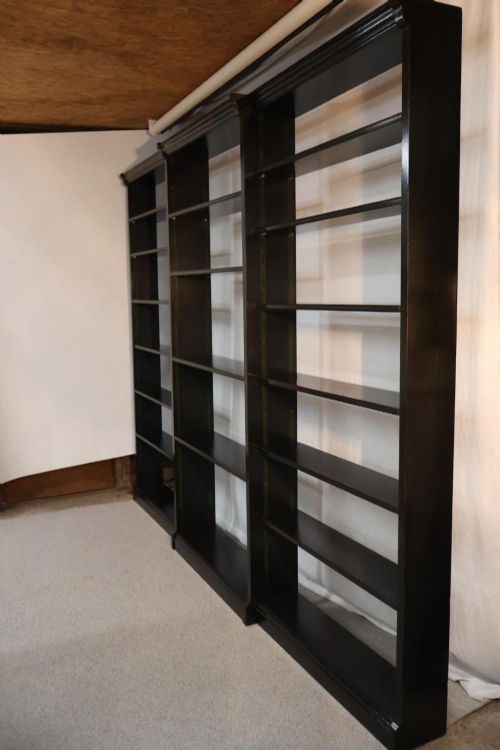
Black display shelving encompasses bookcases, etageres, wall shelves, and whatnots sourced predominantly from the nineteenth and early twentieth centuries. These pieces serve to organise books and decorative objects while providing a strong visual anchor in a room.
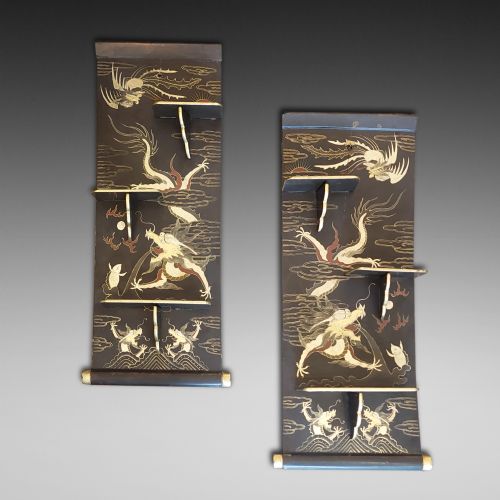
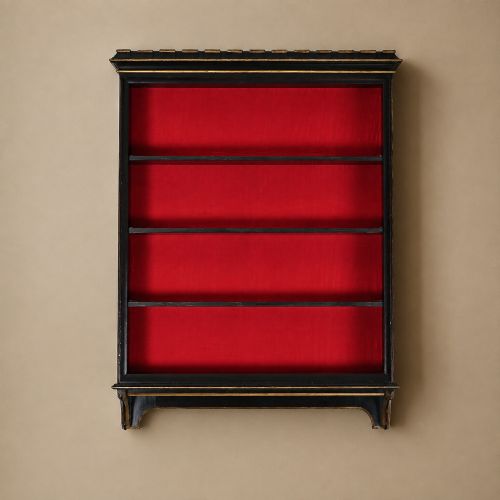
The selection on this page relies heavily on Victorian and Edwardian examples alongside specific regional interpretations such as French and Chinese designs. Buyers encounter everything from hanging wall shelves to multi-tiered freestanding dumb waiters.
Dark surfaces dominate the inventory through ebonised wood, painted finishes, and bamboo. These materials lend themselves to varied aesthetic movements, including Chinoiserie, Gothic Revival, and the Aesthetic Movement.
Materials and construction methods
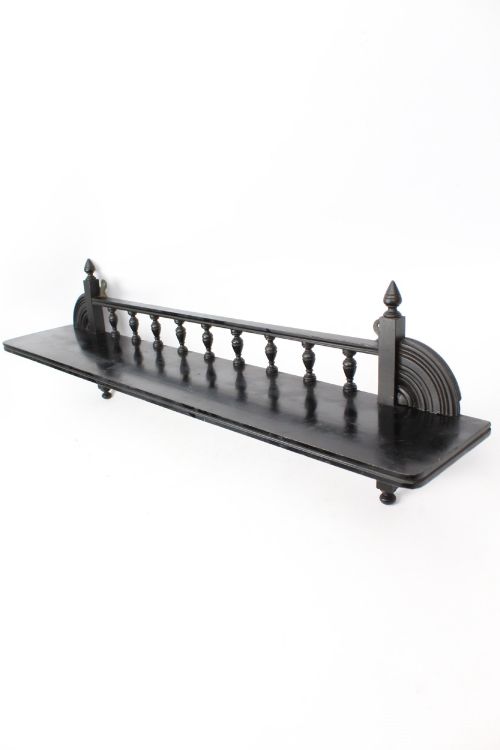
Makers utilised ebonised timber, painted pine, and natural bamboo to achieve the signature dark tones of these pieces. Ebonisation involved treating hardwoods to imitate costly ebony, frequently paired with parcel gilding or brass embellishments.
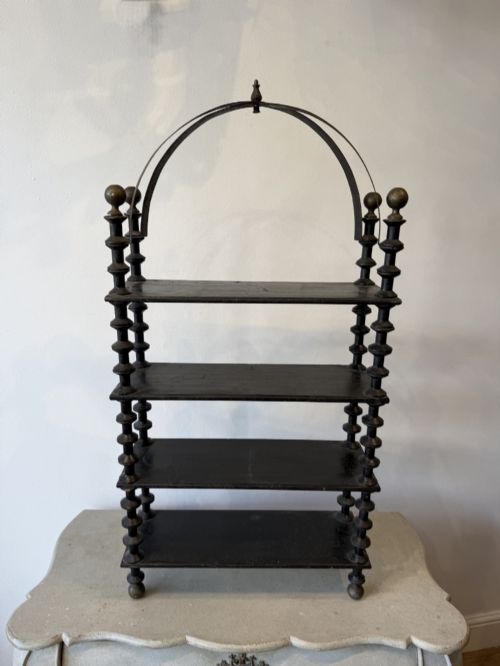
Structural variety stems from traditional joinery suited to tiered etageres, open bookcases, and wall-mounted shelving units. Lighter frames incorporated bamboo or wrought iron, whereas substantial bookcases relied on solid woods and fixed or adjustable internal shelving.
Black Display Shelving Retail Price Guide 2026
Typical asking prices for black display shelving among the pieces listed under this phrase on Sellingantiques today, from the lower quarter to the upper quarter. They describe what is for sale here now, not the wider market.
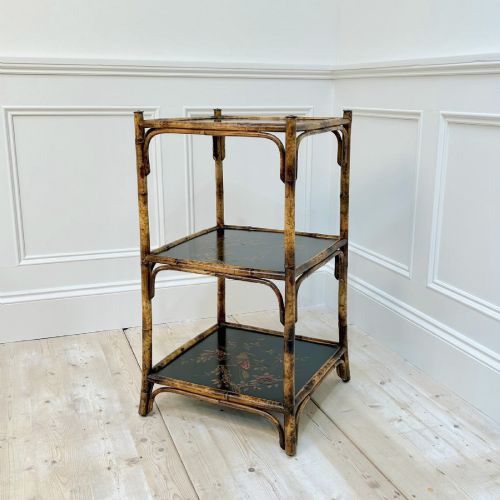
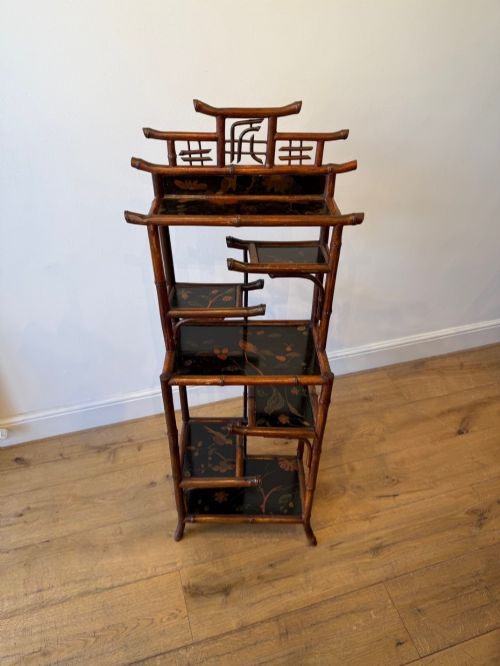
Some nineteenth-century makers cleverly repurposed bamboo as a sturdy structural skeleton for delicate lacquer display shelves.
Assessing quality and craftsmanship
Superior pieces display thoughtful integration of decorative details such as hand-carved motifs, parcel gilding, and quality brass mounts. Craftsmanship reveals itself in the stability of multi-tiered stands and the crisp execution of stylistic details like Chinoiserie lacquer work.
The integrity of the ebonised or painted finish significantly impacts the overall impression of a piece. Finer examples maintain an even, deep colouration that complements the underlying timber without obscuring delicate mouldings or structural joins.
George Edmund Street·Wedgwood
The Black Display Shelving Glossary
- Ebonised wood
- Timber treated with stain, dye, or polish to simulate true ebony. This finish gained popularity during the Victorian period for its striking contrast against gilded accents.
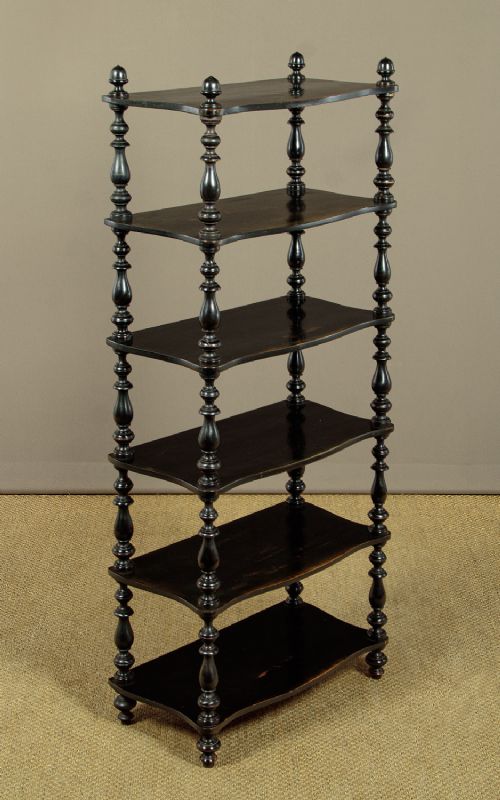
- Étagère
- A piece of furniture consisting of open shelves for displaying ornaments. Originating in France, these tiered stands appear frequently in bamboo and ebonised variations.
- Whatnot
- A freestanding set of open shelves used for small ornaments and books. They emerged in the nineteenth century and often feature multiple tiers supported by slender uprights.
- Aesthetic Movement
- A late nineteenth-century design current that emphasised visual beauty over narrative content. Pieces from this movement often incorporate ebonised surfaces and orientalising motifs.
Black Display Shelving: Frequently Asked Questions
How do I style black display shelving in a modern interior?
These dark finishes provide a grounding contrast against neutral walls, making them ideal for highlighting collections of ceramics, glassware, or books. Their varied silhouettes allow them to function as focal points in living rooms or studies.
Grouping items with contrasting textures and lighter tones on the shelves creates balance and visual depth. Consider the scale of the room to ensure freestanding etageres or hanging shelves do not overwhelm the surrounding space.
What is the difference between an etagere and a whatnot?
An etagere is typically designed specifically for the display of decorative objects across multiple open tiers. These pieces often feature lighter frames in materials like bamboo or ebonised wood.
A whatnot serves a similar multi-tiered function but historically accommodated a broader mix of small personal items and books. Both forms offer practical vertical storage with distinct aesthetic lineages from the nineteenth century.
How should I care for ebonised wood surfaces?
Maintain ebonised timber by dusting regularly with a soft, dry cloth to prevent particulate buildup. Avoid placing these pieces in direct sunlight or near heat sources to protect the dark finish from fading.
Apply a microcrystalline wax sparingly if the surface requires conditioning, avoiding silicone-based polishes. Proper humidity control in the room will also help preserve the integrity of the underlying wood and joints.