




Black Cane Chair
A black cane chair brings dark elegance and woven texture to a room, ranging from Regency ebonised models to Anglo-Indian carved pieces.
Black Cane Chair
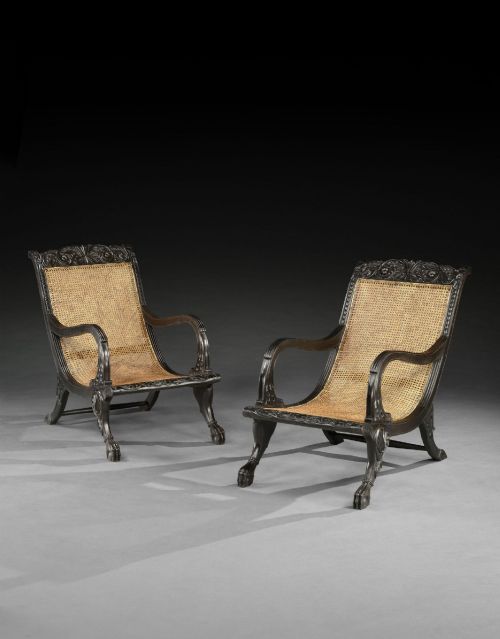
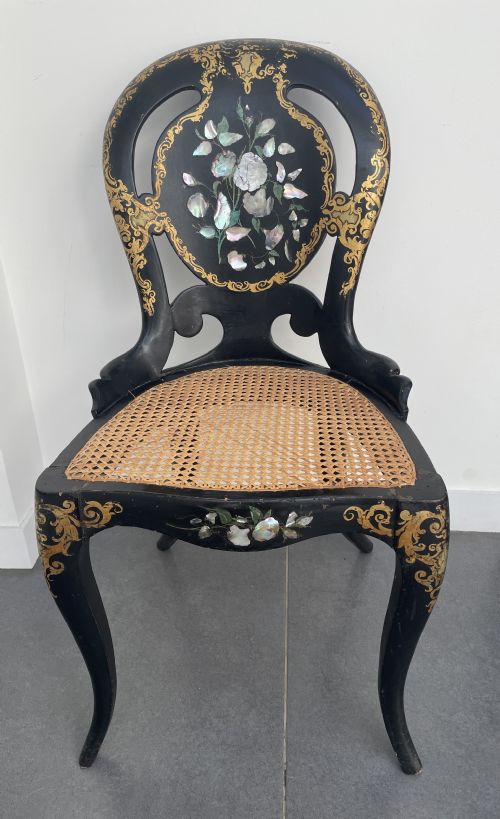
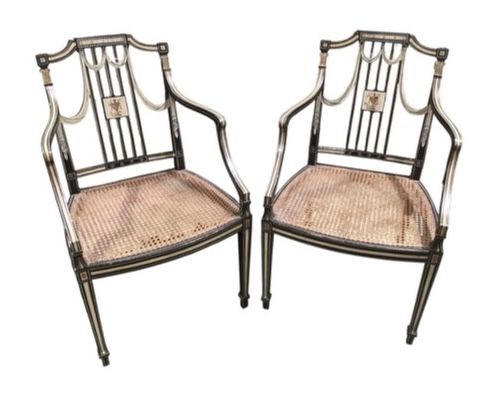
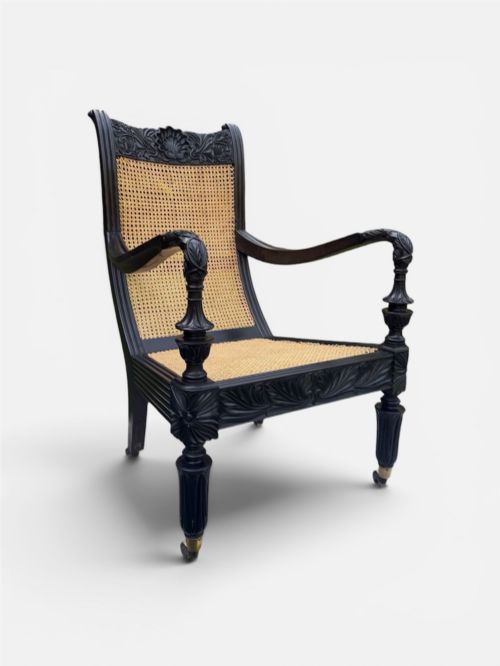
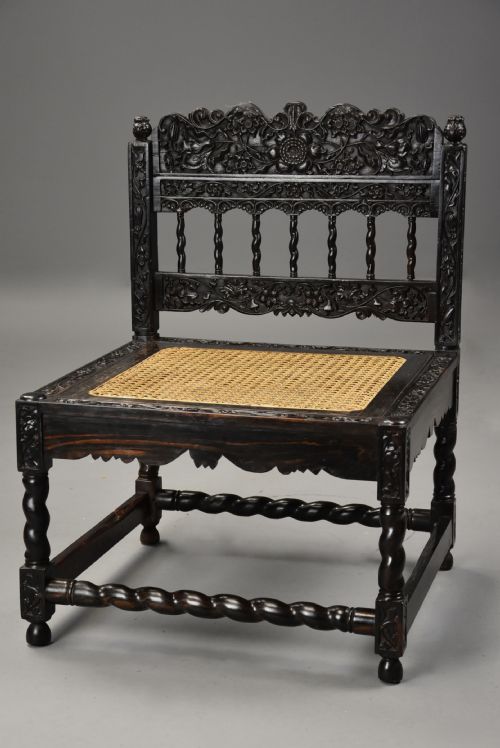
A black cane chair encompasses armchairs, side chairs, dining chairs, and rocking chairs originating from periods spanning the seventeenth to the twentieth centuries. The selection includes Regency ebonised frames, Victorian papier-mâché models, and solid ebony Anglo-Indian pieces from Ceylon and the Coromandel Coast.
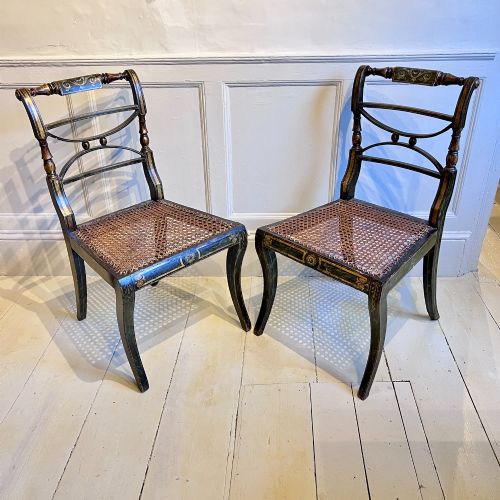
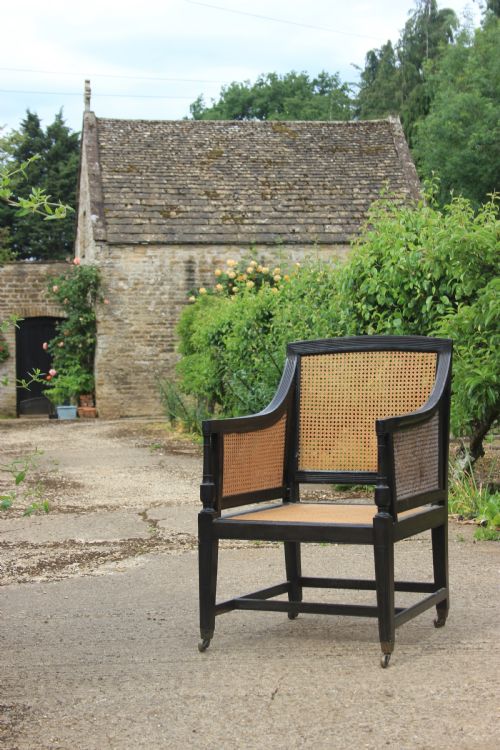
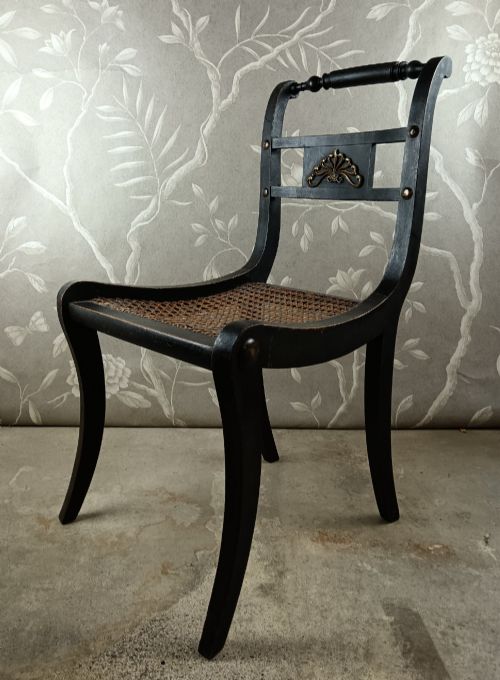
Buyers most frequently encounter Regency ebonised designs alongside painted and japanned variations. These seating forms range from library armchairs and Trafalgar sabre leg side chairs to children's high chairs and rocking chairs.
The styles recorded in the inventory stretch from classical Regency and Victorian revivals to Chinoiserie, Art Nouveau, and Aesthetic Movement designs. Workshop origins vary widely, touching English cabinet makers as well as continental bentwood manufacturers.
Materials and Construction
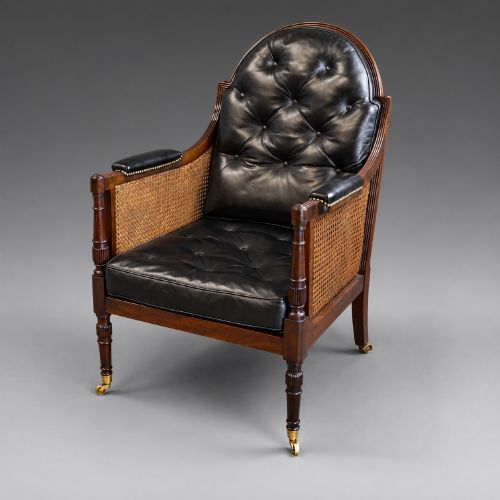
Construction relies upon dense hardwoods and structural timbers such as beech, walnut, and mahogany, transformed through ebonising, paint, or dark lacquer. Natural cane is woven directly into the seat frames or bergere backs to provide resilient support.
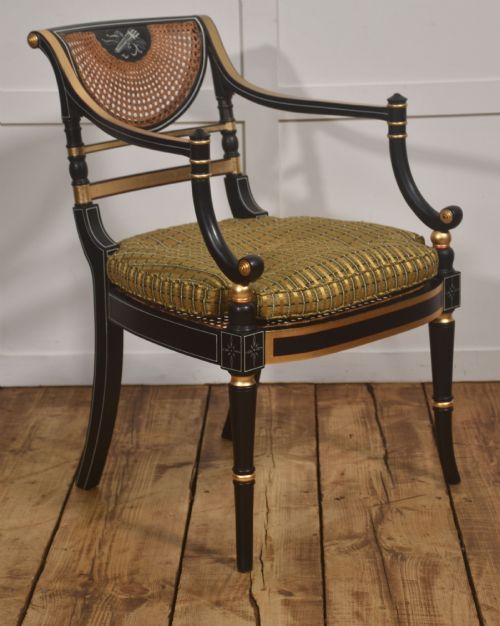
Surface decoration incorporates intricate hand-carving, mother of pearl inlay, and parcel gilding over dark grounds. Japanning and painted finishes achieve the desired sombre tone on woods that lack the natural black density of solid ebony.
Black Cane Chair Retail Price Guide 2026
Typical asking prices for black cane chair among the pieces listed under this phrase on Sellingantiques today, from the lower quarter to the upper quarter. They describe what is for sale here now, not the wider market.
Listings feature solid ebony, beech, and walnut, alongside ebonised wood, paint, lacquer, and brass materials.
Distinctions in Execution
The hierarchy of quality rests upon the crispness of the turning and carving, particularly evident in elaborate sabre legs, bobbin turnings, and deep floral reliefs on solid ebony. Superior examples display refined proportions and hand-woven cane work that remains taut and uniform across the frame.
Subtle details such as original parcel gilding, intact japanned motifs, and period-appropriate joinery elevate certain seating forms above standard production. The distinction between a simply painted surface and a deeply ebonised or solid exotic hardwood frame defines the upper tiers of the collection.
Gillows·E W Godwin·Thonet
The Black Cane Chair Glossary
- Bergere
- An upholstered or caned armchair with closed sides, popular during the Regency period. The cane work provides a light, breathable back and seat structure.
- Ebonised
- Wood treated with stain, paint, or polish to imitate the deep black colour of ebony. This finish was heavily favored during the nineteenth century for formal seating.
- Japanning
- European imitation of East Asian lacquerwork involving layered varnishes and metallic dust. It creates a dark, glossy decorative surface often found on Chinoiserie furniture.
- Sabre leg
- A curving, outwardly tapering chair leg resembling a cavalry sabre. This form is characteristic of Regency furniture design.
- Bentwood
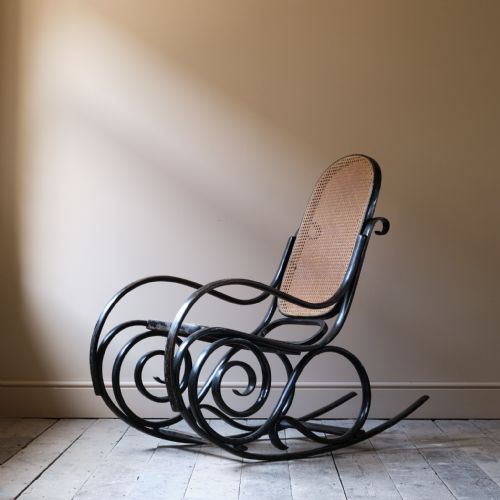
- Wood heated with steam and bent into curved structural shapes. This technique defines nineteenth-century rocking chairs and children's seats.
Black Cane Chair: Frequently Asked Questions
How do I care for antique cane?
Keep the woven cane hydrated by wiping it occasionally with a damp sponge and warm water. Avoid placing these chairs near direct heat sources that can dry out and snap the natural fibres.
Allow the cane to dry naturally after cleaning before anyone sits on the seat again. Weight distribution matters, so avoid kneeling directly on the woven surface.
Are ebonised chairs made of ebony?
Most ebonised chairs consist of a more common timber like beech or mahogany finished with a black stain or paint. Solid ebony examples do exist, particularly within Anglo-Indian furniture imported from Ceylon and the Coromandel Coast.
Examining the underside or wear points reveals the underlying timber grain. Solid ebony feels significantly heavier than painted or stained native European woods.
Can I use a Victorian rocking chair daily?
Victorian bentwood and ebonised rocking chairs were built for domestic relaxation and handle normal sitting well. However, eighteenth and nineteenth-century joints benefit from gentle use rather than heavy daily stress.
Check the stability of the rockers and cane work periodically. Placing them on flat carpets prevents uneven strain on the curved wooden feet.