





Black Blanket Chest
A black blanket chest offers robust storage, uniting dark surfaces with sturdy timber construction across eras from the eighteenth century onward.
Black Blanket Chest
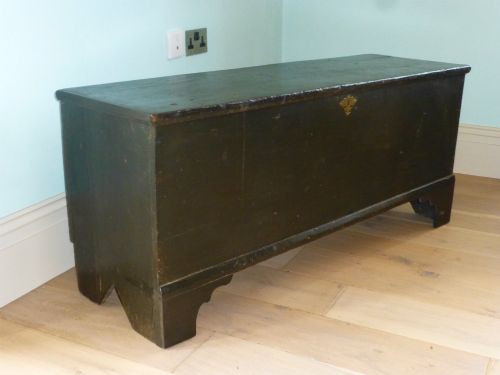
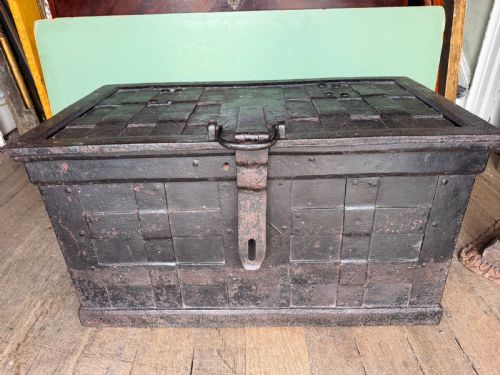
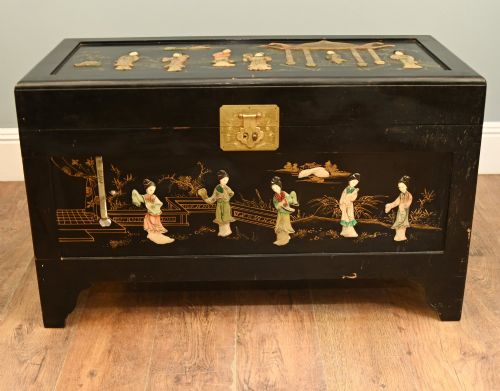
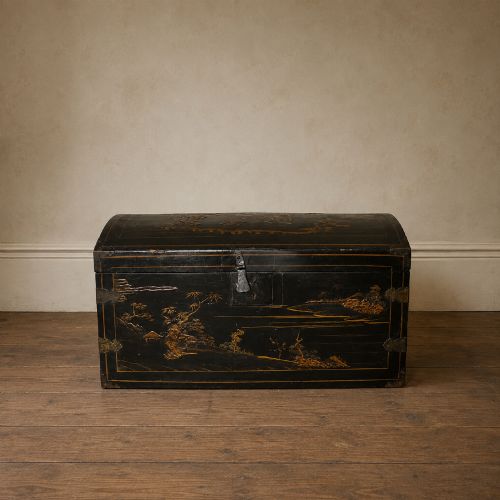
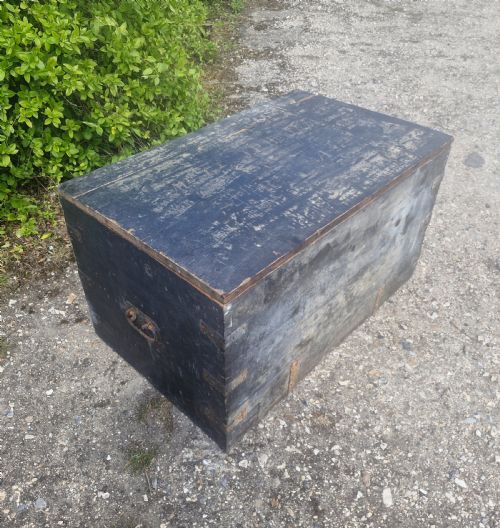
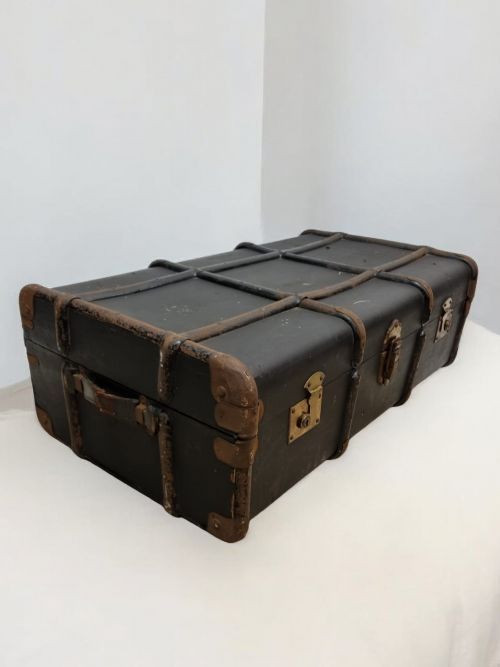
A black blanket chest functions primarily as a substantial storage box for textiles and household belongings, appearing in various forms such as travel trunks, blanket boxes, and seafaring coffers. Buyers searching for a black blanket chest encounter sturdy timber containers finished in dark lacquer, paint, leather, or ebonised surfaces.
The pieces on this page span several centuries, with nineteenth-century examples and Victorian models appearing frequently alongside eighteenth-century coffers and early twentieth-century travel trunks. Origins vary widely from English workshops and Scandinavian provinces to Chinese export houses and Anglo-Indian makers.
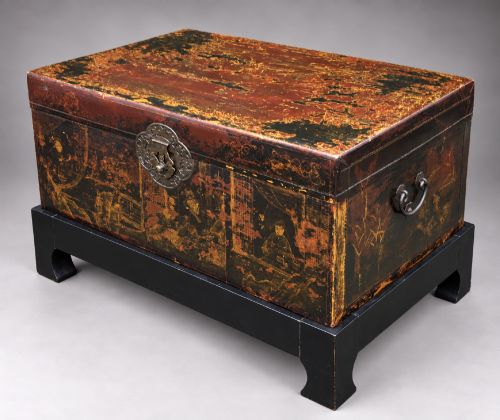
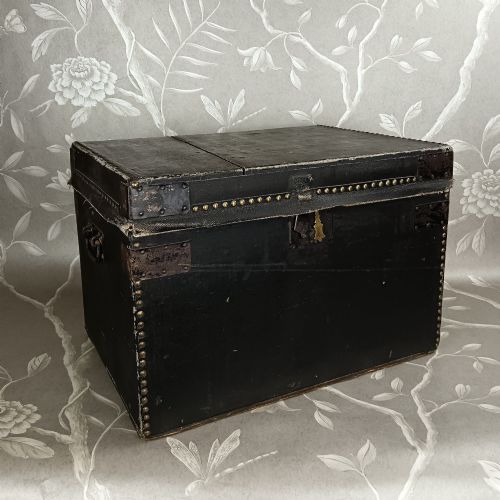
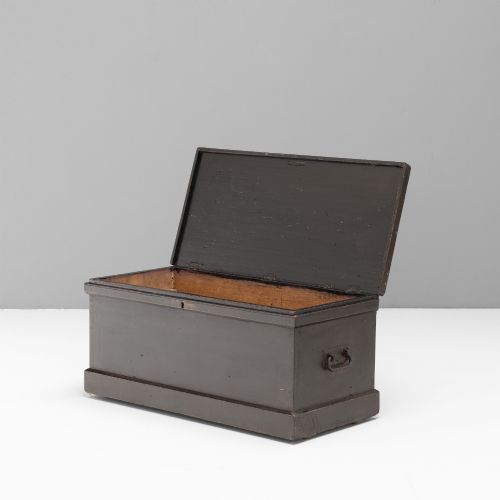
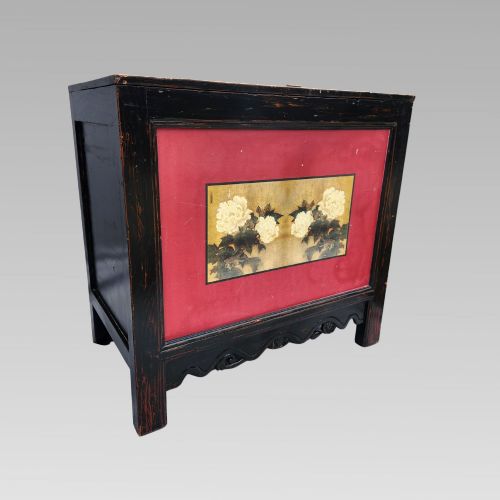
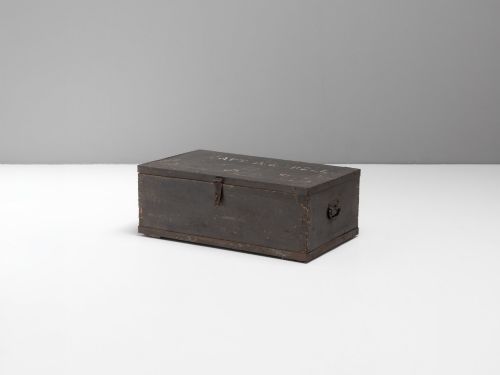
Forms range from domed travelling trunks and campaign chests with brass fittings to flat-topped pine kists and lacquer storage boxes on stands. Each version reflects the utilitarian needs of transport, seafaring, or domestic storage adapted through regional craftsmanship.
How they were made
Maker's workshops utilised solid timbers such as pine, camphorwood, and hardwood as structural foundations, frequently reinforcing corners and edges with iron straps, brass banding, and heavy hardware. Leather cladding and canvas coverings fastened with nailhead details provided weather resistance for travel and marine use.
Surface finishes involved dark paint, ebonising, or black lacquer, sometimes enhanced with gilt decoration, floral chinoiserie, or pig skin. Traditional joinery methods secured panels and lids, accommodating the heavy usage demanded of campaign trunks, tool chests, and storage coffers.
Black Blanket Chest Retail Price Guide 2026
Typical asking prices for black blanket chest among the pieces listed under this phrase on Sellingantiques today, from the lower quarter to the upper quarter. They describe what is for sale here now, not the wider market.
Listings for a black blanket chest combine pine, camphorwood, and hardwood structures finished in black lacquer, leather, paint, or iron reinforcement.
What varies in quality
The standard of a black blanket chest rests upon the integrity of its original construction and the preservation of its surface finish, whether hand-applied lacquer, painted pine, or stitched leather. Pieces retaining their original brass hardware, working locks, and fitted interior compartments hold greater integrity.
Origin and decorative detail distinguish finer examples, such as Chinese export lacquer with detailed gilt work or Anglo-Indian pieces on stands, compared to utilitarian workman trunks. The harmony between the underlying timber frame and the exterior protective coating dictates the overall calibre of the box.
Wm Insall of Bristol
The Black Blanket Chest Glossary
- Campaign trunk
- A portable chest constructed in sections or fitted with carrying handles for military officers on active service abroad. These pieces typically feature recessed brass hardware to prevent snagging during transport.
- Chinoiserie
- European imitation and adaptation of Chinese artistic motifs, popular in lacquerwork and painted decoration. This style frequently depicts landscapes, figures, and floral patterns in gold upon dark surfaces.
- Camphorwood
- An aromatic timber prized for furniture and storage chests due to its natural insect-repellent properties. It was widely used in maritime and export trunks originating from Asian trade routes.
- Ebonised
- Wood finished to resemble ebony through staining, painting, or chemical treatment. This technique gave utilitarian pine and hardwood items a formal, polished appearance.
- Kist
- A traditional northern European regional term for a heavy wooden storage chest or box. These lidded containers served domestic storage needs in Scandinavian and British rural settings.
Black Blanket Chest: Frequently Asked Questions
What were black blanket chests used for originally?
These chests served primarily for storing household blankets, textiles, and personal belongings in domestic settings. Many examples also doubled as travel luggage or military transport containers.
Seafarers, soldiers, and travellers relied on these sturdy trunks to protect clothing and equipment from moisture and rough handling during journeys.
How do I tell an 18th-century chest from a Victorian one?
Eighteenth-century examples often exhibit hand-carved details, pegged joinery, and simpler structural assemblies typical of earlier cabinet making. Chinese export pieces from this era frequently feature traditional lacquer techniques.
Victorian chests often incorporate mass-produced iron or brass hardware, leather cladding, and specialised internal compartments tailored for tools, travel, or specific domestic uses.
Are camphorwood chests safe for modern blankets?
Camphorwood chests provide natural protection against moths and insects, making them suitable for storing woolen blankets and textiles. The distinct aromatic oil inherent in the timber guards stored items without chemical additives.
Ensure the interior surface remains clean and dry before placing delicate fabrics inside a vintage camphor box.
How should I care for a lacquered finish?
Lacquered surfaces require gentle dusting with a soft, dry cloth to prevent scratching the delicate finish. Avoid placing lacquer chests in direct sunlight or near heat sources to prevent cracking.
Keep the humidity in the room stable to preserve both the timber substrate and the decorative black coating over time.