


Bird and Flower Porcelain Vase
A bird and flower porcelain vase brings painted nature indoors, offering collectors rich botanical and avian detail across centuries of global kiln traditions.
Bird and Flower Porcelain Vase
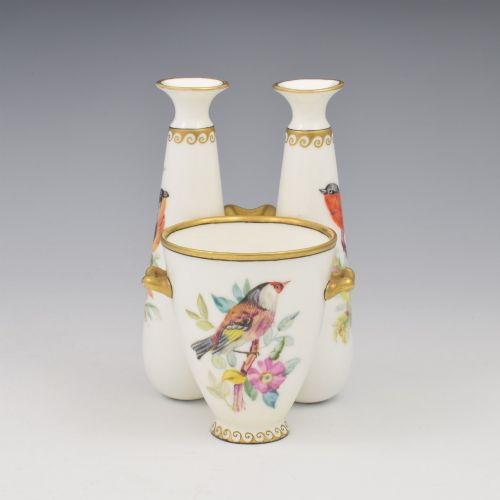
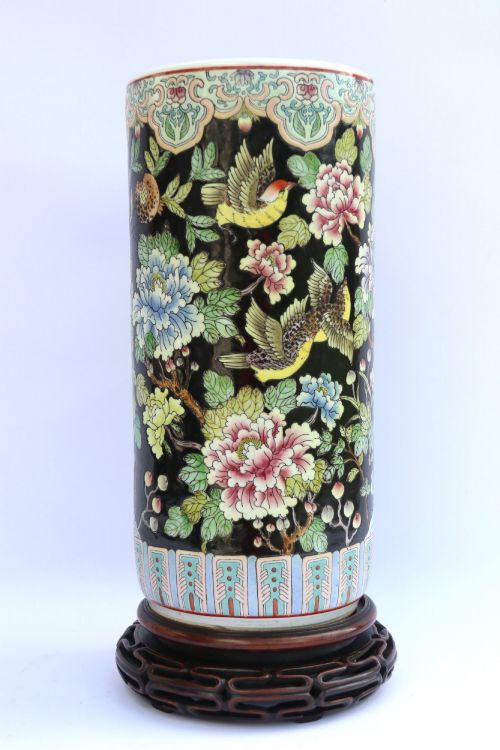
A bird and flower porcelain vase spans centuries of domestic display, taking the form of single vessels, jars, urns, and matched pairs. These pieces range from substantial Chinese famille rose and famille noire examples to European interpretations by English and continental factories.
The aesthetic bridges Eastern motifs and Western domestic tastes through styles such as Qing, Rococo, Art Nouveau, and Dutch Baroque. Buyers encounter everything from large floor pieces with original hardwood stands to delicate posy vases and jardinieres.
Origins stretch from seventeenth-century Delft workshops to nineteenth-century British makers like Royal Worcester, Mason's, and Coalport. Each piece deploys avian and floral subjects as the primary decorative language across varied ceramic bodies.
How they were made
Makers utilised ceramic and porcelain bodies, sometimes reinforced as ironstone, shaped into vases, jars, and cachepots. These forms received intricate applications of coloured enamel, cobalt blue glaze, and gilding or gold leaf to define the feathers and petals.
Decoration relied on hand-painted overglaze and underglaze techniques, combining blue and white pigments with polychrome enamels. European factories often paired these ceramic bodies with hand-carved hardwood stands for display.
Periods represented range from the seventeenth century through the Victorian and Edwardian eras into the nineteen-thirties.
What varies in quality
Quality rests in the precision of the brushwork, distinguishing hurried factory output from finely executed avian and floral compositions. The clarity of the enamel colours and the crispness of the gilding separate standard production from superior work.
The integrity of the form and the survival of secondary elements, such as matched pairs or original hardwood stands, influence the standing of a piece within its period.
Royal Worcester·Royal Dux·Coalport
The Bird and Flower Porcelain Vase Glossary
- Famille rose
- A major palette of Chinese porcelain characterised by opaque pink or rose enamel, introduced in the Qing dynasty. This palette allowed for nuanced shading of floral petals and bird plumage.
- Ironstone
- A patented heavy earthenware developed in Britain that mimics porcelain durability. It provides a robust body for enamelled bird and flower motifs.
- Chinoiserie
- European artistic style reflecting Chinese motifs and decorative themes. It frequently manifests in tin-glazed earthenware decorated with blue and white birds and foliage.
- Jardinier
- A large ornamental pot or stand designed for holding plants or floral arrangements. These vessels often match the decorative schemes of contemporary vases.
- Cachepot
- An ornamental container used to hide a plain flowerpot. They share the ceramic bodies and painted motifs typical of standard vases.
Bird and Flower Porcelain Vase: Frequently Asked Questions
What periods do these vases date from?
The pieces span from the seventeenth century through to the early twentieth century, encompassing periods such as the seventeenth century, the eighteenth century, the Victorian era, the Edwardian period, and the nineteen-twenties and thirties.
Production crosses both European manufactories and Chinese imperial or export kilns, reflecting shifting tastes in floral and avian ornamentation.
Are these pieces sold as pairs?
Many listings feature matched pairs of vases, which were originally intended for symmetrical placement on mantelpieces or cabinets.
Single vessels also appear, including large floor vases and jardinieres designed for standalone display.
What materials are used besides porcelain?
While porcelain forms the primary body, makers also utilised ironstone and standard ceramic earthenware.
Decoration incorporates polychrome enamel, cobalt glaze, gilding, and gold leaf, occasionally accompanied by original hardwood stands.
How do styles differ between regions?
Chinese pieces often showcase Qing style, famille rose, or famille noire palettes with deep historical motifs.
European makers interpret these themes through Dutch Baroque Chinoiserie, Rococo curves, or the organic lines of Art Nouveau.