



Birch Writing Table
A birch writing table brings pale warmth and clean grain to a room, offering a functional workspace rooted in nineteenth-century and twentieth-century cabinetmaking.
Birch Writing Table
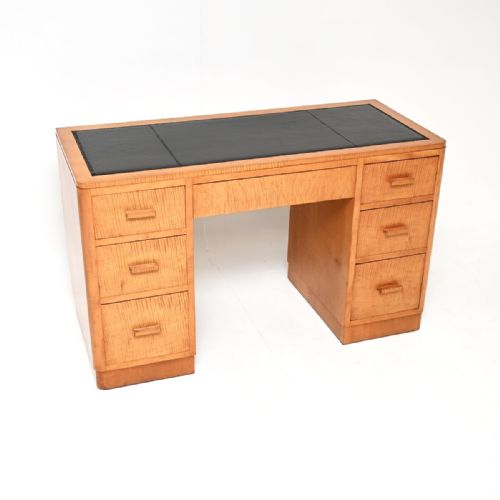
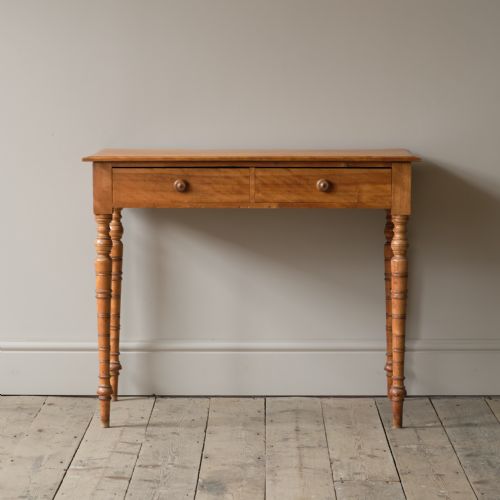
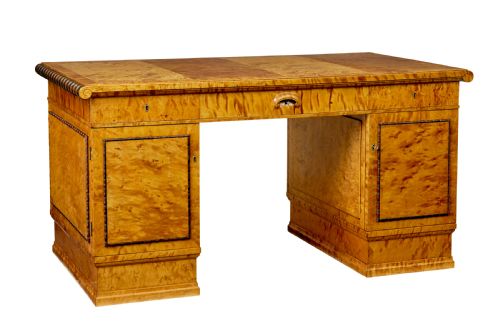
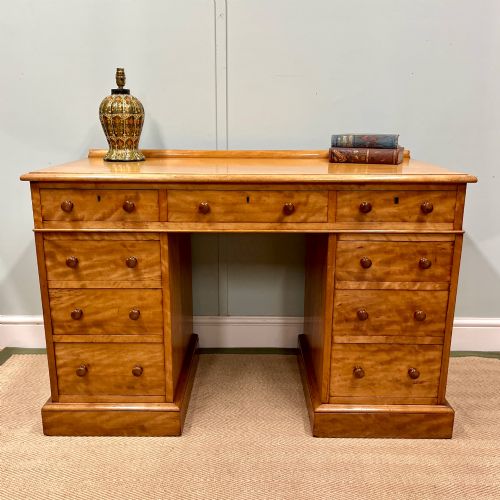
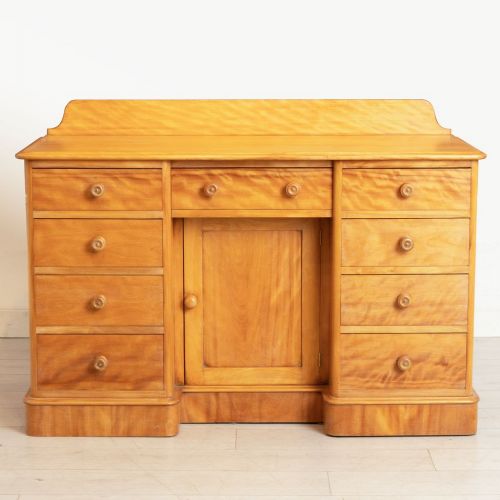
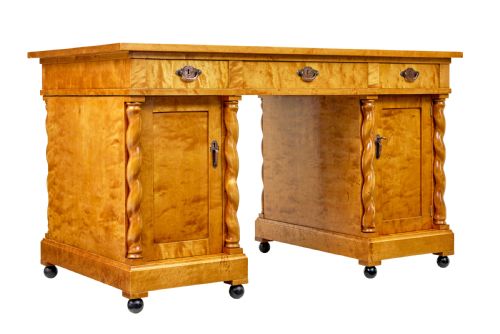
When you search for a birch writing table, you encounter forms ranging from compact side tables to substantial pedestal desks and sofa tables. The nineteenth century yields numerous Victorian examples, often configured as kneehole desks or writing tables with fitted drawers.
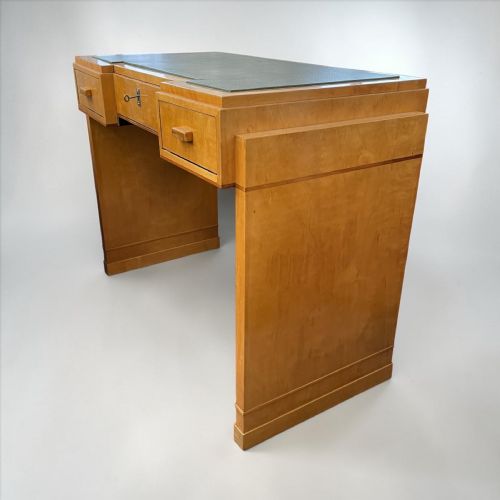
You are most likely to meet Victorian and Art Deco iterations on this page, reflecting periods that favoured the pale, figured timber. Styles span from Biedermeier and Swedish Empire Revival to rustic farmhouse and Aesthetic Movement pieces.
The objects serve primarily as desks, writing tables, and centre tables. Their origins cross British workshops and Scandinavian makers, bringing distinct regional character to the timber.
Materials and construction
Makers utilised birch and satin birch, frequently selecting flame birch or burr birch veneers to accentuate the swirling grain patterns. Solid pine often served as a secondary wood for interior drawer framing and carcases.
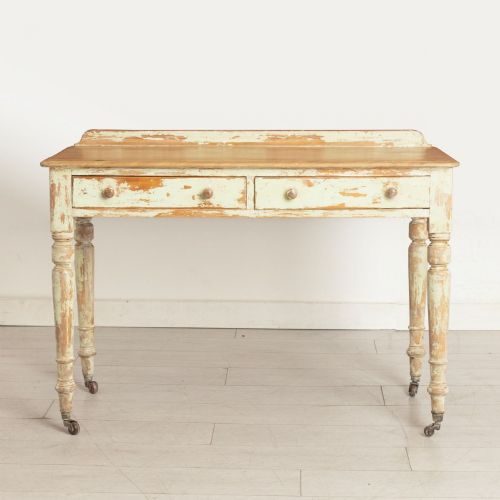
Surfaces were commonly fitted with inset leather writing panels, sometimes complemented by brass hardware such as handles and castors. Paint appears on specific painted variants, while polished finishes highlight the natural blonde figure of the wood.
One nineteenth-century sewing table arrived with its original contents still tucked inside the drawers.
Distinctions in craftsmanship
The hierarchy of quality rests upon the selection of timber figures, where richly patterned satin birch or burr birch veneers distinguish superior pieces from plain variants. Cabinetmaking finesse is visible in the precision of drawer construction and the integration of brass mounts.
Attribution to documented makers elevates an example, as does the preservation of original leather writing surfaces and integrated brass fixtures. Proportion and balance between the writing surface and supporting pedestals or legs dictate the overall visual success of the desk.
Heal And Son·J Shoolbred·Howard And Sons·C Hindley·Miles And Edwards
The Birch Writing Table Glossary
- Satin birch
- A timber derived from specific birch trees yielding a lustrous, light-reflecting grain. It was heavily favoured by nineteenth-century cabinetmakers for high-status desks.
- Pedestal desk
- A form featuring two independent stacks of drawers supporting a single desktop. These units often include a central kneehole for seating.
- Biedermeier
- A Central European style spanning the nineteenth century, known for clean lines and unadorned surfaces that showcase timber grain. Pieces from this tradition emphasise architectural restraint.
- Sofa table
- A narrow table originally designed to stand in front of a sofa, frequently equipped with drop leaves. They double as compact writing surfaces in domestic interiors.
- Kneehole desk
- A writing desk with a recessed central space for the user's legs, flanked by banks of drawers. This configuration became standard during the Victorian period.
Birch Writing Table: Frequently Asked Questions
How do I date a birch writing table?
Dating relies on architectural proportions, construction methods, and stylistic cues present in the piece. Victorian examples often display turned legs and mahogany secondary woods, whereas Art Deco pieces show streamlined geometry.
Examination of drawer dovetails and hardware provides further chronological evidence. Makers' stamps or labels, when present, offer definitive dates.
What is satin birch?
Satin birch is a term used to describe birch timber with a particularly reflective and lustrous grain. It is not a separate botanical species but a visual grade prized by nineteenth-century cabinetmakers.
This timber takes a high polish, which accentuates the chatoyant movement across the surface. It appears frequently on bureau bookcases and writing tables from the Victorian era.
How should I care for a leather desk top?
Leather writing surfaces require gentle cleaning with a slightly damp cloth to remove dust and debris. Avoid harsh chemical cleaners that can strip the natural oils from the hide.
Periodic application of appropriate leather dressings helps maintain suppleness and prevents cracking. Keeping the desk away from direct sunlight preserves both the leather and the surrounding birch veneer.
Where were Biedermeier desks made?
Biedermeier furniture originated in Central Europe, particularly Germanic lands and Austria, during the first half of the nineteenth century. The style prioritised domestic comfort and functional utility over ostentatious ornamentation.
Scandinavian makers also adopted these principles, producing refined birch pieces with minimalist aesthetic appeal. These desks integrate cleanly into modern interiors due to their understated forms.