




Birch Wood Accent Chair
A birch wood accent chair brings sculptural Scandinavian form and warm timber grain into a room, offering both striking presence and comfortable seating.
Birch Wood Accent Chair
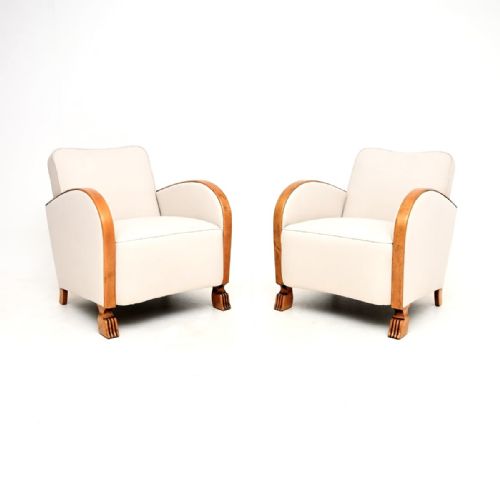
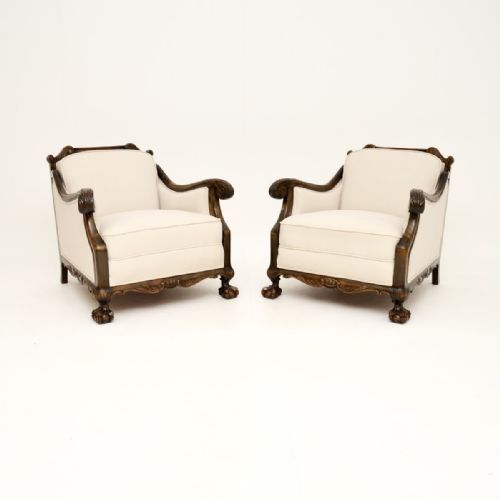
When you search for a birch wood accent chair, you enter a sphere dominated by Scandinavian seating, particularly from Swedish workshops across the nineteenth and twentieth centuries. The pieces available range from the restrained classical lines of the Karl Johan and Biedermeier periods through to the streamlined curves of Art Deco design.
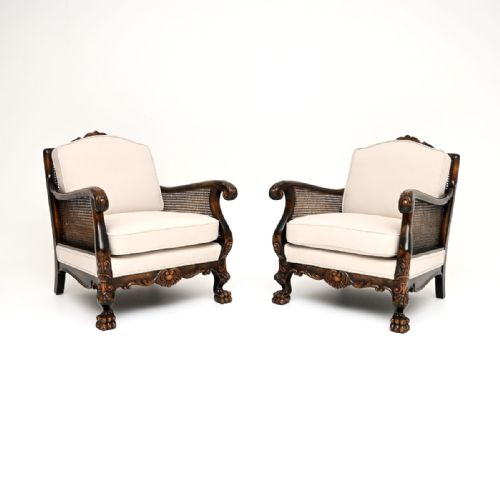
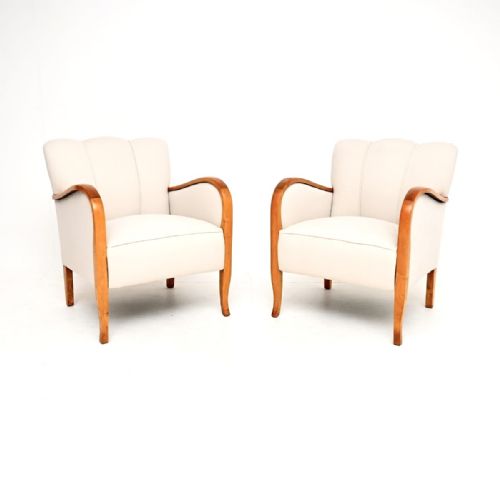
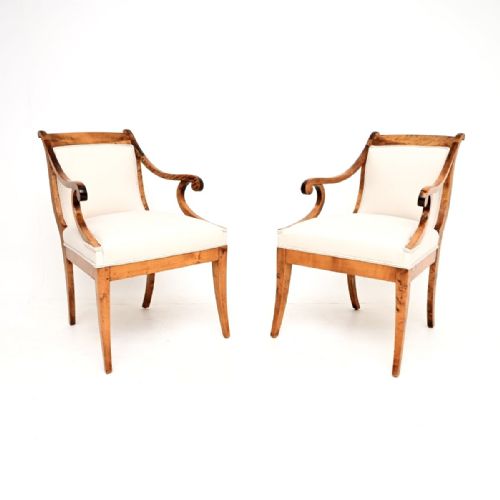
The armchairs and occasional rocking chairs on this page span several distinct decades, including pieces from the eighteen-sixties, eighteen-eighties, and the nineteen-twenties and thirties. Buyers most frequently encounter pairs of armchairs rendered in striking satin birch or flame birch veneers.
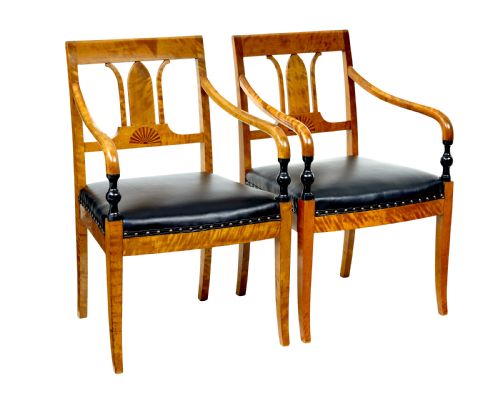
Many items show strong regional character, such as Swedish Art Deco lounge armchairs or Biedermeier examples featuring ebonised details. Alongside these formal armchairs, the selection includes vernacular variations like the Arts and Crafts bobbin and bar back rocking chair.
How they were made
Makers utilised solid birch alongside highly figured veneers such as satin birch and flame birch to create striking visual movement across the timber surfaces. Elm occasionally appears in combination with birch, providing contrasting tones within the structural frame.
Upholstery forms an integral part of construction, employing traditional fabric upholstery and leather to finish the seats and backs of the armchairs. Metal elements such as brass appear as subtle decorative or functional accents, while ebonisation creates sharp tonal contrasts against the pale wood.
Birch Wood Accent Chair Retail Price Guide 2026
Typical asking prices for birch wood accent chair among the pieces listed under this phrase on Sellingantiques today, from the lower quarter to the upper quarter. They describe what is for sale here now, not the wider market.
One chair even sports turned wooden bobbins on its back, proving that utility and whimsy can share the same piece of timber.
What varies in quality
The visual impact of the timber grain largely separates standard examples from exceptional ones. Highly figured satin birch and flame birch veneers require precise matching and placement across the curved surfaces of Art Deco and Biedermeier frames.
The sophistication of the joinery and carving distinguishes regional vernacular pieces from high-style workshop production. Integrated upholstery details and the preservation of original ebonised highlights further determine the distinction between simpler seating and master-designed armchairs.
The Birch Wood Accent Chair Glossary
- Satin Birch
- A timber selection exhibiting a natural shimmering lustre and fine grain pattern. It was frequently utilised in high-status Scandinavian furniture to catch the light.
- Flame Birch
- A distinctive wood figure featuring undulating, flame-like patterns across the grain. This decorative veneer defines the aesthetic of many Biedermeier and Art Deco armchairs.
- Biedermeier
- A influential Central and Northern European design style spanning the nineteenth century, known for clean architectural lines and emphasis on wood grain over ornamentation.
- Karl Johan
- A Scandinavian revival style drawing on neoclassical French forms during the early nineteenth century. It precedes the heavier Victorian tastes with simpler, monumental silhouettes.
- Bobbin and bar back
- A method of turning woodwork into repetitive rounded spindles resembling bobbins. This technique characterises Arts and Crafts vernacular seating.
Birch Wood Accent Chair: Frequently Asked Questions
What periods do these birch chairs come from?
The listings span from the mid-nineteenth century through to the Art Deco period of the nineteen-thirties. Examples include mid-nineteenth-century Biedermeier pieces and early twentieth-century Arts and Crafts designs.
Twentieth-century production is strongly represented by Swedish Art Deco armchairs dating from nineteen-thirty. Earlier nineteenth-century examples reflect Karl Johan and Biedermeier aesthetic revivals.
Are these chairs sold in pairs?
A significant portion of the armchairs are offered as matching pairs, particularly those originating from Swedish workshops. This reflects traditional interior schemes where symmetrical seating was placed around a room.
Solitary pieces also appear, such as vernacular rocking chairs and individual lounge armchairs. Buyers seeking unified seating arrangements will find multiple matched pairs across the decades.
How do Biedermeier and Art Deco chairs differ?
Biedermeier chairs, emerging in the nineteenth century, rely on architectural restraint and polished timber surfaces to create quiet elegance. They often feature dark ebonised details alongside warm birch veneers.
Art Deco chairs, dating from the nineteen-twenties and thirties, embrace bolder curves and streamlined silhouettes. They utilise the same rich birch veneers but apply them to more dramatic, flowing forms.
Where were these chairs made?
The pieces concentrated on this page originate primarily from Swedish makers and workshops. Scandinavia developed a distinct tradition of utilising native birch for both vernacular and high-style furniture.
This regional focus gives the armchairs a consistent material palette and design language. Swedish cabinetmakers mastered the handling of figured birch across multiple centuries.