




Birch Dresser
A birch antique dresser brings tactile warmth and clean Scandinavian lines to a room, offering practical storage with distinct character.
Birch Dresser
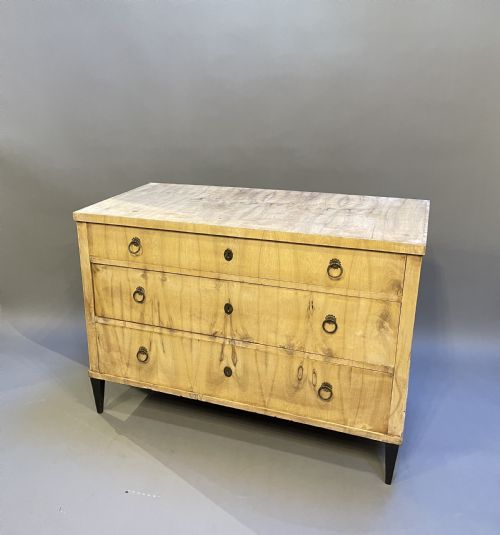
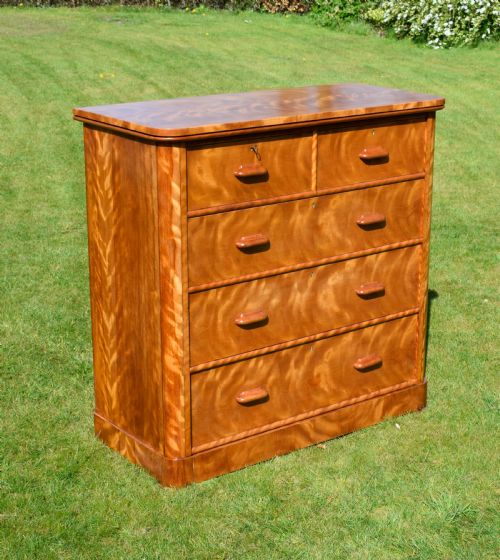
A birch antique dresser most commonly takes the form of a chest of drawers, spanning several periods including the eighteenth century, the nineteenth century, and the early twentieth century. Buyers seeking this phrase encounter practical storage furniture built primarily in Sweden and broader Scandinavia, alongside Victorian examples.
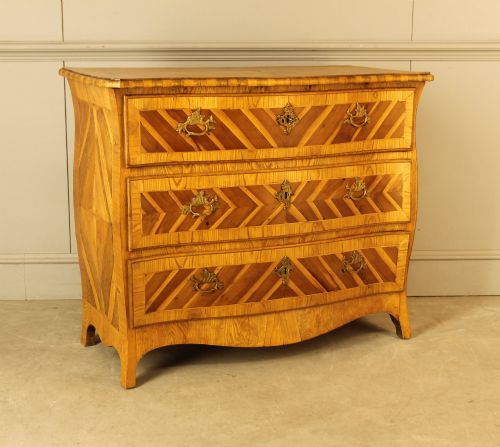
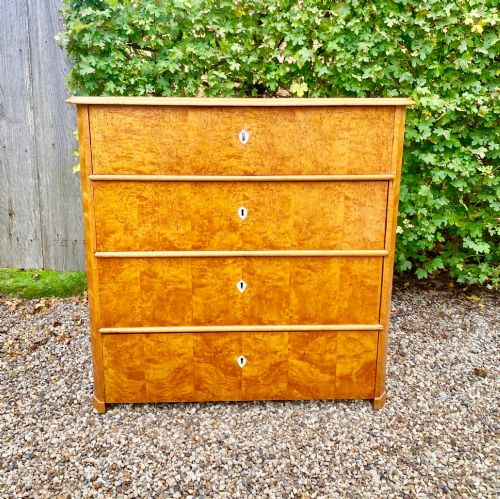
The chests appear in various regional interpretations, from seventeenth and eighteenth-century roots through to nineteenth-century Biedermeier, Empire Revival, and Art Nouveau styles. Pieces range from straightforward functional storage with four straight drawers to serpentine commodes and bombé shapes.
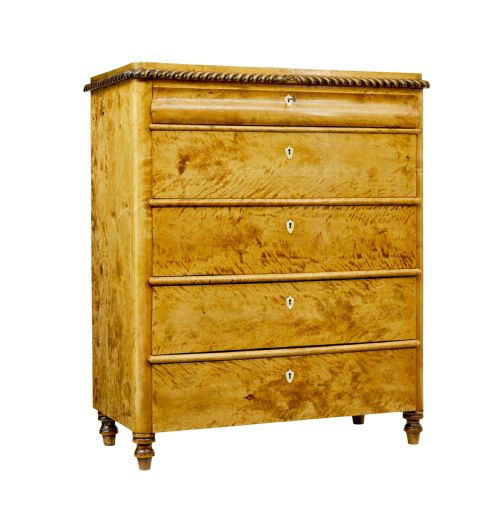
Display cabinets and cabinets on chests also appear alongside standard drawer configurations. Many examples utilise distinctive timber selections such as flame birch, tiger birch, masur birch, and satin birch to create strong grain patterns.
How they were made
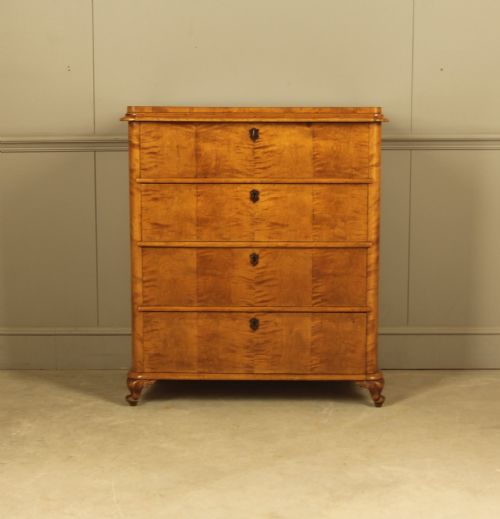
Cabinet makers utilised solid birch and pine carcases overlaid with striking veneers of flame birch, tiger birch, and masur birch to emphasise the natural figure of the timber. Satin birch also appears, providing a pale and uniform surface finish.
Metalwork details such as brass handles and keyhole escutcheons complement the wood, whilst iron components provide internal structural support. Occasional pieces incorporate ebonised wood contrasts and bone inlay details to define the drawer fronts and mouldings.
Listings feature eighteenth-century and nineteenth-century pieces alongside 1930 examples, constructed in birch, satin birch, pine, and ebonised wood.
What varies in quality
The quality of a piece rests heavily on the selection and matching of the birch veneer, where dramatic flame and tiger figures elevate the visual impact above plain timber surfaces. Expert book-matching across drawer fronts demonstrates a higher level of cabinet-making skill.
Construction methods and decorative restraint set pieces apart, ranging from simple provincial country chests to ambitious Empire Revival and Rococo bombe forms with carved details. The sophistication of the hardware and the precision of inlaid elements also distinguish finer examples.
GEMLA FABRIKERS
The Birch Dresser Glossary
- Flame birch
- A timber cut displaying a flickering, undulating grain pattern. This figure is prized for its decorative movement across drawer fronts.
- Masur birch
- A natural growth variation in birch wood creating small dark swirls and dots across the grain. Cabinet makers used this timber for high-status Biedermeier furniture.
- Biedermeier
- A Central European and Scandinavian style spanning the nineteenth century focused on clean lines and utility. Ornamentation relies on the natural beauty of wood veneers rather than heavy carving.
- Bombé
- A swelling, outward-curving profile seen on eighteenth-century commodes and chests of drawers. This flamboyant shape demands advanced woodworking techniques.
- Caddy top
- A raised, stepped moulding profile along the top edge of a chest of drawers. This detail frames the upper surface with geometric definition.
Birch Dresser: Frequently Asked Questions
How do I identify Biedermeier style?
Biedermeier furniture prioritises minimalist forms and polished wood surfaces over ornate carving. The style emerged in the nineteenth century.
Pieces often feature pale birch timbers with dark contrasting details and geometric drawer arrangements.
What is tiger birch?
Tiger birch is a descriptive term for timber displaying alternating dark and light bands resembling tiger stripes. This figuring occurs naturally within the grain.
Cabinet makers arranged these veneers symmetrically to create striking visual patterns on drawer fronts.
Are these pieces purely Scandinavian?
Whilst the majority of nineteenth-century birch chests originate from Sweden and Scandinavia, British Victorian examples also appear. Each region applied distinct stylistic influences.
Scandinavian makers favoured Biedermeier and Empire Revival lines, whilst British workshops produced satin birch Victorian pieces.