




Biedermeier Storage
Biedermeier storage pieces bring together clean architectural lines and rich figured timbers, offering practical room for everyday organisation.
Biedermeier Storage
When buyers search for biedermeier storage, they encounter case pieces designed for domestic utility across the nineteenth century and subsequent revival periods. These items primarily comprise chests of drawers, commodes, secretaire chests, cupboards, and corner cabinets originating from Sweden, Denmark, and broader continental workshops.
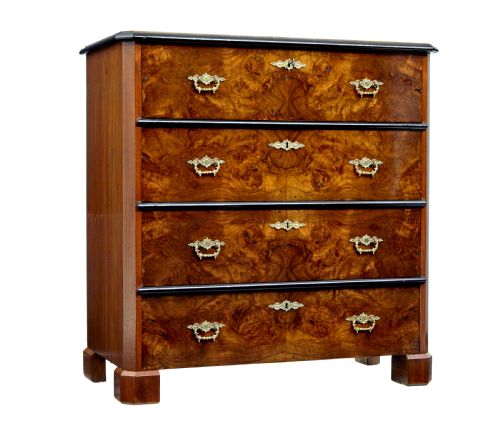
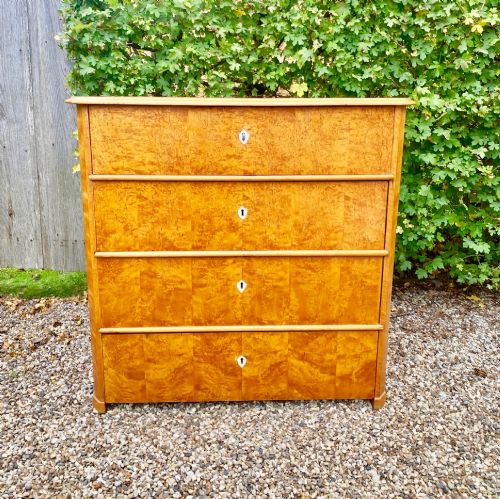
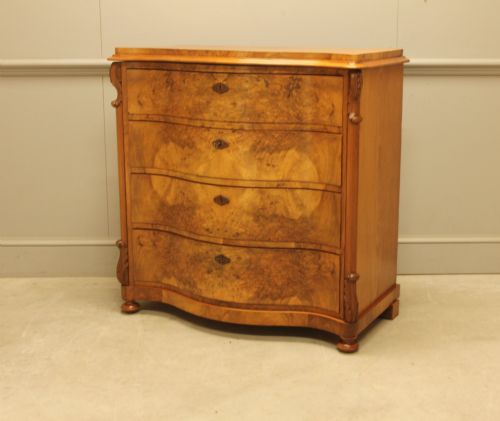
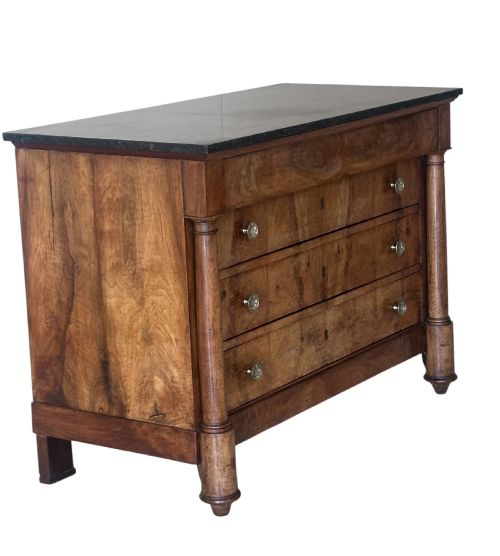
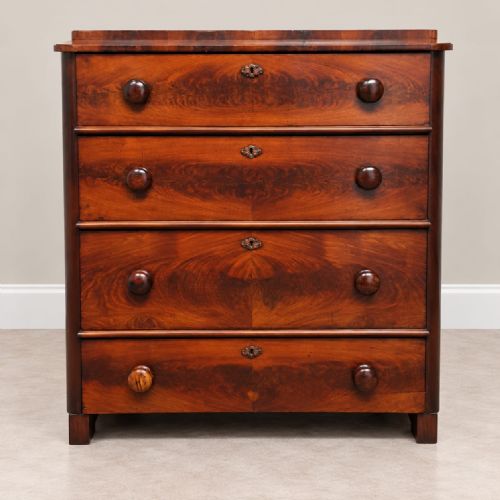
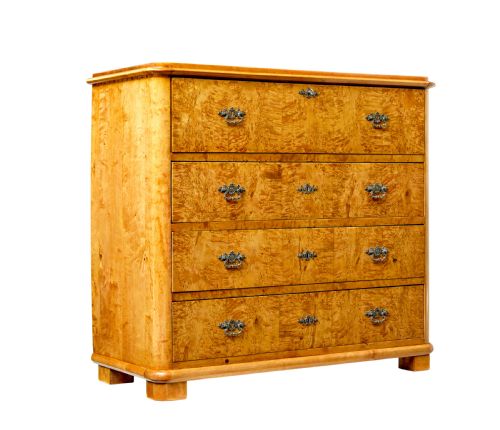
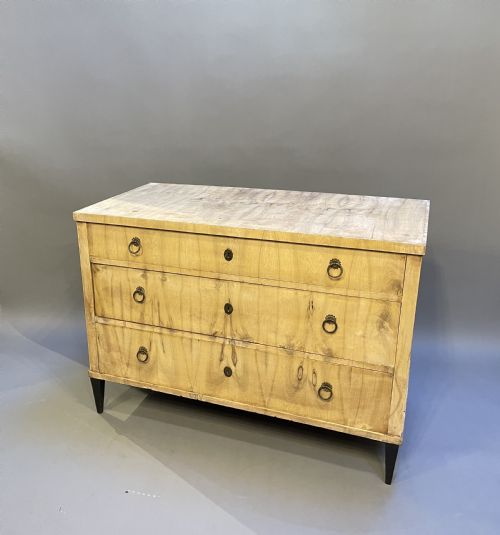
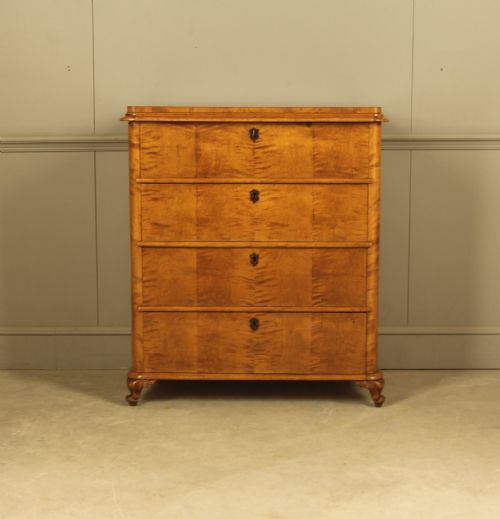
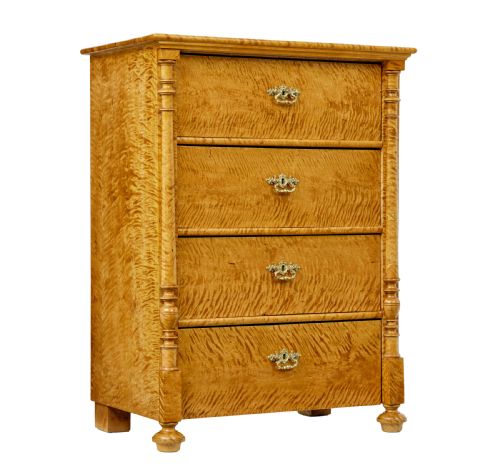
The most common forms on this page are birch and walnut chests of drawers built with generous proportions and restrained ornamentation. Pieces range from straightforward Scandinavian country furniture to more formal Swedish Biedermeier and Empire Revival designs dating between the early nineteenth century and the early twentieth century.
Buyers also find specialised storage forms such as fitted cupboards, sideboards, and pedestal cabinets utilising native and imported timbers. Each piece reflects the functional domestic requirements of its period while maintaining balanced geometric proportions.
How they were made
Cabinetmakers constructed carcass frames using solid pine or secondary softwoods as a stable foundation for decorative hardwood veneers. Birch, flame birch, burr walnut, and mahogany were sliced thin and applied across drawer fronts and doors to create symmetrical grain patterns.
Surface decoration relies primarily on the natural movement of wood figure rather than carved ornamentation or heavy mouldings. Accents of ebonised wood, brass hardware, and occasional marble tops complete the construction of these storage forms.
Biedermeier Storage Retail Price Guide 2026
Typical asking prices for biedermeier storage among the pieces listed under this phrase on Sellingantiques today, from the lower quarter to the upper quarter. They describe what is for sale here now, not the wider market.
Secret compartments hidden inside drop-front secretaire drawers continue to surprise owners long after purchase.
What varies in quality
Quality rests in the selection and bookmatching of timber veneers across large surfaces such as commode drawer fronts and cupboard doors. Superior examples display carefully chosen burr or flame figuring that flows visually across the entire piece.
Construction integrity determines daily utility, visible in the precision of drawer dovetailing and the alignment of secretaire drop-fronts. The integration of secondary woods and the crispness of brass mounts also distinguish standard regional pieces from finer cabinet work.
The Biedermeier Storage Glossary
- Biedermeier
- A central European style spanning the nineteenth century that prioritises utility, clean lines, and warm wood grains over heavy historical ornament. It developed in Germanic regions and heavily influenced Scandinavian cabinetmaking.
- Secretaire commode
- A chest of drawers featuring a fitted top drawer that folds down to reveal a writing surface and small pigeonholes. This hybrid form combined bedroom storage with private correspondence facilities.
- Flame birch
- A striking timber veneer marked by undulating, flame-like patterns created by the grain structure of the tree. It is frequently seen on nineteenth-century Scandinavian case furniture.
- Commode
- A low chest of drawers or cabinet designed for domestic storage, often placed in bedrooms or reception rooms. The term appears frequently among continental and French nineteenth-century furniture.
- Empire Revival
- A later nineteenth and early twentieth-century design movement recalling the grand classical proportions of the early Napoleonic era. Pieces in this style often incorporate bleached birch, mahogany, and restrained brass mounts.
Biedermeier Storage: Frequently Asked Questions
What is a Biedermeier secretaire chest?
A Biedermeier secretaire chest is a multi-drawer storage unit where the uppermost drawer pulls out and folds down to form a writing desk. Inside, small compartments and hidden drawers provide space for documents and stationery.
This dual-purpose design allowed rooms to remain uncluttered by separate desks while offering secure storage for personal correspondence.
Where were these storage pieces made?
These storage pieces originate primarily from Scandinavian workshops in Sweden and Denmark, alongside continental European centres. Cabinetmakers in these regions adapted classical Empire styles to local preferences.
Local timbers like birch were utilised extensively alongside imported mahogany and walnut to create distinctive regional interpretations of the style.
How do I identify flame birch veneer?
Flame birch veneer exhibits a distinctive rolling, feather-like grain pattern that ripples across the surface of the wood. Craftsmen arranged these patterns symmetrically across drawer fronts to create decorative impact without carved detail.
The natural figure catches the light differently depending on the viewing angle, giving the timber a luminous quality.
How do I use a corner cabinet today?
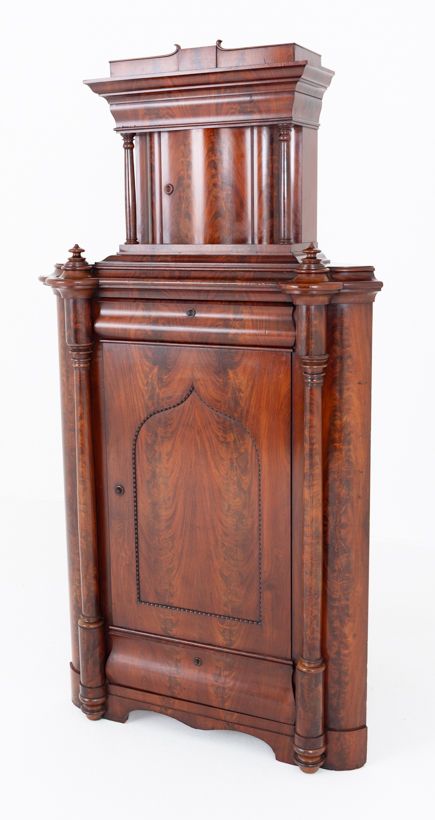
Corner cabinets provide functional storage by fitting neatly into unused room angles while occupying minimal floor space. They serve well for displaying glassware, books, or tableware in dining rooms and living areas.
The enclosed lower cupboards also offer concealed storage for household items that need to be kept out of sight.