



Biedermeier Seating
Biedermeier seating brings clean architectural lines and figured timbers into a room, offering both restraint and warmth.
Biedermeier Seating
Biedermeier seating encompasses armchairs, sofas, settees, benches, and stools originating from continental Europe across the nineteenth and early twentieth centuries. Pieces here span from the early nineteenth century through Victorian, Art Deco, and later revivals, reflecting shifts in taste across decades.
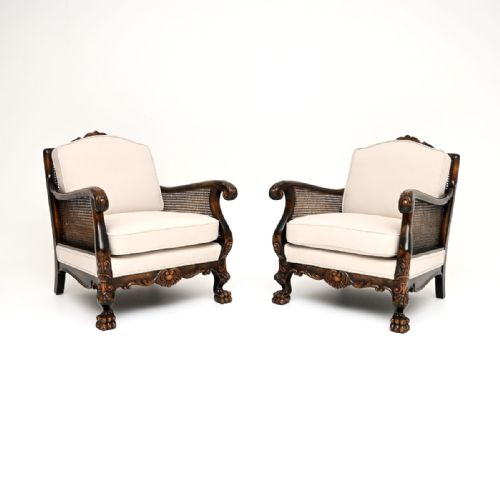
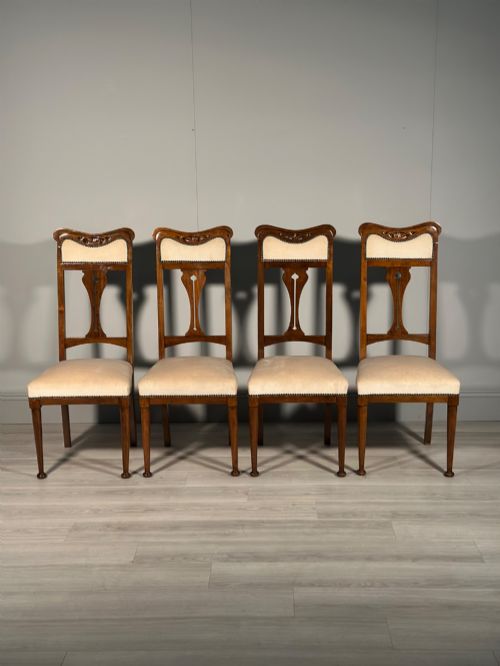
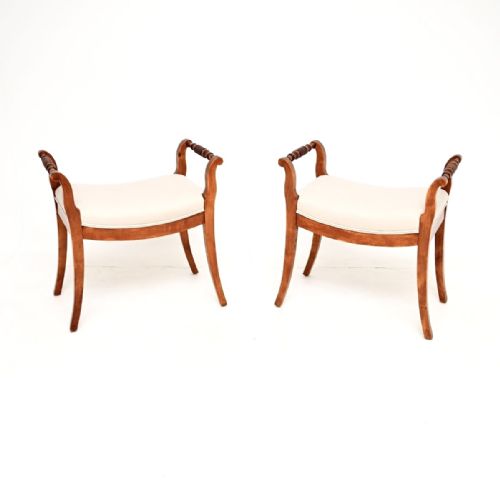
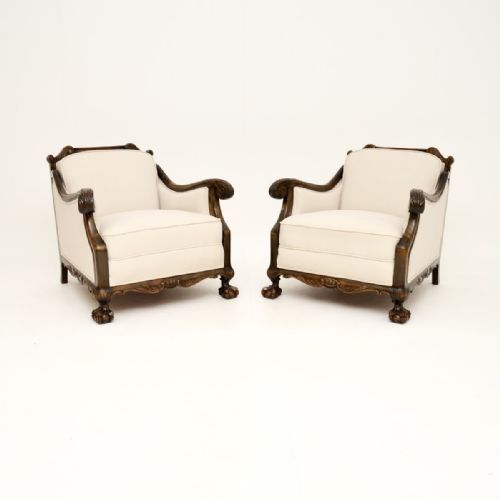
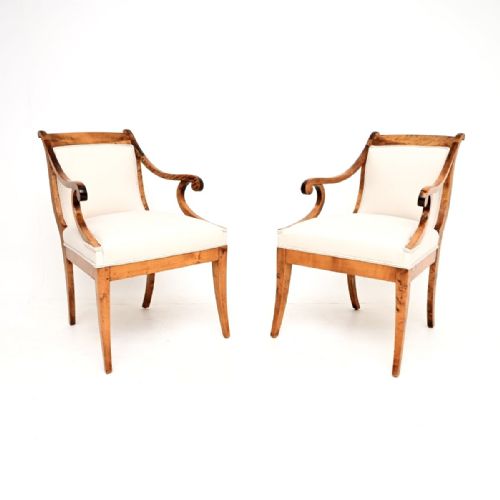
The most common forms on this page are Swedish armchairs and stools, frequently rendered in satin birch or mahogany. Buyers encounter pairs of armchairs alongside individual sofas, benches, and living room suites.
Origins stretch from Sweden to Denmark and wider continental workshops, crossing stylistic boundaries into Swedish Empire and Danish Neoclassical interpretations. Each piece demonstrates the domestic focus of the era, prioritising comfort and timber grain over excessive ornament.
What varies in quality
The standard of timber selection determines the visual impact of a piece, particularly in how mirror-matched veneers are arranged across prominent surfaces like chair backs and sofa rails. Higher grades display rich, unbroken grain movement without awkward patching or careless matching.
Structural integrity and the crispness of joinery separate ordinary examples from exceptional ones, especially where curved wooden elements meet seat rails. The retention of original timber finishes and coherent upholstery choices further define the tier of a piece.
Biedermeier Seating Retail Price Guide 2026
Typical asking prices for biedermeier seating among the pieces listed under this phrase on Sellingantiques today, from the lower quarter to the upper quarter. They describe what is for sale here now, not the wider market.
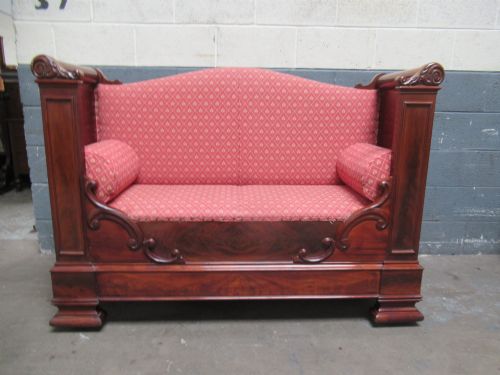
Listings feature satin birch, flame mahogany veneer, and burr birch across nineteenth and early twentieth-century forms.
The Biedermeier Seating Glossary
- Satin Birch
- A pale, lustrous timber with a fine grain, widely utilised in Scandinavian furniture for its reflective quality. It creates a striking contrast when paired with ebonised details.
- Flame Mahogany
- A veneer cut from the fork of the mahogany tree, producing a rippling flame-like pattern across large surfaces. This finish is characteristic of mid-nineteenth-century seating.
- Burr Birch
- Wood taken from a tree growth that produces swirling, knotty grain formations, prized for decorative veneer work. It offers deep texture on prominent furniture facades.
- Ebonised
- Wood treated with a dark stain or chemical process to imitate ebony, providing sharp contrast against lighter birch or satinwood frames. It appears frequently on nineteenth-century structural accents.
- Settee
- A long upholstered seat with a back and arms, designed to accommodate multiple people. These forms range from compact bench seats to full living room suite components.
Biedermeier Seating: Frequently Asked Questions
What is biedermeier seating?
Biedermeier seating comprises chairs, sofas, and stools originating primarily from nineteenth-century Germanic and Scandinavian regions. These pieces focus on clean forms and striking timber grains rather than heavy ornamentation.
Buyers find everything from single armchairs to complete living room suites in materials like birch and mahogany.
How do I identify a Swedish piece?
Swedish pieces often utilise pale satin birch or birchwood veneers paired with simplified neoclassical silhouettes. They frequently appear as matching pairs of armchairs or stools.
Ebonised accents and restrained carving help distinguish Scandinavian examples from other continental variants.
Are these seats comfortable for daily use?
Most pieces feature upholstered seats and supportive backs designed for domestic living rooms and parlours. Upholstery materials vary from modern replacements to traditional fabrics.
Their ergonomic wooden curves make them practical for everyday sitting when paired with appropriate interior layouts.
How do I date an antique chair?
Dating relies on examining construction techniques, timber choices, and stylistic markers such as Empire or Art Deco influences. Nineteenth-century pieces often display solid birch or mahogany frames with hand-applied veneers.
Later twentieth-century iterations incorporate transitional details reflecting Art Deco or revival aesthetics.