


Biedermeier Center Table
A biedermeier centre table anchors a room with clean architectural lines and striking wood grains, offering both daily utility and strong decorative presence.
Biedermeier Center Table
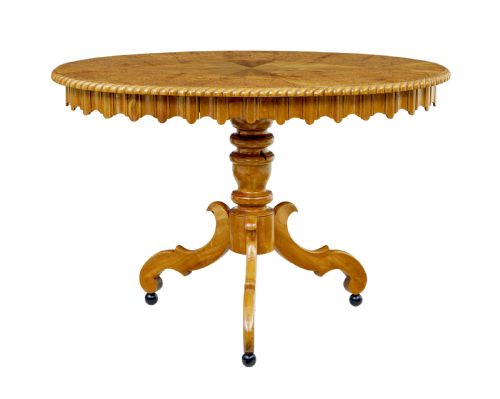
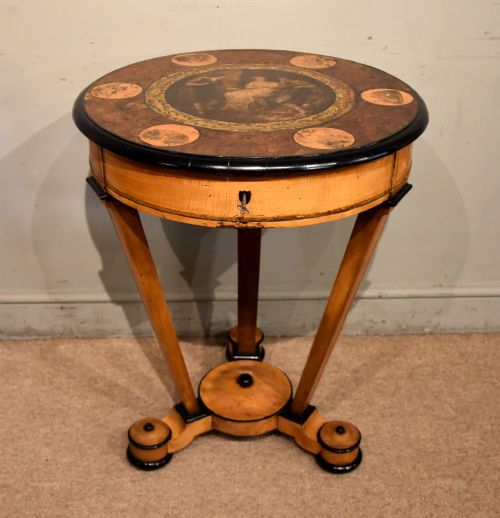
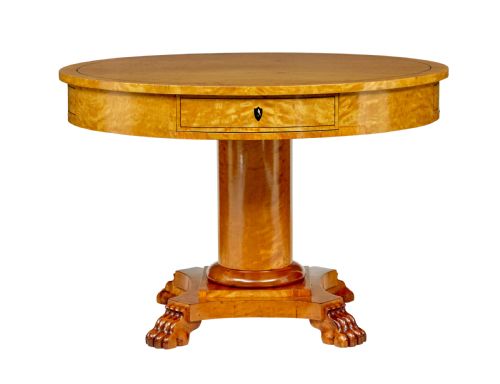
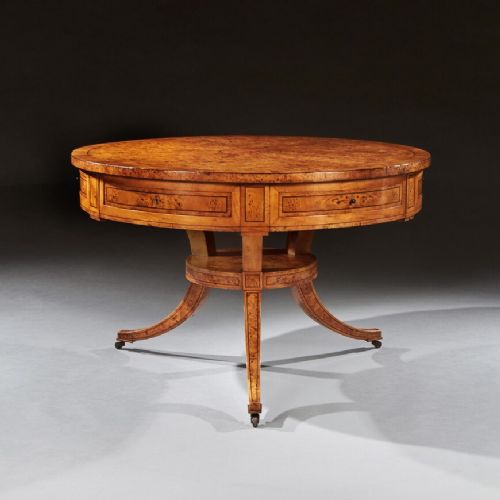
When you search for a biedermeier centre table, you encounter a selection of freestanding tables designed to sit in the middle of a room rather than against a wall. The most common forms on this page include round, oval, and drum centre tables, alongside occasional and sofa tables.
The material palette is dominated by birch, burr birch, and satin birch veneers, occasionally paired with ebonised wood details or marble tops. These pieces draw primarily from nineteenth century Swedish workshops and later revival periods.
Makers focused on expressing the natural figure of the timber rather than adding heavy carved ornamentation. This approach gives each table a distinct graphic presence that suits both period and modern interiors.
How they were made
Cabinet makers applied finely sliced veneers of burr birch, mahogany, or satin birch over stable secondary timbers to create sweeping geometric patterns across the table tops. This technique allowed workshops to maximise expensive and highly figured logs while preventing timber movement.
Structural elements often incorporated ebonised wood contrasts and subtle brass mounts to accentuate the clean lines of the design. Surfaces were finished to a high polish, protecting the wood while deepening the warmth of the grain.
Listings on this site feature nineteenth-century Swedish origins alongside later revival periods, predominantly utilising birch, burr birch, and mahogany.
What varies in quality
The quality of a biedermeier centre table depends heavily on the symmetry and selection of the veneer work across the top surface. Superior pieces display carefully matched burr patterns that radiate from a central point or follow the contour of the table.
Construction methods and the integrity of the timber foundation also separate standard examples from finer works. Tables that retain their original polished finish and tight veneer seams demonstrate careful historical maintenance and superior initial craftsmanship.
The Biedermeier Center Table Glossary
- Veneer
- A thin layer of figured wood applied to a stable core timber to create decorative patterns. This method allowed makers to utilise expensive woods efficiently.
- Burr birch
- A growth deformity in birch trees that produces intricate, swirling grain patterns. Cabinet makers prized this wood for high-status table tops.
- Centre table
- A freestanding table designed to be viewed from all sides in the middle of a room. These forms emerged strongly during the nineteenth century.
- Ebonised wood
- Timber treated to resemble ebony, providing dark contrast against lighter birch veneers. It defines structural edges and architectural details.
- Gueridon
- A small circular table on a central pillar or pedestal support. These originated in France and appeared across various nineteenth century revival styles.
Biedermeier Center Table: Frequently Asked Questions
Where should I place a centre table?
A centre table works best positioned in the middle of a room where its form and grain can be appreciated from all angles. It serves as a natural focal point for conversation areas or entrance halls.
Ensure there is sufficient surrounding space for movement around the piece, allowing it to function both visually and practically within the room.
How do I care for birch veneer?
Protect birch veneer surfaces from direct sunlight to prevent the natural tones from fading over time. Use coasters and mats to guard against moisture and heat rings.
Dust regularly with a soft, dry cloth and apply a quality furniture wax sparingly when the wood appears dry to maintain its natural lustre.
Are these tables sturdy enough for daily use?
These tables were built for domestic life, featuring robust internal construction beneath the decorative veneers. They handle everyday items like books and lamps comfortably.
Avoid dragging the tables across floors to protect the base joinery and veneer along the lower edges from unnecessary strain.
How can I tell a revival piece from an original?
Original nineteenth-century pieces often display hand-cut veneers, traditional joinery methods, and age-related patina in the finish. Revival pieces from later periods may show different secondary woods and modern construction tolerances.
Examining the underside and interior surfaces often reveals the manufacturing techniques typical of specific historical decades.