
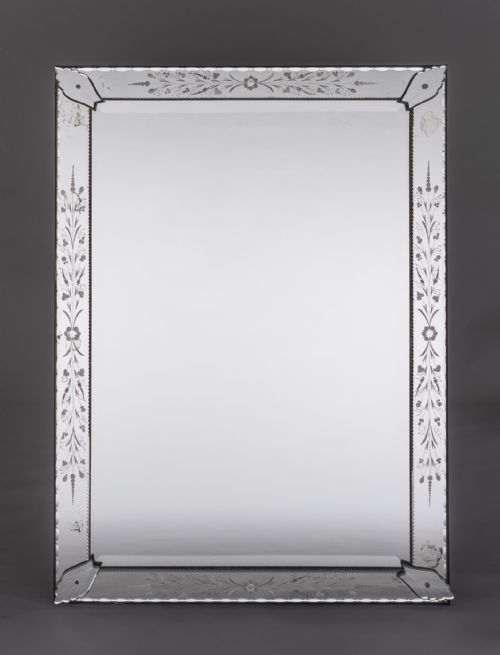


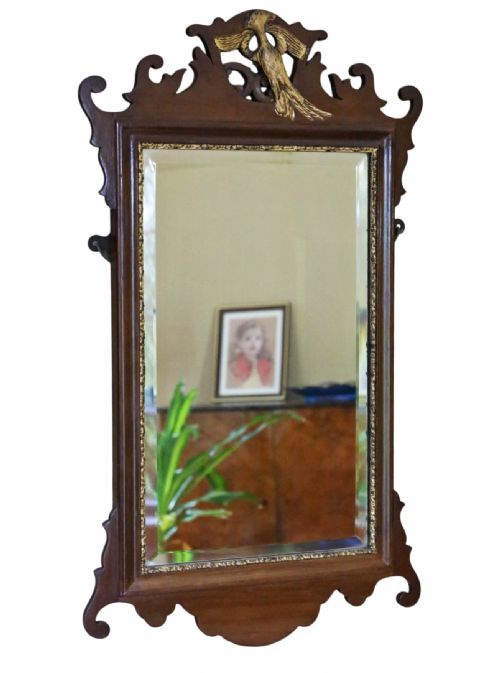


Bevelled Edge Glass Mirror
A bevelled edge glass mirror brings deep reflections and period character into a room, catching the light through angled perimeters.
Bevelled Edge Glass Mirror
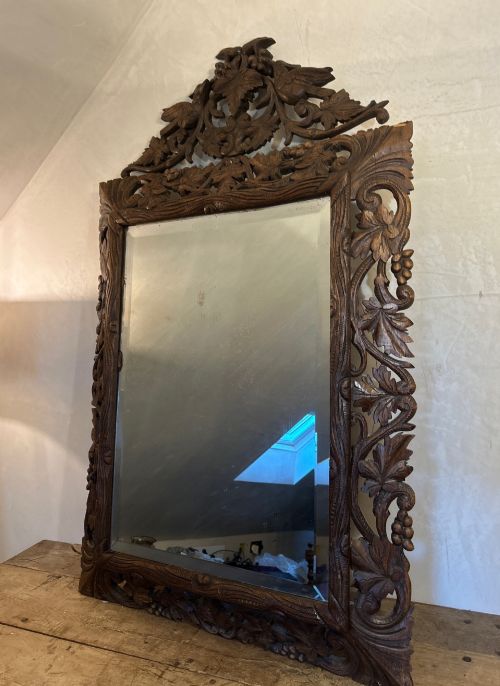
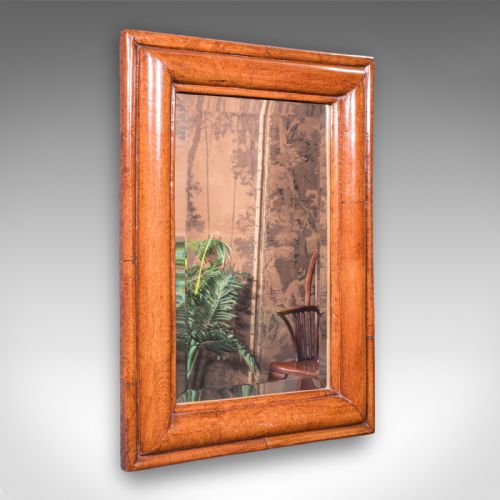
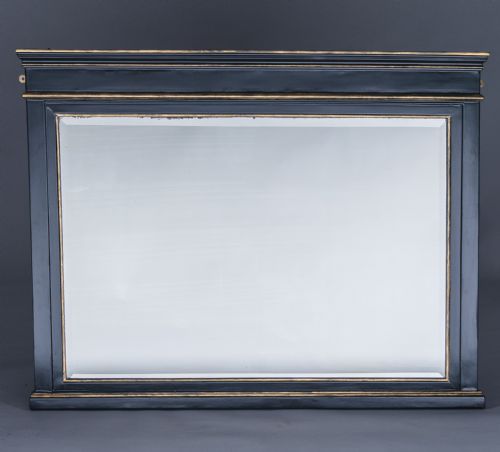
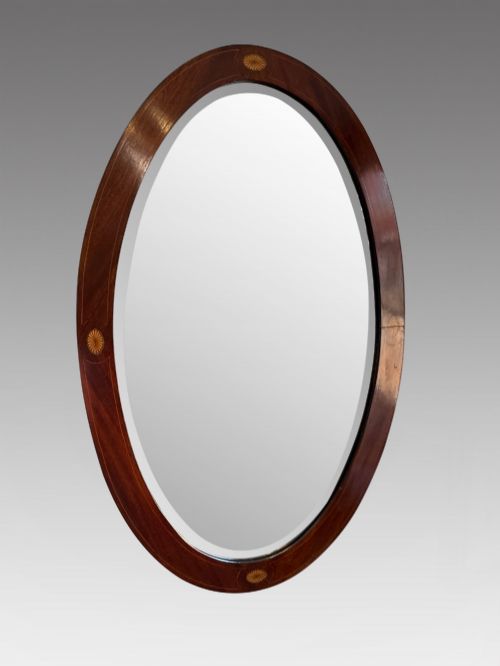
A bevelled edge glass mirror is a reflective glass panel with an angled ground perimeter, designed to hang upon a wall or stand upon a surface. When you examine a bevelled edge glass mirror on this page, you encounter pieces spanning from the Victorian era through the Edwardian period and into Art Deco design. These items appear in various forms including wall mirrors, overmantle mirrors, vanity mirrors, and dressing mirrors.
The selection ranges from French oak and gilt gesso frames to frameless geometric shapes and Venetian glass creations. You find domestic hall mirrors alongside large reception pieces, showing how makers shaped glass to catch interior light. The variety encompasses both restrained mahogany framing and ornate Renaissance-style carvings.
Art Deco examples demonstrate circular, octagonal, and etched glass forms from the nineteen-twenties and nineteen-thirties, often featuring peach or green tinted glass sections. Earlier nineteenth-century specimens rely on heavy timber frames, brass fittings, and ebonised details. Each piece reflects the domestic priorities of its original era.
Materials and construction methods
Makers utilised mirror glass and silvered glass alongside structural timbers such as mahogany, oak, walnut, rosewood, and gilt wood. Frames were constructed using traditional joinery, gesso moulding, and metal mounts in brass or chrome. Glass edges were hand-ground and polished to create the characteristic sloping perimeter.
Art Deco pieces often employed frameless construction with embossed or etched decoration directly on the glass surface. Earlier Victorian and Edwardian items depended on heavy wooden backing boards, original chains, and secure metal hanging fittings to support the substantial weight of the glass.
One exceptional Art Deco dressing mirror spent its earlier working life stationed inside a gentlemen's outfitters.
Factors determining quality
Quality rests upon the depth and precision of the glass bevelling, the integrity of the silvering behind the plate, and the crispness of the frame's carving or moulding. Superior examples display clean, distortion-free reflections and robust original wooden backs.
The sophistication of the design sets finer pieces apart, whether through intricate French gesso work or balanced geometric Art Deco geometry. Original fittings, chains, and backboards contribute significantly to a piece's integrity.
The Bevelled Edge Glass Mirror Glossary
- Bevelling
- The practice of grinding and polishing the outer edges of a glass plate to a specific angle. This technique creates a decorative border that refracts light.
- Overmantle mirror
- A large horizontal mirror designed specifically to hang above a fireplace mantelpiece. These pieces often anchor the decorative scheme of a Victorian or Edwardian reception room.
- Gilt gesso
- A plaster-like material applied to a wooden frame and carved before being covered in thin gold leaf. This technique allowed makers to achieve ornate relief ornamentation.
- Silvered glass
- Glass coated with a reflective metallic compound on the rear surface. Historic examples often show subtle ageing or foxing within this backing layer.
- Cheval mirror
- A full-length dressing mirror suspended on a vertical frame with pivots, allowing the glass to tilt. These freestanding items were common in bedrooms and dressing rooms.
Bevelled Edge Glass Mirror: Frequently Asked Questions
What causes dark spots on antique mirror glass?
Dark spots and silvering loss occur when moisture penetrates the protective backing behind the glass over many decades.
This natural ageing process is commonly accepted by collectors as evidence of genuine age.
How do I clean antique mirror glass?
Clean antique glass gently using a soft cloth and mild, non-ammonia cleaning solution applied to the cloth rather than directly to the glass.
Take care to avoid liquid seeping behind the edges where it could damage the historic silvering or wooden frame.
Can I date a mirror by its bevel?
Broader, hand-ground bevels typically indicate nineteenth-century or earlier craftsmanship, while narrower or machine-produced bevels often point towards the twentieth century.
Combining this observation with the frame style and backing materials provides a clearer indication of the period.