

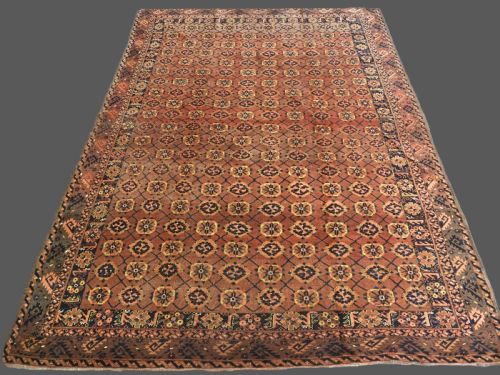
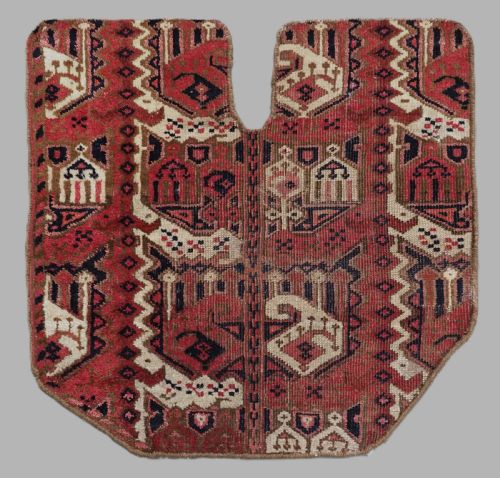


Beshir Tribal Rug
A beshir tribal rug brings rich Central Asian geometry and deep madder tones straight into a room.
Beshir Tribal Rug
A beshir tribal rug is a textile originating from Turkmenistan and Central Asia, woven by Turkmen and Ersari weavers during the nineteenth and early twentieth centuries. These pieces encompass various forms including main carpets, saddle rugs, storage bags, torbas, and chuval faces.
The objects seen here date from the 1860s through to the 1920s, showing a tradition of Turkmen tribal design. Buyers will most frequently encounter smaller formats such as torbas and storage bagfaces alongside larger area carpets and village rugs.
These floor and wall coverings reflect the cultural heritage of Central Asian nomadic groups. Their distinct patterns range from classic motifs to bold ikat designs and rams horn elements.
Materials and Construction
Every beshir tribal rug relies on wool as its foundational material, utilising hand-spun wool for the pile and structure. This traditional spinning method produces varied yarn textures that absorb dyestuffs unevenly, creating subtle tonal shifts across the surface.
The weavers coloured these textiles using natural dyes, which yield deep, resonant hues over time. The combination of hand-spun wool and organic colourants defines the tactile character of these Central Asian pieces.
Beshir Tribal Rug Retail Price Guide 2026
Typical asking prices for beshir tribal rug among the pieces listed under this phrase on Sellingantiques today, from the lower quarter to the upper quarter. They describe what is for sale here now, not the wider market.
Some storage bags spent decades holding nomad wool before ending up on a polished drawing room floor.
Quality Variations
The standard of a beshir tribal rug rests in the clarity of its design and the depth of its natural dyes. Tighter knotting and precise execution of motifs like ikat patterns or rams horns separate finer examples from simpler village work.
Preservation of the original wool pile and structural integrity heavily influence the standing of each textile. Pieces retaining their complete format, whether a full main carpet or a functional torba face, hold greater integrity than heavily altered fragments.
The Beshir Tribal Rug Glossary
- Torba
- A small storage bag or wall hanging produced by Turkmen tribes. These items were traditionally used inside yurt dwellings for household possessions.
- Chuval
- A large tent bag used for storage by nomadic groups. They feature flatwoven backs and knotted pile faces.
- Ikat
- A dyeing technique where yarns are tied and dyed before weaving to create characteristic blurred pattern edges. This design influence appears frequently in Central Asian textiles.
- Natural Dyes
- Colourants derived from plants, insects, and minerals rather than synthetic chemistry. They age gracefully by mellowing into soft patinas.
Beshir Tribal Rug: Frequently Asked Questions
What is a beshir tribal rug?
A beshir tribal rug is a hand-knotted textile created by Turkmen and Ersari weavers in Central Asia during the nineteenth and early twentieth centuries. These pieces display distinct regional patterns influenced by local weaving traditions.
They range from large main carpets down to smaller utility items such as storage bags and saddle covers.
How were these rugs used?
Nomadic and village communities utilised these textiles for daily domestic needs inside tents and dwellings. Large carpets covered living floors while smaller bags served as storage containers for household goods.
Saddle rugs and torbas fulfilled specific transport and organizational functions within daily nomadic life.
How do I live with a beshir rug?
These textiles suit areas with moderate foot traffic where their wool structure remains protected from excessive wear. Placing them in studies, bedrooms, or low-traffic hallways highlights their geometric patterns.
Keep them away from direct sunlight to preserve the natural dye colours over extended periods.
How do I date an old rug?
Dating relies on examining the wool quality, the natural dye palette, and structural characteristics typical of nineteenth-century production. Comparisons with documented examples from the 1860s through to the 1920s help establish a period.
Design motifs such as ikat influences or rams horn symbols also point to specific eras of weaving.