
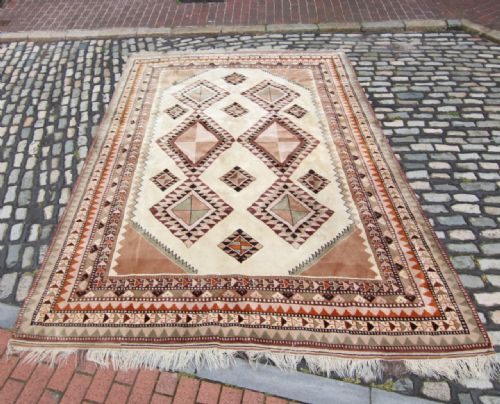


Beige Wool Floor Rug
A beige wool floor rug brings tactile warmth and grounding texture to a room, drawing on centuries of weaving traditions from Persia, Turkey, and China.
Beige Wool Floor Rug
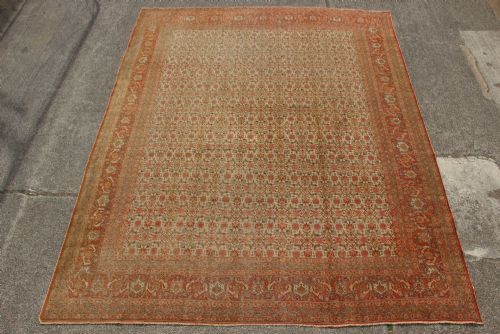
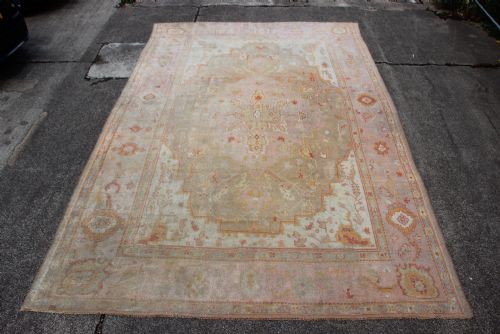
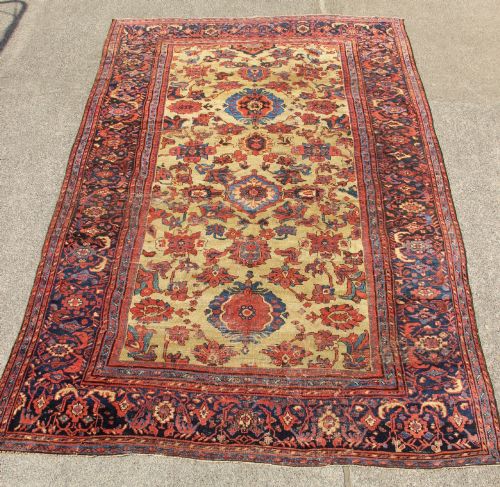
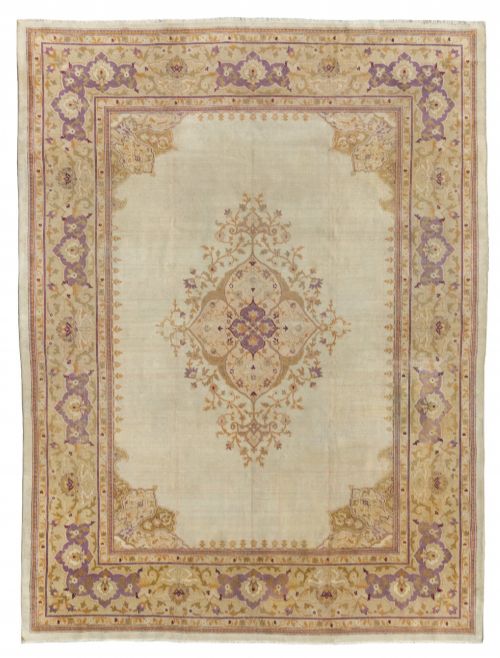
A beige wool floor rug encompasses large carpets and smaller area pieces originating from diverse regions including Tabriz, Oushak, Fereghan, Amritsar, and China, dating from the nineteenth century into the twentieth century. Buyers seeking this style will encounter traditional Persian and Ottoman village weaves, Chinese Art Deco carpets, and rustic tribal rugs rendered in neutral palettes.
The selections span grand room-size carpets measuring several metres alongside more compact village and nomadic formats like Baluch, Sarab, and Hamadan pieces. These floor coverings bridge diverse stylistic eras, ranging from mid-nineteenth-century Aubusson and Fereghan examples to 1930s carpets by makers such as Benlian.
How they were made
Construction relies primarily on natural wool, occasionally incorporating cotton foundations or camel wool for specific tactile and structural qualities. Weavers utilised hand-woven techniques to create dense piles suitable for daily foot traffic in domestic spaces.
Dyeing and knotting traditions varied by origin, from the distinctive large-scale patterns of Oushak and Ushak workshops to the fine knotting seen in Tabriz and Kashan productions.
Some tribal pieces incorporate camel wool, offering a wonderfully rustic texture that feels as stubborn as the animals themselves.
What varies in quality
Quality rests in the integrity of the wool, the precision of the hand-woven structure, and the preservation of the pile across large expanses. Finer pieces demonstrate superior knot density and sophisticated dye retention, while rustic tribal examples trade refinement for expressive, heavy textures.
The distinction between a top-tier workshop carpet and a village piece lies in the complexity of the design execution and the quality of the materials selected by the maker.
Benlian·Ziegler
The Beige Wool Floor Rug Glossary
- Pile
- The upright loops or cut strands of yarn that form the usable surface of a rug. It provides cushioning and warmth underfoot.
- Knot density
- The number of knots per square unit, which influences the clarity of pattern and durability. Higher density often indicates urban workshop production rather than tribal weaving.
- Foundation
- The underlying structure of warp and weft threads that supports the pile. Cotton and wool are typical foundation materials.
- Warp
- The vertical threads stretched on the loom before weaving begins. Fringe ends typically originate from these parallel strands.
- Weft
- The horizontal threads passed across the warp to lock the knots in place. This contributes to the structural stability of the carpet.
Beige Wool Floor Rug: Frequently Asked Questions
How do I clean a wool floor rug?
Vacuum gently without a rotating brush roll to protect the pile and prevent fibre degradation.
Professional specialist cleaning is recommended for antique wool textiles to preserve natural lanolin and dyes.
Where should I place a large carpet?
Position the piece in low-traffic reception rooms or studies to limit excessive wear on historical fibres.
Ensure the rug rests on a quality underlay to prevent slipping and cushion the foundation against hard flooring.
How can I tell an Oushak from a Tabriz?
Oushak carpets typically feature looser knots, larger scale floral motifs, and a softer wool texture.
Tabriz pieces generally display finer knotting, intricate medallion designs, and denser urban workshop execution.
Are these rugs suitable for modern interiors?
Neutral beige tones and weathered textures complement contemporary minimalist or traditional room schemes alike.
The varied origins provide distinct aesthetic anchors for grounding modern furniture layouts.