
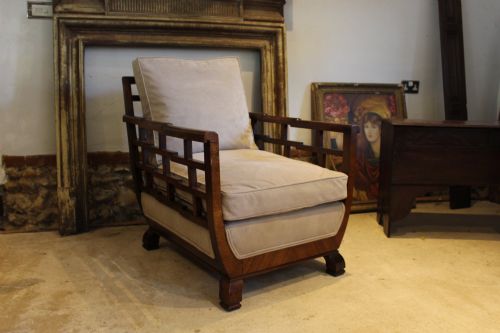
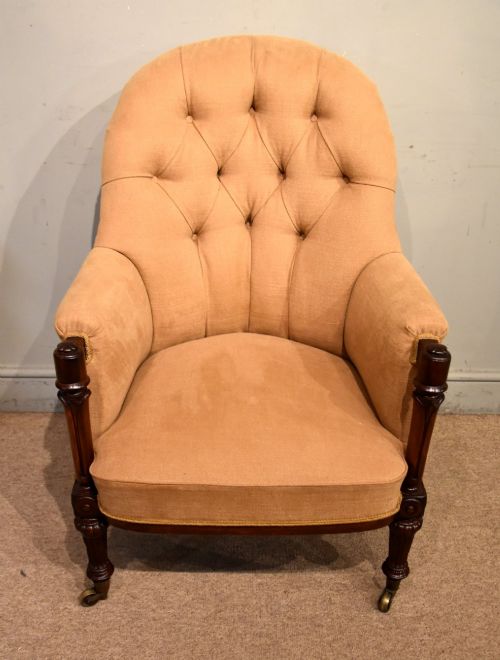


Beige Upholstered Reading Chair
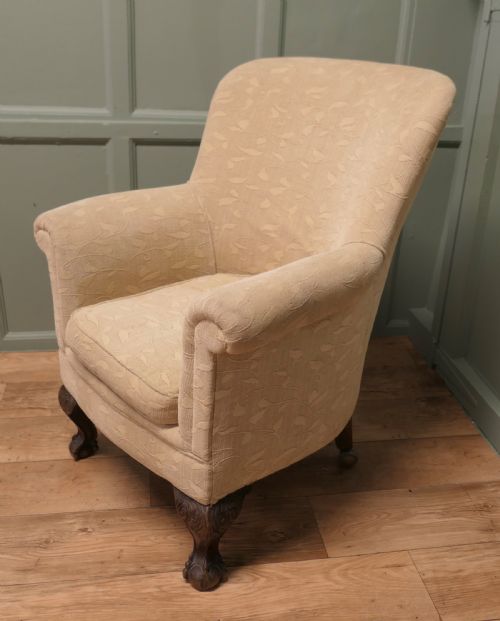
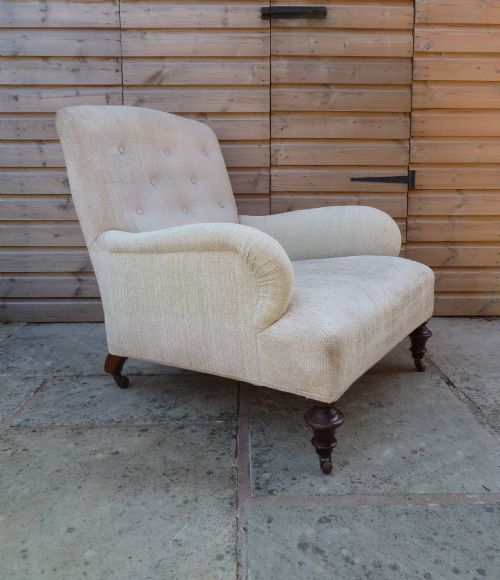
A beige upholstered reading chair provides deep comfort for long hours of book-bound focus, combining supportive cushioning with period woodwork.
Beige Upholstered Reading Chair
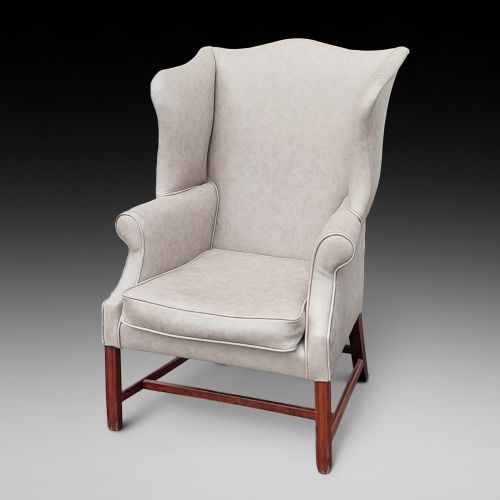
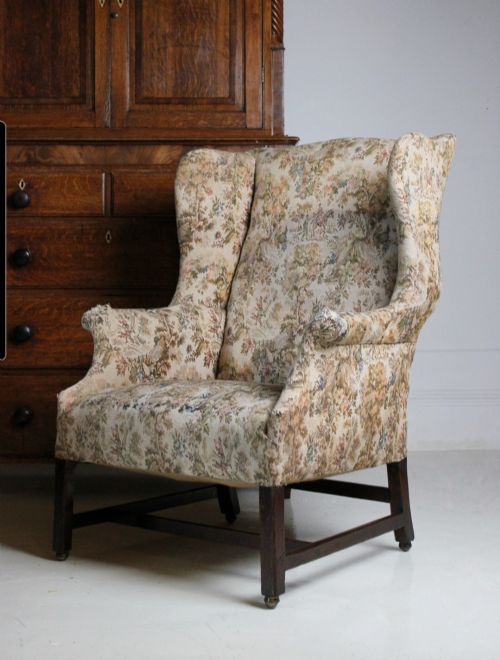
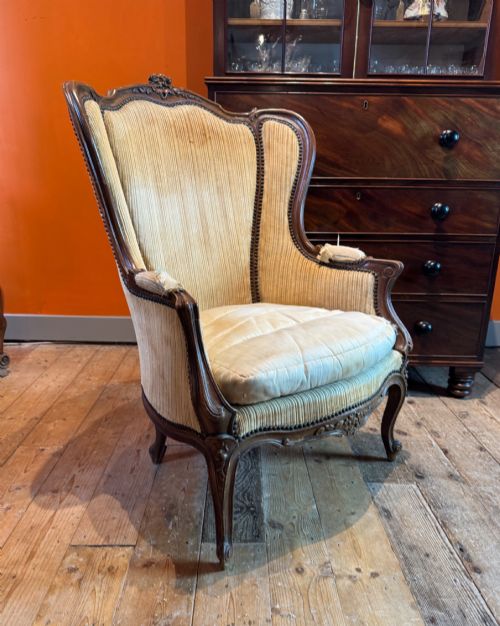
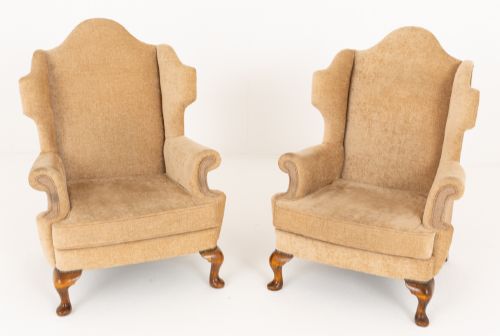
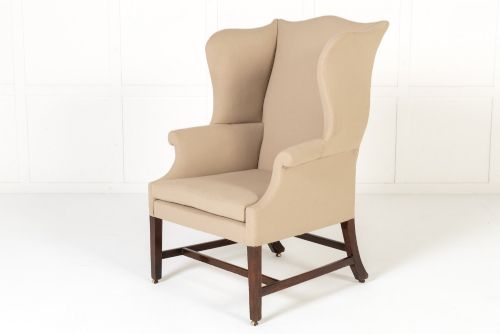
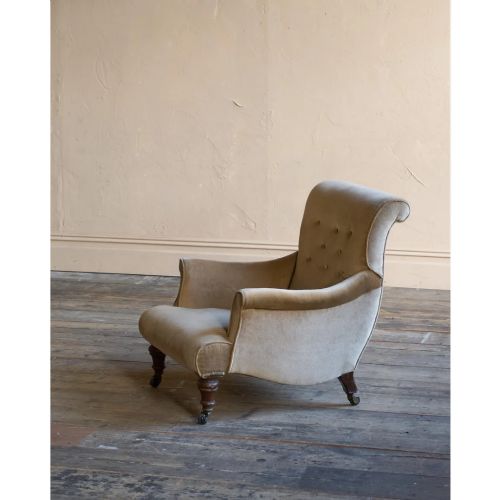
When you search for a beige upholstered reading chair, you encounter sturdy armchairs, library chairs, and wing chairs designed for relaxed sitting. These pieces predominantly date from the nineteenth and early twentieth centuries, spanning Victorian, Edwardian, and Georgian styles.
Originating largely from English country house and library traditions, these armchairs focus on physical comfort, high backs, and supportive armrests. They serve as functional seating that anchors a traditional study or living space.
How they were made
Makers built the structural frames of these armchairs using dense timbers such as mahogany, walnut, rosewood, and general hardwoods. Woodworkers carved show frames, cabriole legs, and scroll arms by hand, often incorporating brass fittings and metal reclining mechanisms.
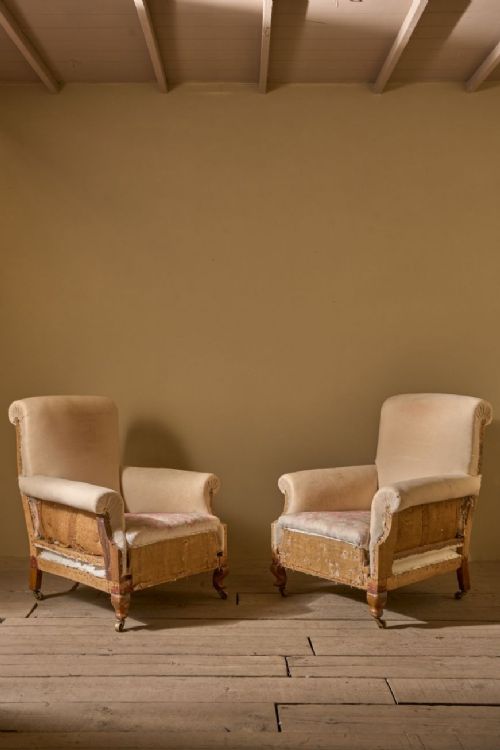
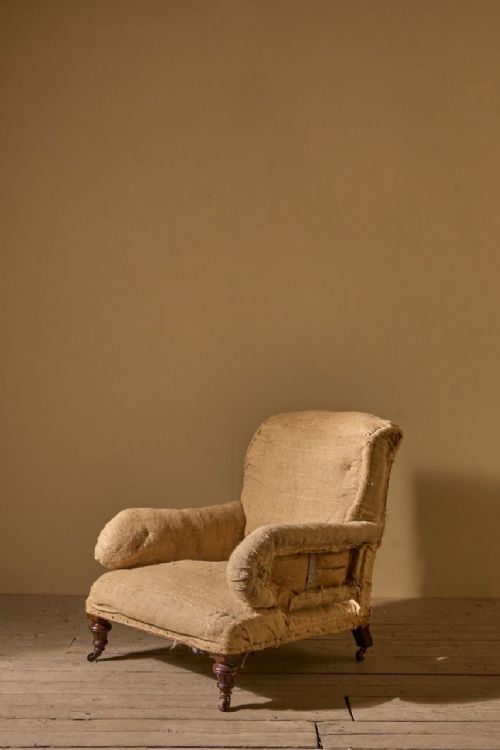
Upholsterers layered natural textiles including linen, cotton velvet, leather, and calf suede over internal padding to achieve durable support. Traditional stuffing methods utilised springs, webbing, and horsehair beneath the exterior fabric cover to maintain shape through decades of use.
Materials recorded across the inventory include mahogany, walnut, rosewood, brass, linen, velvet, calf suede, and general hardwoods.
What varies in quality
The integrity of the underlying hardwood frame and the precision of the joinery set the baseline for longevity. Chairs featuring substantial mahogany or walnut structures resist wobbling far better than lighter pine or mixed-timber alternatives.
The refinement of the upholstery work and the selection of covering material dictate the overall finish. High-end examples display meticulous hand-stitching, robust internal webbing, and quality textiles like heavy linen or supple suede that age gracefully.
Howard and Sons·Shoolbred
The Beige Upholstered Reading Chair Glossary
- Wing chair
- An armchair with side panels, or wings, attached to the backrest to block drafts and trap heat around the sitter. This traditional form dates back to the seventeenth century and remains popular for fireside and reading use.
- Library chair
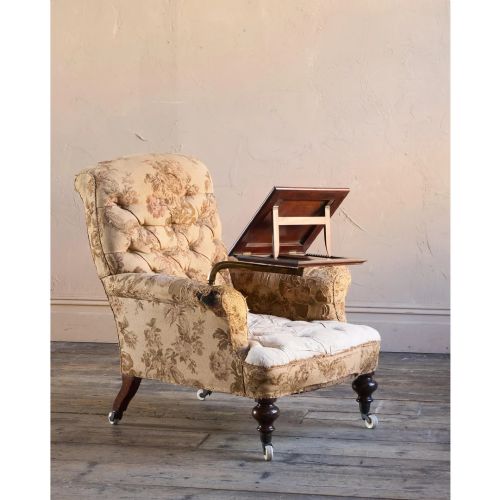
- A heavy, comfortable armchair designed specifically for prolonged reading in a study or library. These often incorporate reading stands, wide armrests, or adjustable reclining mechanisms.
- Bergere
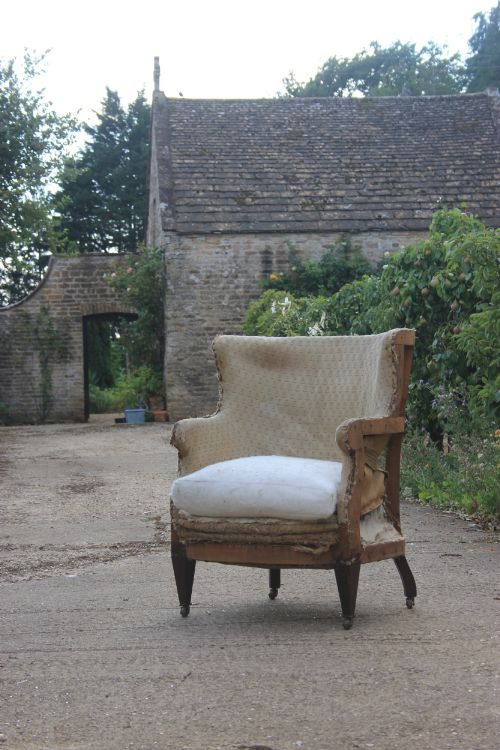
- A closed-upholstered armchair with a wooden show frame originating in France. They typically feature exposed carved woodwork and upholstered backrests and seats.
- Tub chair
- A curved armchair where the back and arms form a single continuous rounded enclosure. The compact shape provides enclosed support for the sitter.
- Show frame
- A wooden chair structure where the carved timber frame remains visible around the upholstered elements. This technique highlights the skill of the cabinetmaker alongside the upholsterer.
Beige Upholstered Reading Chair: Frequently Asked Questions
How do I identify a library chair?
Library chairs are distinguished by their sturdy timber frames, deep seats, and supportive high backs built for long hours of reading. Many examples include integrated reading stands, wider wooden armrests, or adjustable reclining actions.
They often date from the nineteenth century and use dense woods like mahogany or walnut paired with durable upholstery like leather or heavy linen.
What is a wing back chair used for?
Wing back chairs were originally designed to shield seated occupants from cold drafts in large, unheated rooms. The characteristic side panels trap body heat and offer a comfortable resting place for the head.
Today, they serve primarily as statement reading chairs that provide privacy and strong vertical lines in a traditional interior.
Are these chairs comfortable for daily reading?
These period armchairs were engineered specifically for sustained seating and relaxation. Deep cushioning, sturdy armrests, and ergonomic high backs provide ample physical support.
Upholstery materials such as linen, velvet, and suede offer soft tactile surfaces while maintaining structural firmness over extended periods of use.
How do I care for antique upholstery?
Preserving vintage upholstery requires gentle, regular maintenance to protect natural fibres like linen, wool, and suede from excessive wear. Vacuuming with a soft brush attachment removes trapped dust without abrading the textile weave.
Keep these chairs away from direct sunlight and strong heat sources to prevent the fabric colours from fading and the underlying timber from drying out.
What timber was used for frames?
Cabinetmakers relied on dense, durable hardwoods to construct the structural frames of these armchairs. Mahogany, walnut, and rosewood appear frequently in nineteenth-century designs, providing the necessary strength to support heavy use.
Show frames also allowed artisans to display carved decorative details alongside the upholstered sections.