


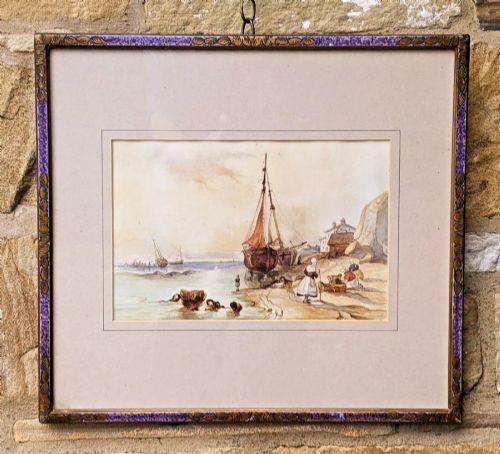
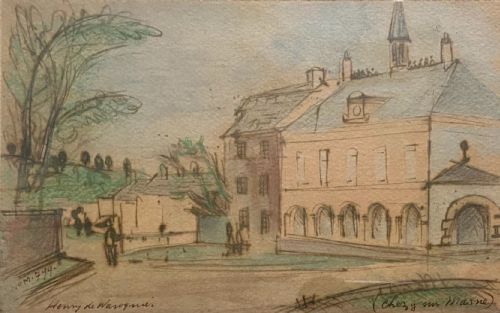
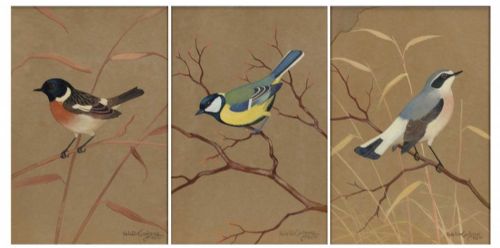


Beige Paper Painting
A beige paper painting brings historical scenes and coastal views to life through delicate washes and lasting pigment.
Beige Paper Painting
A beige paper painting encompasses works on paper, watercolour paintings, wall art, and mixed media drawings executed across the nineteenth and twentieth centuries. These pieces record landscapes, coastal harbours, garden birds, and architectural subjects through varied artistic movements.
The selections available here range from Victorian marine art and Edwardian views to British Impressionism and mid-century British art. Buyers encounter framed watercolours, gouache works, and albums of sketches that preserve historical moments on paper.
Originating from diverse hands, these works showcase subjects such as shipping on the River Humber, Yorkshire coastlines, and French town halls. Each piece relies on the tone of the paper to unify the composition and support the pigment.
Materials and technique
Artists create these works on paper supports, utilising watercolour pigment, ink, gouache, and crayon to build depth and contrast. The tactile quality of the paper surface interacts directly with the fluid mediums applied to it.
Framed examples are frequently protected by glass and backed by wood, preserving the delicate watercolours and mixed media drawings from environmental moisture and damage. Ink and pencil underdrawing often remain visible beneath the washes of pigment.
Albums provide alternative presentation formats, housing sequential ink and watercolour paintings complete with artist seals. These bound collections safeguard individual sketches while maintaining the integrity of the paper sheets.
An artist once tucked eight ink and watercolour paintings neatly inside a custom album, preserving them with an authentic seal.
Defining quality in works on paper
The strength of the composition and the clarity of the artist's brushwork separate accomplished pieces from standard decorative works. Skilful handling of watercolour pigment and ink demonstrates the creator's mastery over the medium.
Provenance and documentation influence the standing of a piece, with signed works, artist seals, and known exhibitions offering clearer historical context. The preservation of the paper support and the vibrancy of the pigments also distinguish finer examples.
Hector Caffieri·Henry de Waroquier·Ralston Gudgeon·William Frederick Settle·Cuthbert Crossley·Fred Lawson·Leslie Rackham·Kate E Booth·Ya Ming·Dame Laura Knight·George De Paris·Jessie Hall
The Beige Paper Painting Glossary
- Gouache
- An opaque water-based paint that includes a white pigment binder, producing a heavier and more matte finish than traditional watercolour.
- Mixed media
- An artwork combining two or more distinct artistic materials, such as ink, watercolour, and pencil used together on a single sheet.
- Provenance
- The documented history of ownership and origin surrounding an artwork, which helps establish its authenticity and background.
- Watercolour pigment
- Finely ground colour particles suspended in a water-soluble vehicle, applied in translucent washes across paper.
Beige Paper Painting: Frequently Asked Questions
How should I frame a beige paper painting?
Works on paper require conservation-grade mounting to ensure the paper does not touch the glass directly, preventing moisture accumulation and degradation.
Utilising UV-protective glass and stable wooden frames further shields the pigments from fading under normal light exposure.
What periods do these paintings cover?
The pieces span from the nineteenth century through the Victorian era, Edwardian period, and into the mid-twentieth century.
Represented styles range from early twentieth-century views to British modernism and mid-century maritime art.
Are these works signed by the artists?
Many of the listed pieces feature original signatures, artist seals, or inscriptions by the creators who produced them.
Signatures often appear alongside dates or location notes, offering direct attribution to the painters and illustrators.
How do I care for antique paper art?
Keep works on paper away from direct sunlight and high humidity environments to prevent the paper from yellowing and the pigments from shifting.
Displaying them in stable indoor conditions ensures the longevity of both the watercolour washes and the supporting paper.