


Beige Paper Landscape Painting
These beige paper landscape painting works capture scenes on toned supports, offering buyers subtle tonal harmony across Victorian and mid-century subjects.
Beige Paper Landscape Painting
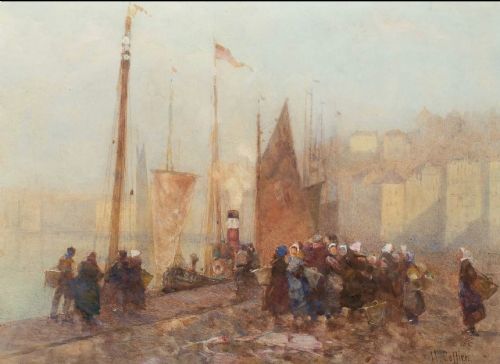
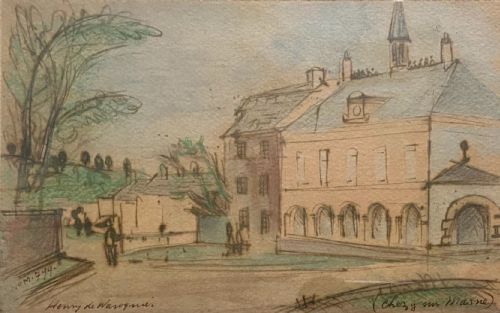
A beige paper landscape painting typically presents coastal views, town halls, cathedrals, and river shipping rendered upon tinted or aged supports. These works span from the Victorian period through to the mid-twentieth century, capturing British and European topographies with intimate scale.
The most common examples on this page are watercolours and mixed media drawings on paper, often framed under glass with wooden mouldings. They include signed sheets by regional artists as well as architectural studies and coastal genre scenes.
Collectors encounter pieces bearing historical labels, artist seals, or inscriptions locating the view in Yorkshire, Norfolk, or further afield in France. The warm ground of the paper itself often functions as a middle tone in the composition, unifying sky, water, and earth.
Materials and execution
Makers utilised watercolour pigment, ink, and crayon applied directly onto prepared or naturally aged paper sheets. The absorbent nature of the paper allowed artists to exploit the pale background for highlights and negative space.
Framed presentation typically involves traditional wood surrounds protecting the delicate works on paper beneath glass. Mixed media pieces combine fluid ink lines with washes of watercolour pigment to define architectural details and figures.
Listings feature works executed on paper using watercolour, ink, and crayon across Victorian, Edwardian, and mid-century periods.
Assessing quality and execution
Quality rests upon the surety of the brushwork and the structural clarity of the composition, distinguishing deft topographical records from stiff or formulaic student exercises. The interplay between the pigment and the exposed beige paper ground reveals the confidence of the hand.
Condition plays a vital role, with superior examples retaining their original freshness of tone without heavy foxing or acidic burn from inferior backing boards. Signed sheets by recognised regional practitioners generally command greater attention than anonymous works.
Hector Caffieri·Henry de Waroquier·William Frederick Settle·Cuthbert Crossley·Fred Lawson·Leslie Rackham·Kate E Booth·Ya Ming·George De Paris·Jessie Hall
The Beige Paper Landscape Painting Glossary
- Watercolour pigment
- Finely ground colour suspended in a water-soluble binder, applied in translucent washes across the paper support.
- Mixed media
- An artwork combining two or more distinct artistic materials, such as ink lines beneath watercolour washes.
- Foxing
- Small brownish spots caused by chemical reactions in aged paper, frequently encountered in works from the nineteenth and early twentieth centuries.
- Topography
- The detailed mapping or pictorial representation of particular places, towns, or natural landscapes.
Beige Paper Landscape Painting: Frequently Asked Questions
What periods do these paintings date from?
The selection spans from the nineteenth century through the Victorian era and into the mid-twentieth century. Works reflect stylistic shifts from British Impressionism to traditional topographical recording.
Dates are often inscribed by the artist or deduced from framing, subject matter, and stylistic handling.
How should I care for works on paper?
Keep watercolours and drawings away from direct sunlight to prevent fading of both the pigments and the toned paper support. Maintaining stable humidity levels protects the paper from warping and deterioration.
Ensure framing is professionally sealed to keep out dust and atmospheric pollutants.
Are these paintings usually signed?
Many pieces feature artist signatures, monograms, or studio stamps, occasionally accompanied by titled mounts or inscriptions on the reverse. Signed works by regional British artists appear alongside occasional continental examples.
Unsigned pieces are attributed on stylistic grounds and subject matter.
What subjects do these landscapes feature?
Subjects range from Yorkshire coastlines and Richmond views to cathedral architecture and river shipping scenes. Figures engaged in daily labour, such as spreading nets or landing catches, frequently populate the foregrounds.
Topographical accuracy combined with atmospheric lighting defines the genre.