


Beige Fabric Easy Chair
A beige fabric easy chair brings quiet comfort and period character to a room, offering deep seating wrapped in neutral upholstery.
Beige Fabric Easy Chair
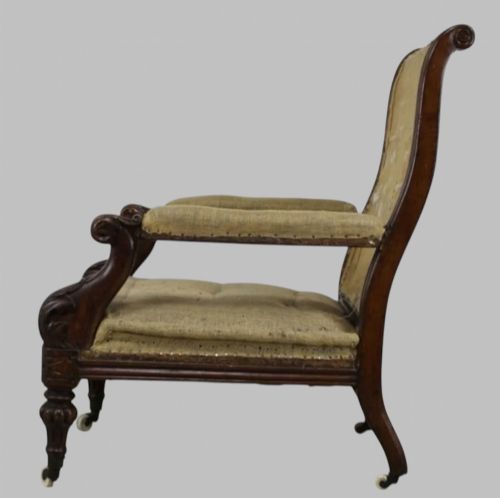
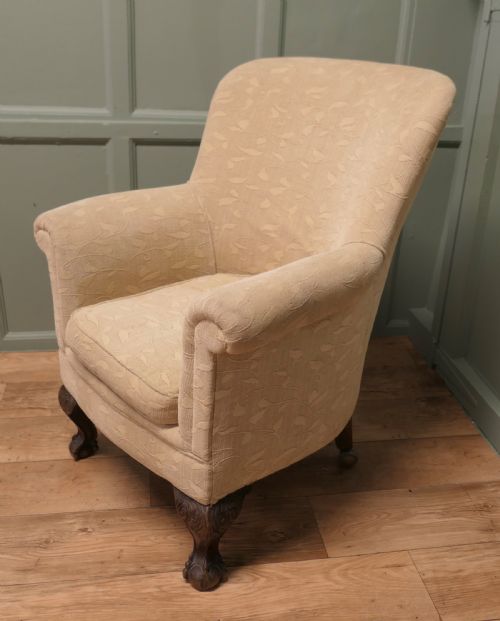
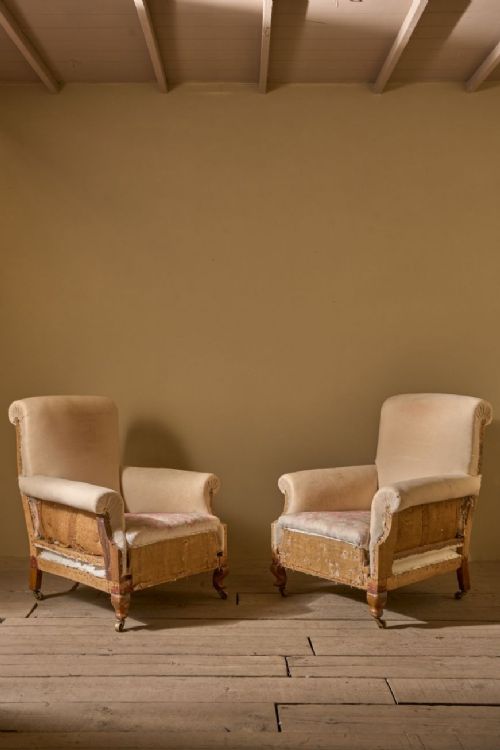
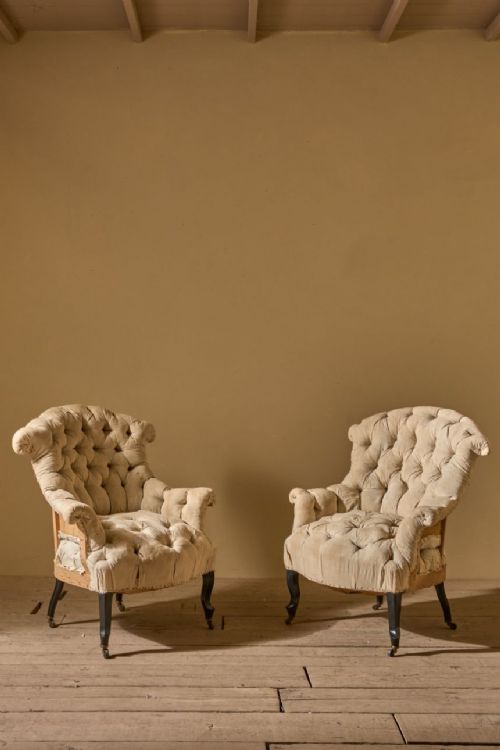
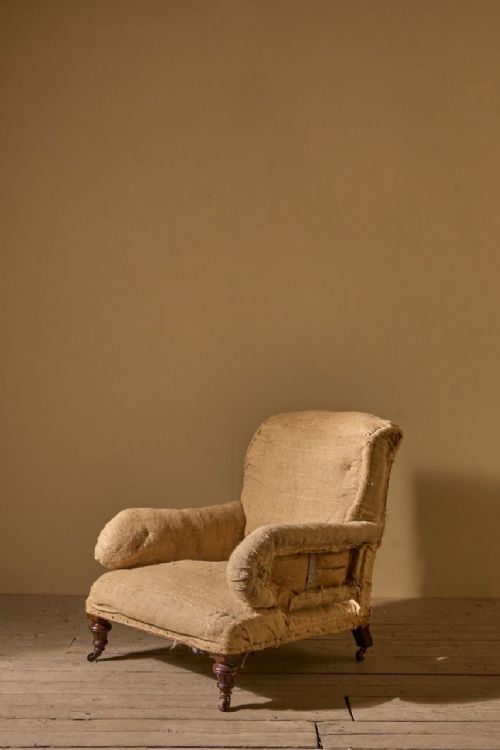
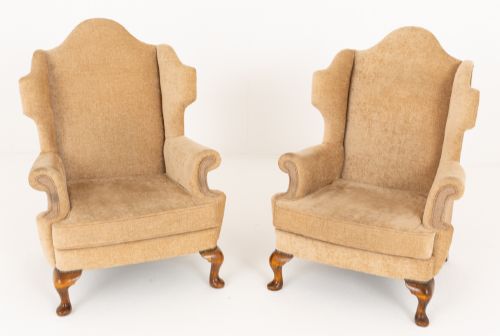
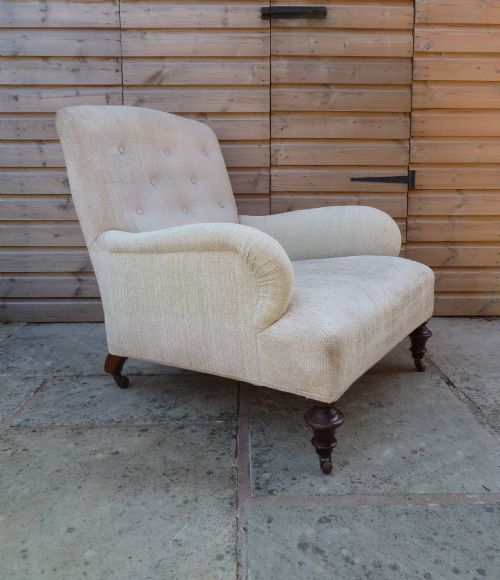
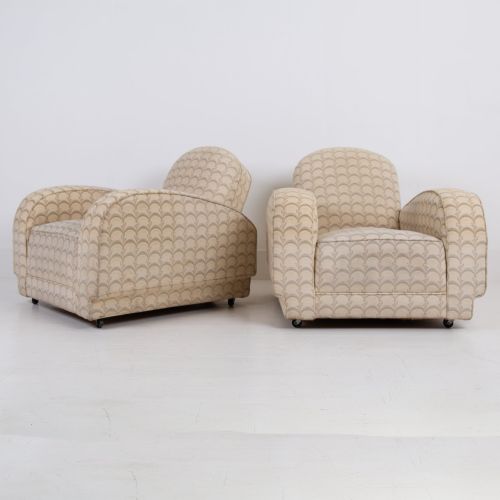
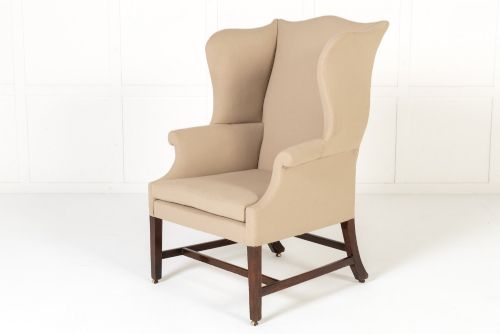
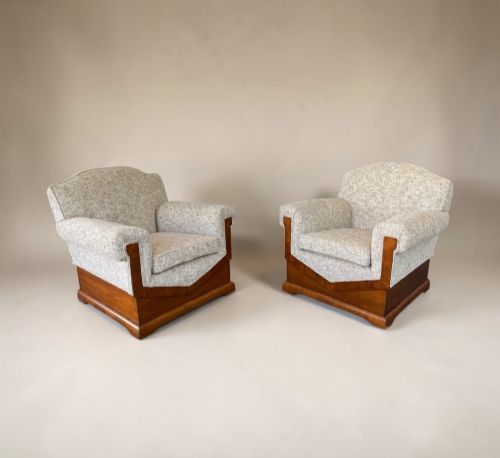
A beige fabric easy chair encompasses diverse seating forms from the eighteenth, nineteenth, and early twentieth centuries, spanning styles from Victorian and Edwardian to Art Deco. Buyers hunting for a beige fabric easy chair encounter everything from deep-seated English country house armchairs to buttoned Napoleon III fishtail chairs and Georgian style wing chairs.
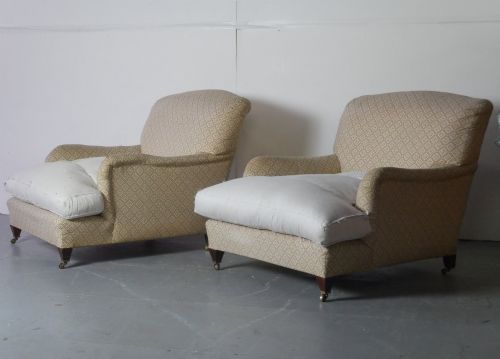
The selection ranges from substantial mahogany and walnut wing chairs to low-slung lounge chairs and occasional tub chairs. Many pieces reflect classic English upholstery traditions associated with makers like Howard and Sons, while others showcase continental flair or regional Scottish craft.
How they were made
Makers constructed these frames from solid timbers such as mahogany, walnut, oak, and general hardwood or timber. Joinery traditions varied by decade, supporting heavy sprung seats and padded backs designed for sustained daily use.
Upholstery relied on durable interior webbing, stuffing, and various textile coverings, often finished with brass details or button tufting. Wood frames frequently featured carved wooden elements, exposed polished legs, and scroll arms.
What varies in quality
Quality rests in the architectural proportions of the wooden frame and the integrity of the underlying structure. Heavier, larger-scale frames with well-balanced scroll backs or wings demonstrate superior cabinetmaking.
The distinction between standard commercial seating and finer workshop production lies in the weight of the timber, the subtlety of the carved details, and the overall harmony of the silhouette.
Whytock and Reid·Howard and Sons
The Beige Fabric Easy Chair Glossary
- Wing chair
- An armchair with side panels or wings attached to the back, originally designed to shield the sitter from drafts. These upholstered seats often feature deep proportions and wooden legs.
- Scroll back
- A chair back shape where the wooden frame or upholstery curves outward in a tight scroll. This contour appears frequently on nineteenth-century country house seating.
- Buttoned back
- An upholstery technique where textile is pulled tight and secured with recessed buttons to create a diamond pattern. This method adds firm support and visual texture.
- Tub chair
- A curved armchair where the back and arms form a single continuous rounded enclosure. These compact seats suit smaller spaces.
- Slipper chair
- A low-to-the-ground armchair traditionally used in bedrooms for dressing. They combine compact frames with upholstered seats.
Beige Fabric Easy Chair: Frequently Asked Questions
What is a beige fabric easy chair?
A beige fabric easy chair is a comfortable upholstered seat dating from the eighteenth century to the 1930s. These pieces range from Victorian buttoned chairs to Edwardian country house loungers.
They offer neutral upholstery combined with traditional wooden frames, making them adaptable seating options for various interior settings.
How do I identify an Edwardian easy chair?
Edwardian easy chairs often feature deep, comfortable proportions influenced by traditional English country house styles. They frequently display relaxed upholstery lines and sturdy wooden supports.
Comparing the frame construction and leg style against known pieces from the early twentieth century helps determine the period.
Where were these armchairs used?
Historically, these armchairs served as comfortable seating in drawing rooms, studies, and bedrooms across English country houses and town residences. Wing chairs protected occupants from drafts, while slipper chairs sat in dressing rooms.
Today, they function as primary reading chairs or living room seating that anchors a neutral colour scheme.
What wood types are used in these frames?
Makers utilised a variety of hardwoods including mahogany, walnut, oak, and general timber for structural stability. Exposed wooden elements often showcase the natural grain or polished finishes characteristic of their period.
The choice of timber typically reflects the furniture style, from Georgian mahogany to nineteenth-century walnut.