


Beige Club Chairs
Beige club chairs are deep, low-slung armchairs designed for comfort, offering substantial seating upholstered in neutral tones.
Beige Club Chairs
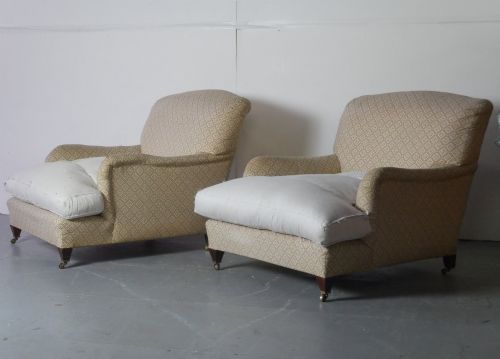
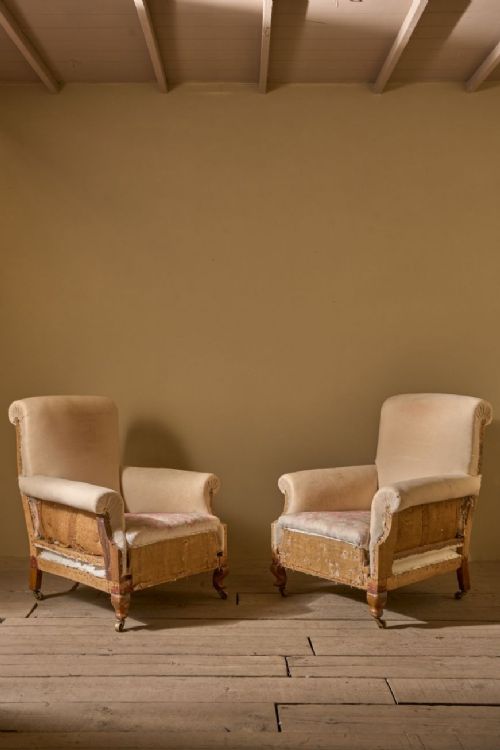
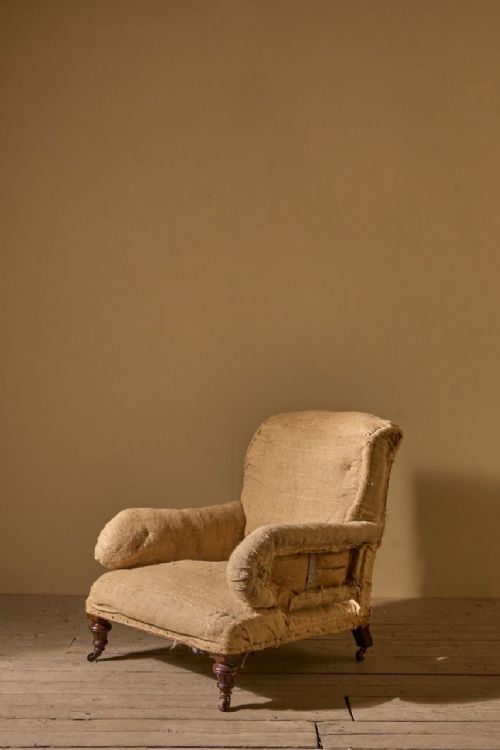
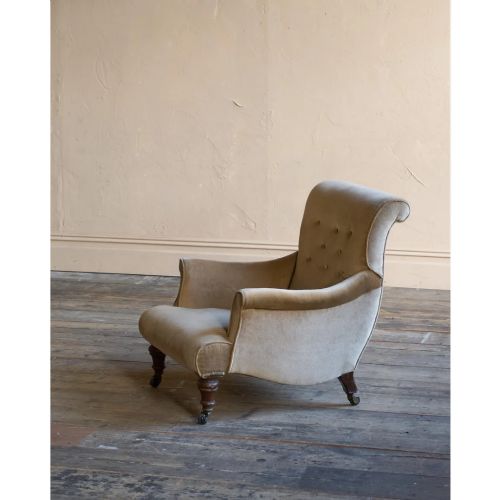
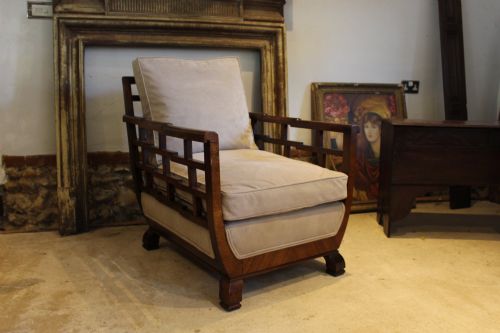
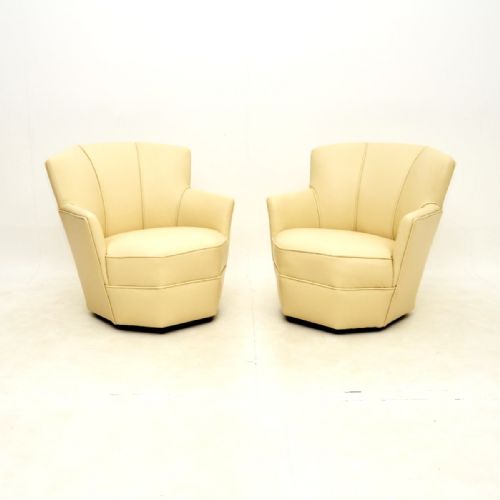
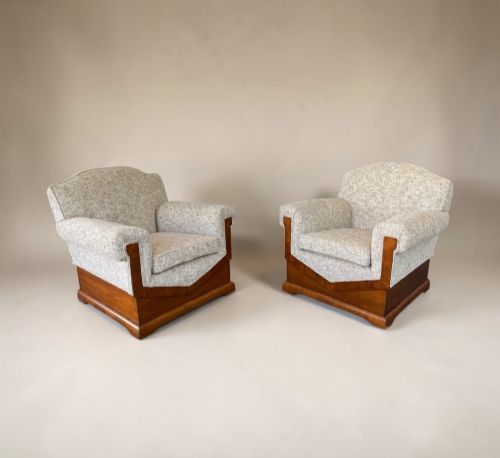
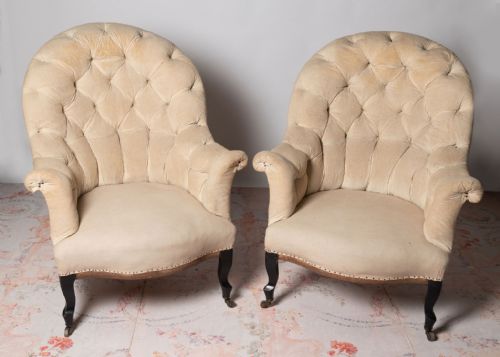
Beige club chairs encompass deep upholstered seating spanning the nineteenth century through the mid-twentieth century, with strong representation from the Edwardian era and the art deco period. Buyers encounter forms ranging from English country house scroll back armchairs to streamlined art deco lounge chairs and nineteenth-century library chairs.
Origin points across the evidence point towards English country house traditions, French workshops, and Scottish cabinet makers. These pieces prioritize generous proportions and comfortable padding suited to domestic relaxation.
Materials and construction
The underlying frames utilise solid timber, mahogany, walnut, and wood, often supported by exposed metal or brass elements where appropriate for the period. These sturdy structural timbers provide the necessary rigidity for deep-seated armchair designs.
Upholstery materials recorded in the evidence include fabric, velvet, calf suede, and leather, occasionally incorporating decorative textiles like kilim carpets or specific thematic prints. This variety of tactile coverings defines the outward appearance of each club chair.
One Edwardian armchair comes upholstered specifically in a horse racing theme.
What sets examples apart
Quality rests upon the integrity of the underlying timber frame and the precision of the upholstery work executed by makers such as Whytock and Reid or workshops working in the Howard and Sons tradition. Superior pieces display harmonious proportions, such as well-balanced scroll backs or deep-seated frames.
The selection of covering materials, whether fine leather, calf suede, or heavy velvet, distinguishes standard production from more ambitious commissions. Finer execution shows in the crisp lines of art deco silhouettes or the tailored drape of traditional English country house seating.
Whytock and Reid·Howard and Sons
The Beige Club Chairs Glossary
- Scroll back
- An armchair design where the top rail or arms curve outward and backward in a scroll shape. This profile provides both ergonomic support and a distinctive silhouette.
- Art Deco
- A design style prominent in the 1920s and 1930s characterised by sleek geometric forms and streamlined shapes. It marks a shift away from ornate historical revivals toward modern luxury.
- Edwardian
- Pertaining to the reign of King Edward VII, spanning the early twentieth century. Furniture from this period often balances comfortable domestic scale with lighter decorative touches.
- Walnut
- A dense, dark hardwood valued for its rich grain and durability in cabinet making. It frequently forms the visible wooden legs or accents on finer armchairs.
- Kilim
- A flatwoven textile traditionally produced in the Middle East and Eastern Europe. When utilised as upholstery, it brings vibrant geometric patterns to heavy seating.
Beige Club Chairs: Frequently Asked Questions
How do I identify an Edwardian club armchair?
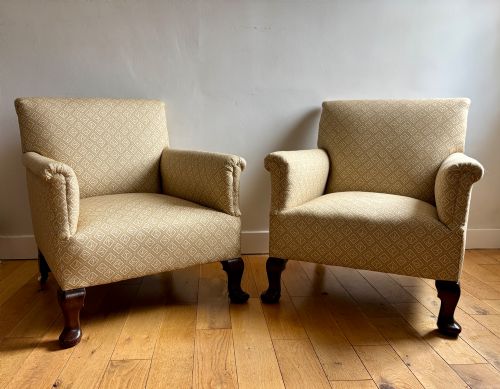
Edwardian examples typically feature deep, comfortable upholstery designed for relaxed seating within a domestic interior. They often incorporate traditional English country house styling alongside early twentieth-century proportions.
Look for subtle stylistic cues that distinguish them from heavier nineteenth-century models, such as refined wooden legs and softer, more approachable padding profiles.
What materials are used for art deco club chairs?
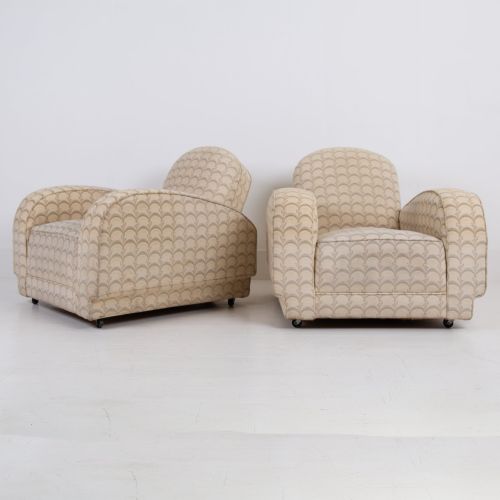
Art deco club chairs from the 1930s frequently combine solid walnut or timber frames with smooth leather, calf suede, or heavy fabric upholstery. These materials emphasise clean lines and tactile luxury.
The combination of polished wood and supple animal hide defines the distinct aesthetic of this mid-century modernizing phase.
Are these armchairs sold as pairs?
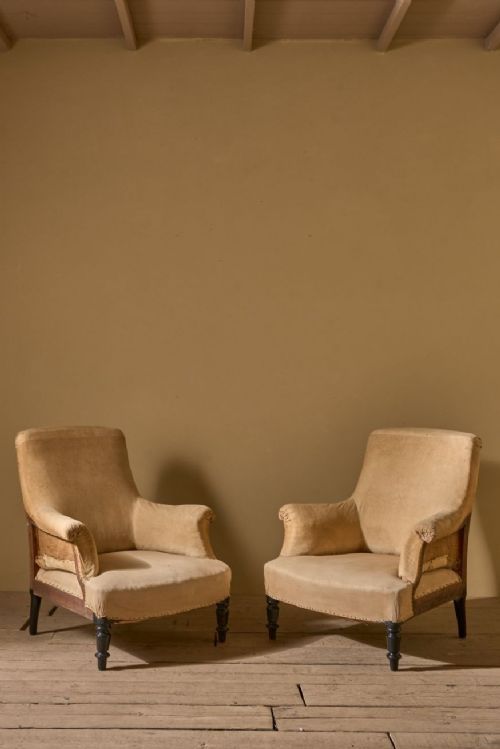
Many listings across the nineteenth and twentieth-century periods comprise matched pairs alongside individual seating options. Pairs are particularly common in traditional English country house and art deco configurations.
Buyers seeking symmetrical arrangements for a living room or library will find multiple dual offerings throughout the inventory.
How do French styles differ from English ones?
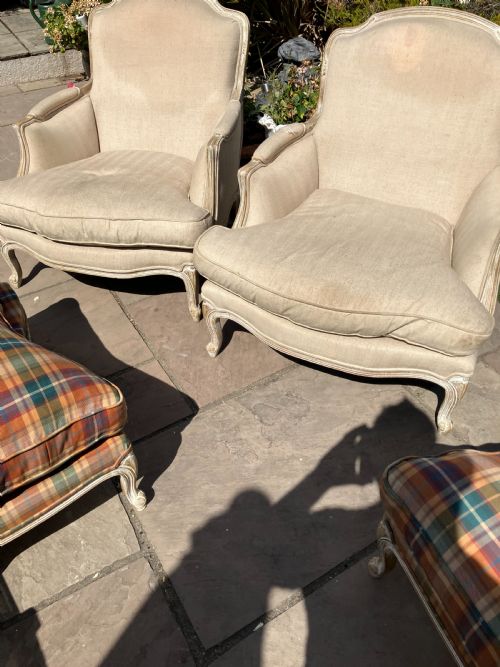
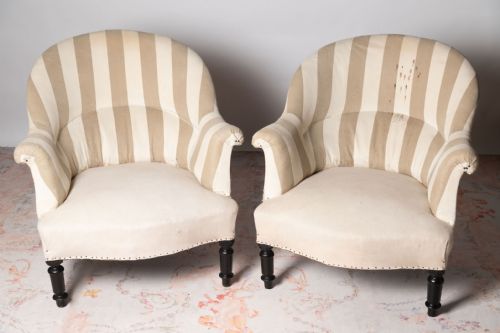
French club chairs often display Napoleon III, Louis XV, or general Louis style influences, emphasising decorative framing and distinct square or rounded back shapes. They bring a Continental sensibility to the classic deep-seated armchair form.
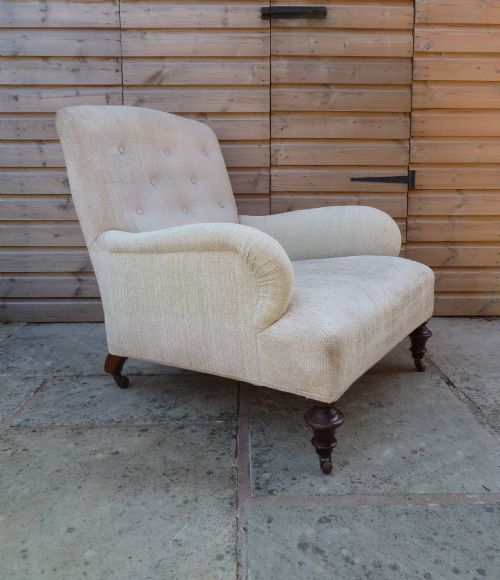
In contrast, English country house variants lean toward robust comfort, scroll backs, and associations with makers like Howard and Sons.