

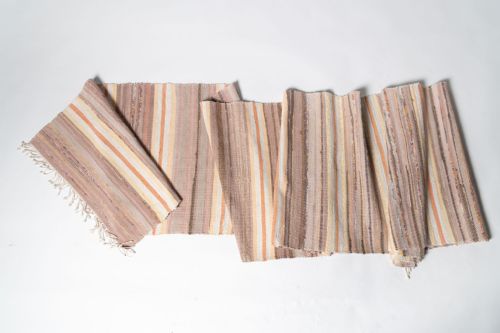
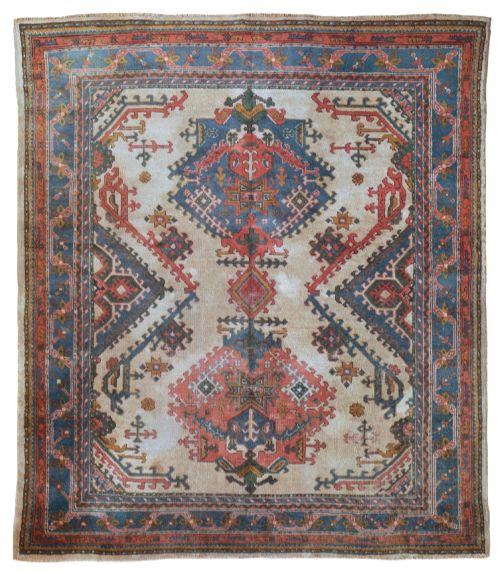
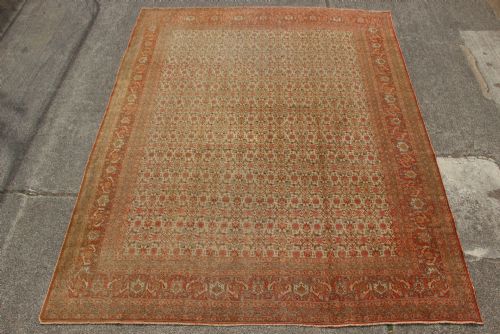
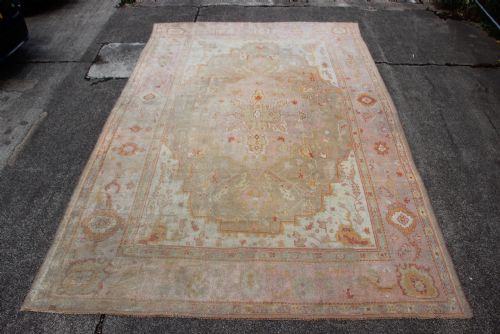
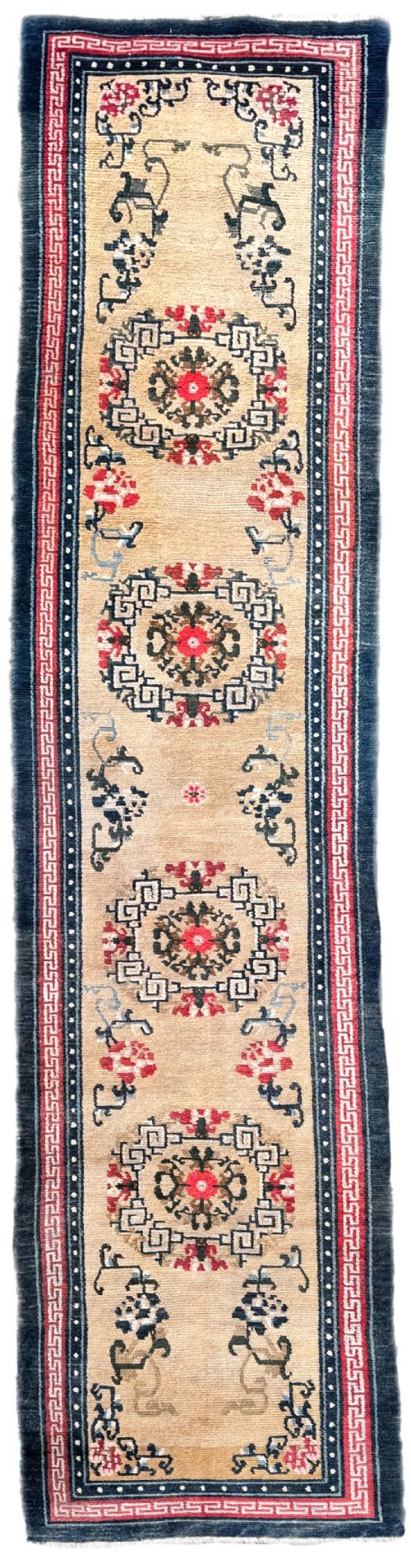
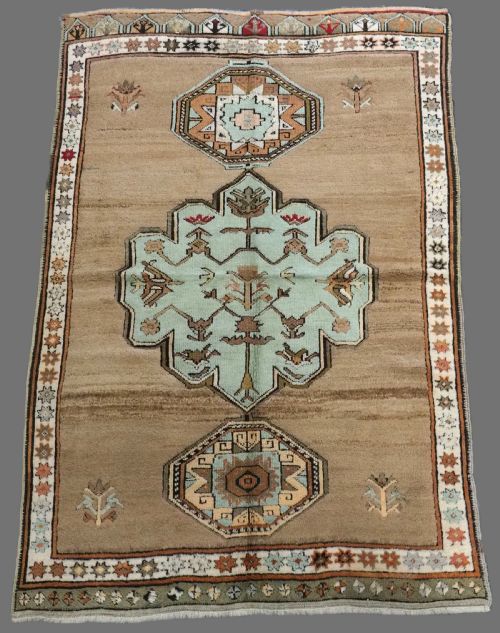
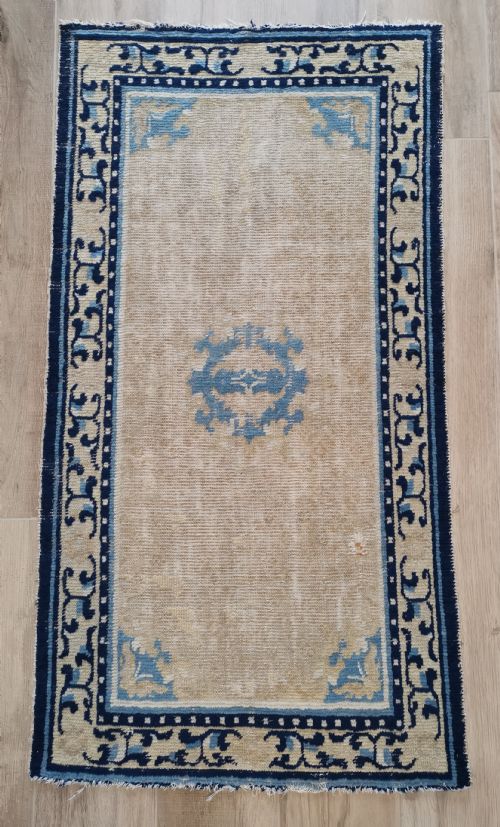
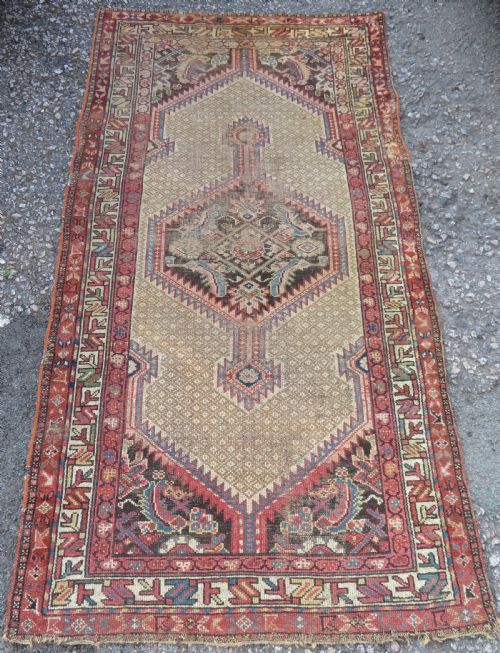
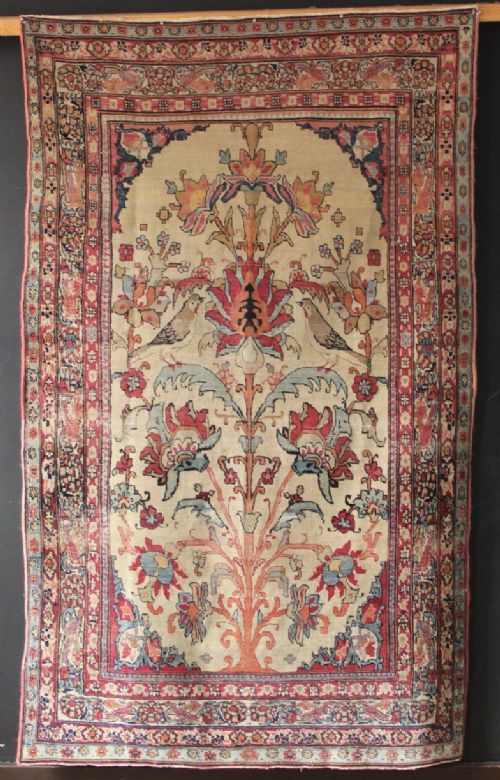
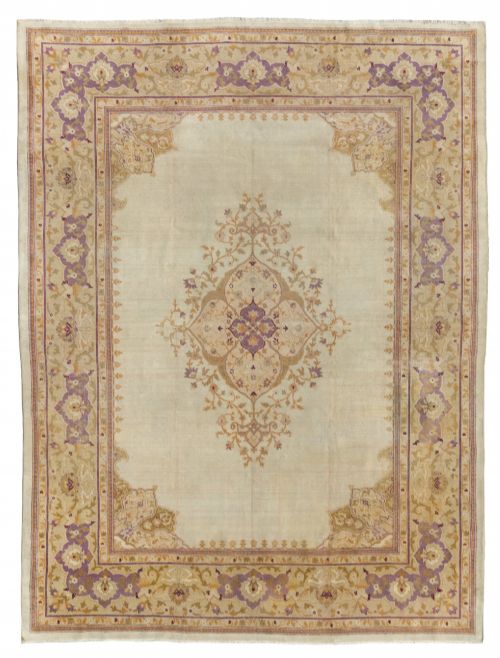


Beige Rug
When you search for a beige antique rug, you are looking at centuries of hand-knotted and embroidered floor coverings woven across Persia, Turkey, Central Asia, and China.
Beige Rug
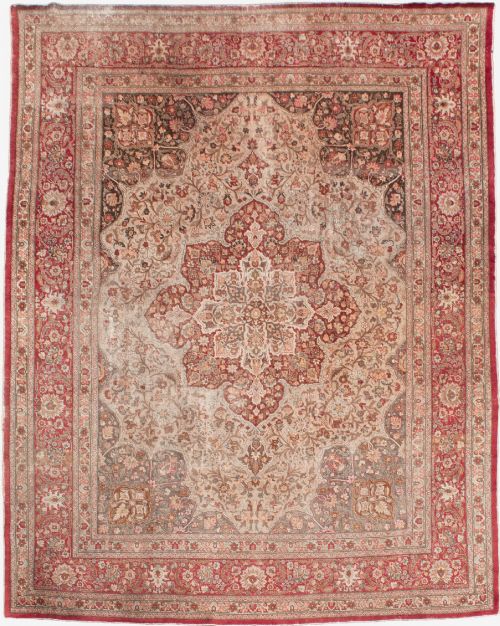
A beige antique rug encompasses woven and embroidered carpets, runners, prayer rugs, and cushions originating from traditional regional centres including Tabriz, Oushak, Kirman, and Bidjar. These pieces span production dates from the mid-nineteenth century through the early twentieth century, reflecting varied tribal and city workshop traditions.
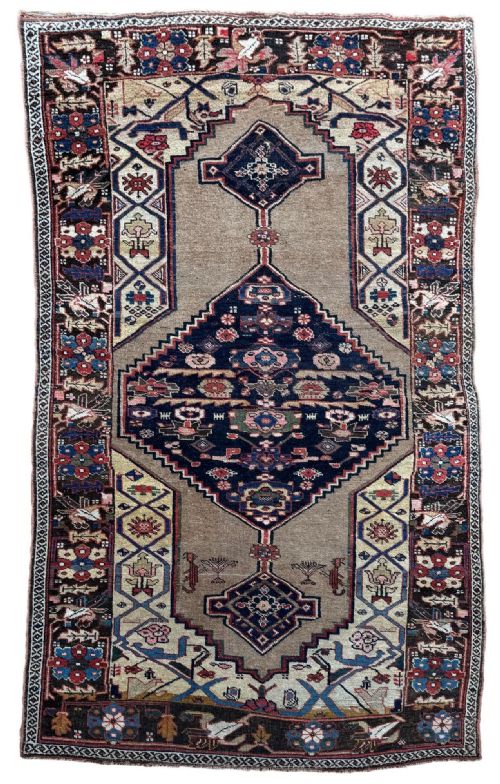
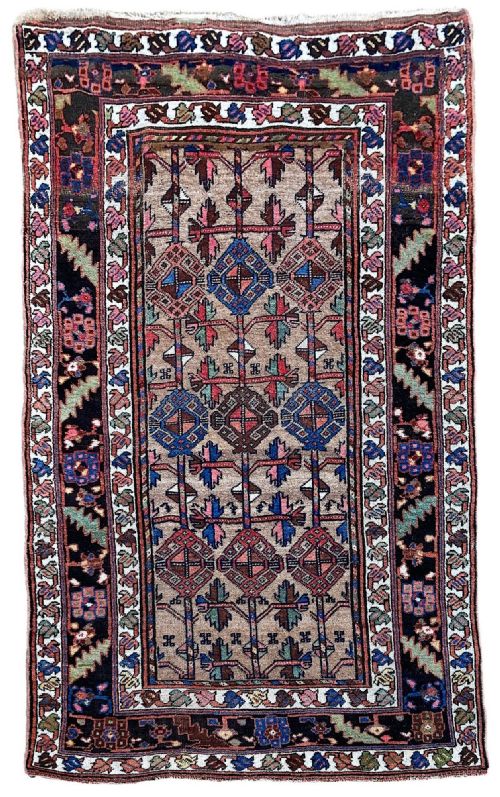
The prevalent forms on this page include large country house carpets alongside smaller scatter rugs and runner rugs. Materials range from standard sheep wool to camel hair, cotton, silk, and jute, often displaying subdued or faded patinas.
Buyers will find distinctive regional styles such as Persian Ziegler, Anatolian tribal, and Chinese Art Deco pieces. Each object preserves the specific structural techniques and decorative motifs of its original geographic source.
How they were made
Weavers constructed these textiles primarily using hand-spun wool and cotton foundations, occasionally incorporating silk thread or camel wool for specific pile and detail work. Individual knots were tied by hand across the warp and weft threads to build dense, durable floor coverings.
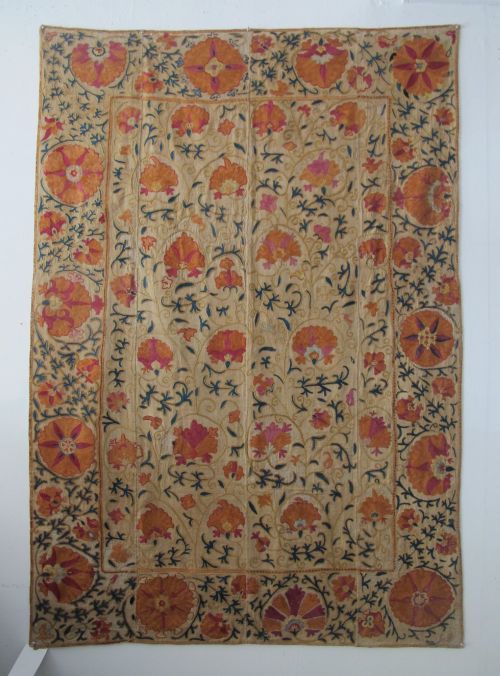
Dyeing methods relied on traditional natural sources to achieve the characteristic soft colour palettes seen across the inventory. Certain textiles, such as Suzanis, utilise detailed needlework embroidery applied directly to woven backing fabrics.
Beige Rug Retail Price Guide 2026
Typical asking prices for beige rug among the pieces listed under this phrase on Sellingantiques today, from the lower quarter to the upper quarter. They describe what is for sale here now, not the wider market.
Listings feature textiles spanning production dates from 1850 through 1930, utilising wool, silk, cotton, and camel hair.
What varies in quality
Knot density and structural integrity determine the durability and refinement of an antique rug. Pieces with tighter knots and finer wool or silk yarns maintain their form and detail more effectively over decades of use.
The consistency of the natural dye palette and the subtlety of the faded patina influence the visual balance of each textile. Master workshops achieved greater harmony in proportion and intricate border execution compared to standard village productions.
Benlian
The Beige Rug Glossary
- Pile
- The vertical or slanted yarn standing up from the foundation of a rug that forms the usable surface. This soft nap results from hand-tied knots clipped to a uniform height during production.
- Warp
- The stationary longitudinal threads stretched tightly on a loom before weaving begins. These parallel threads carry the structural tension of the entire carpet.
- Weft
- The horizontal threads passed alternately over and under the warp threads to lock the knots in place. This grid provides the stable backing necessary for traditional floor textiles.
- Suzani
- A large, decorative embroidered textile made in Uzbekistan and surrounding regions. Women traditionally stitched these floral panels in silk thread on cotton or linen foundations as part of dowry items.
- Patina
- The surface sheen and softened coloration acquired by textiles through age, light exposure, and gentle wear. This gradual transformation mellows bright raw dyes into harmonious, muted tones.
Beige Rug: Frequently Asked Questions
How do I clean an antique rug?
Gentle surface vacuuming without a beater bar removes loose dirt from the pile safely. Professional textile conservators should handle wet washing and deep cleaning to protect delicate natural dyes.
Avoid harsh chemical detergents or household scrubbing methods which weaken old wool and cotton foundations. Regular rotation prevents uneven fading and wear patterns across different sections.
Can I use these rugs in high traffic areas?
Sturdy wool and camel hair carpets withstand moderate foot traffic when paired with a quality rug underlay. Thicker village and city weaves distribute pressure evenly and resist daily friction effectively.
Silk prayer rugs and fine needlepoint textiles require protected placement away from heavy corridors. Placing delicate pieces in low-traffic rooms preserves their structural integrity.
How do I identify the regional origin?
Specific knotting structures, border motifs, and colour combinations point directly to traditional weaving regions. Comparing edge finishes and material combinations helps separate Persian workshops from Anatolian or Central Asian productions.
Familiarity with regional palettes, such as the pale tones of Oushak or the fine detail of Tabriz, clarifies provenance. Each weaving district maintained distinct technical signatures embedded within the foundation.
What causes the faded patina on these rugs?
Decades of natural light exposure and gentle domestic use gradually soften the original dyed wool and silk yarns. This ageing process creates the characteristic muted aesthetic valued by collectors.
Traditional natural dye formulas reacted to environmental conditions over time rather than washing out abruptly. This gradual mellowing distinguishes genuine antique textiles from modern chemical reproductions.