

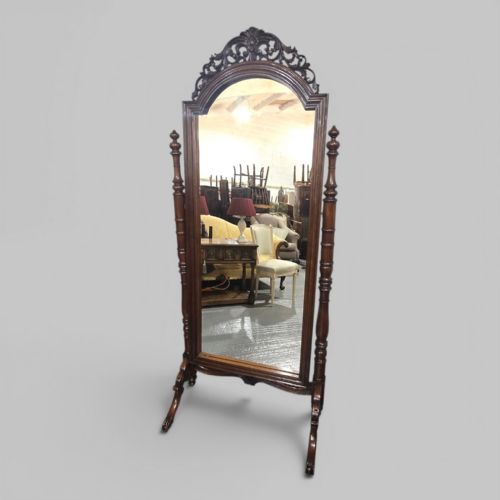


Bedroom Standing Glass
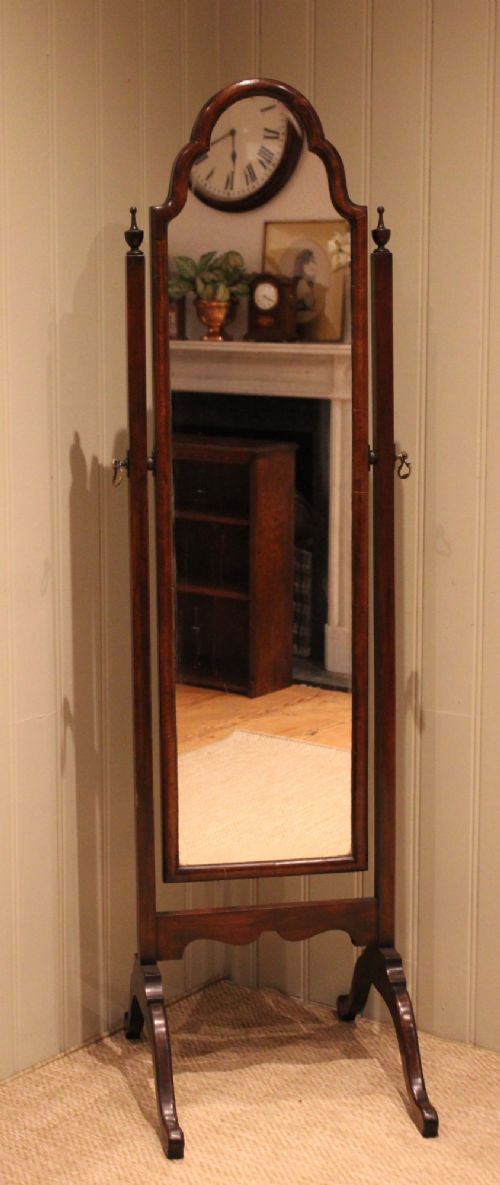
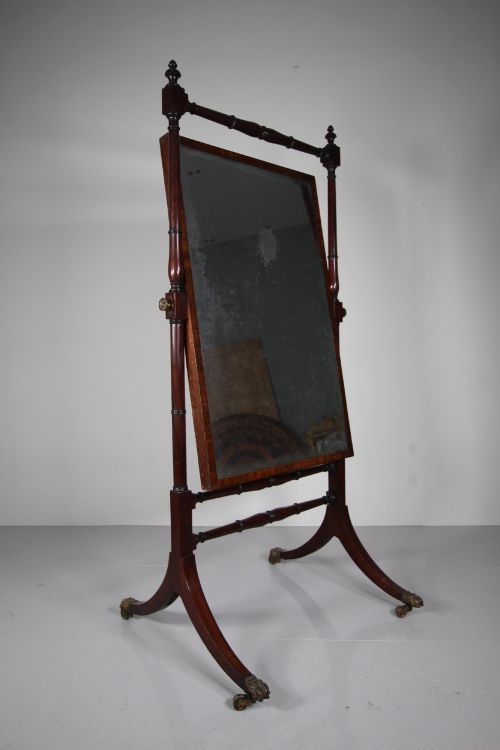
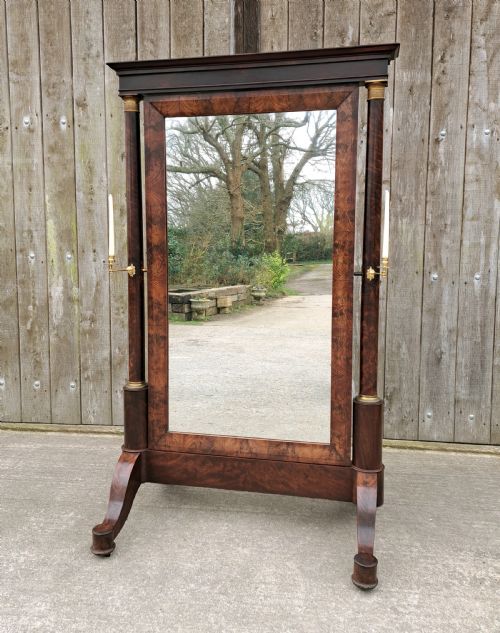
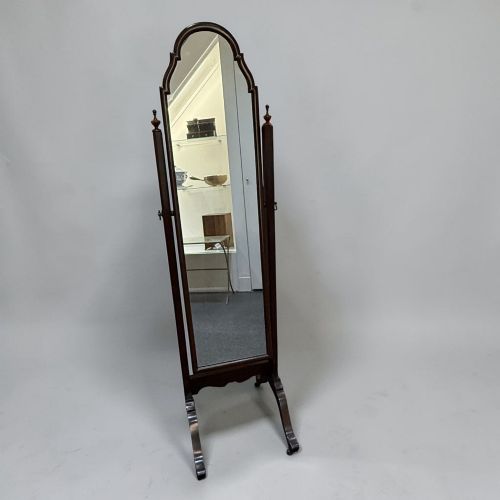
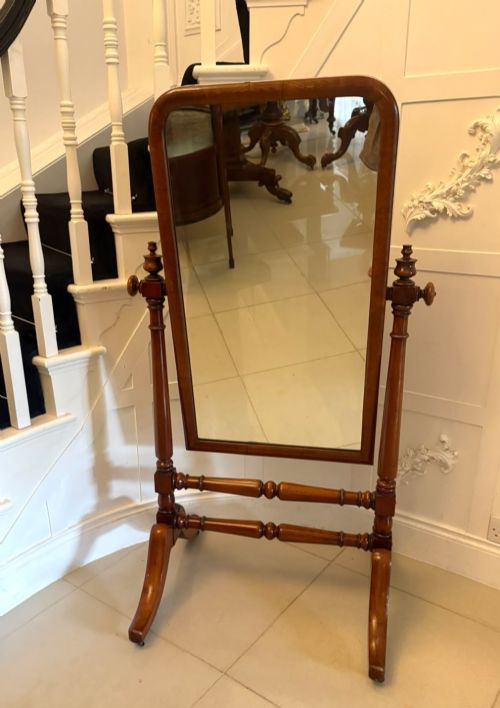
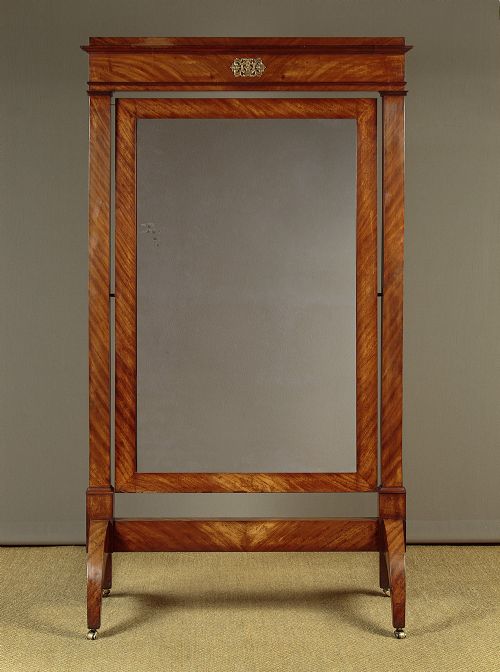
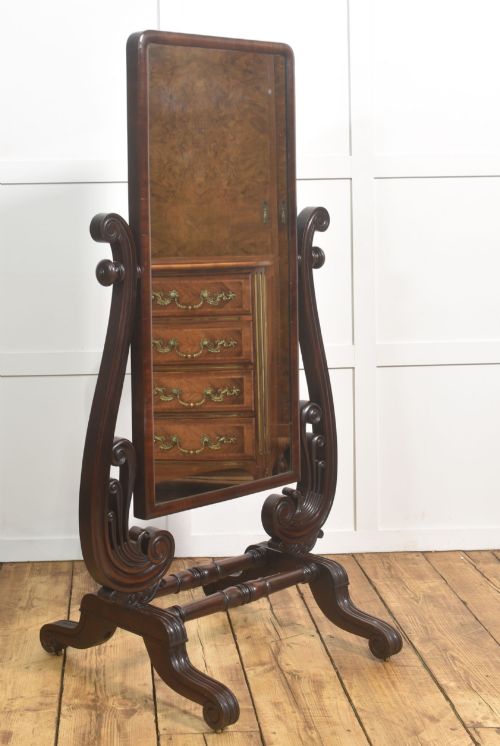
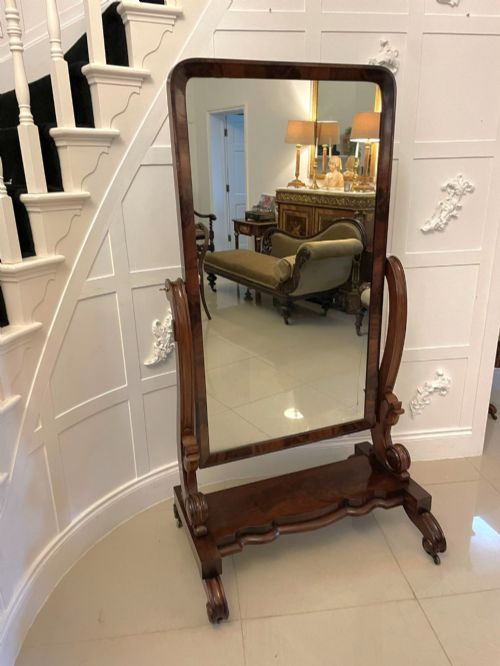
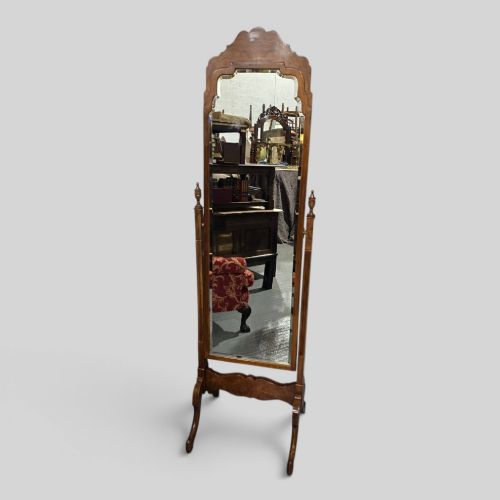
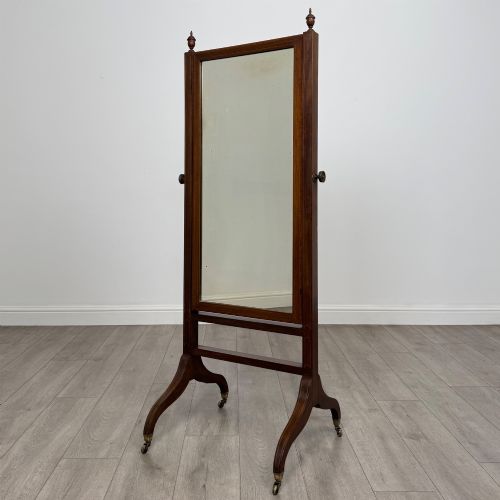
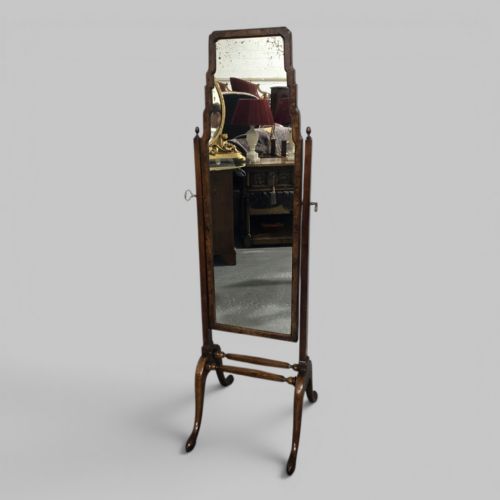
These bedroom standing glass items, better known as cheval mirrors, provide a full-length reflection framed in timber and designed to stand independently on the floor.
Bedroom Standing Glass
A bedroom standing glass piece is primarily a tall floor-standing mirror mounted in a pivoting frame, designed to assist with dressing and grooming from head to toe. The examples on this page span the nineteenth century into the Edwardian era, predominantly taking the form of freestanding cheval mirrors.
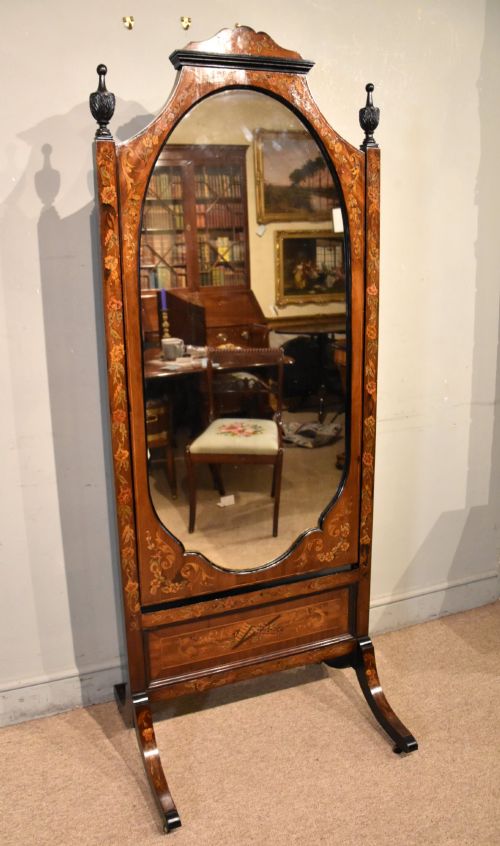
Mahogany forms the structural backbone for the vast majority of these pieces, appearing across Regency, Victorian, and Edwardian periods. Walnut, satinwood, and oak also feature, alongside decorative elements such as brass castors and marquetry inlay.
Most items are standalone floor mirrors, though variations include dressing tables incorporating mirrors and tilted dressing glasses. The styles range from clean Regency lines and William IV heft to ornate Edwardian satinwood and Queen Anne walnut interpretations.
What varies in quality
The choice of timber grain defines much of the visual appeal, with figured flame mahogany and richly patterned burr walnut sitting at the higher end of the range. Simpler straight-grained mahogany and oak represent more utilitarian manufacture.
Construction details distinguish workshop standards, seen in the solidity of the pivoting mechanism, the turning of the support frames, and the integration of brass castors. Elaborate marquetry inlay and finely carved details elevate individual pieces above standard production.
Bedroom Standing Glass Retail Price Guide 2026
Typical asking prices for bedroom standing glass among the pieces listed under this phrase on Sellingantiques today, from the lower quarter to the upper quarter. They describe what is for sale here now, not the wider market.
Many a Victorian household relied on these pivoting glasses to check if one's gaiters matched before braving the morning mud.
Gillows
The Bedroom Standing Glass Glossary
- Cheval mirror
- A large, freestanding floor mirror mounted in a pivoting frame. The term derives from the French word for horse, referencing the four-legged supporting trestle structure.
- Trunnion
- The pivoting pin or bolt set into the sides of the mirror frame. It allows the glass to tilt back and forth.
- Flame mahogany
- A distinct veneer figure resembling flickering flames, sliced from timber cut where the branches join the main tree trunk.
- Marquetry inlay
- Decorative patterns created by fitting contrasting pieces of wood veneer into a primary background surface.
- Satinwood
- A hard, yellowish timber native to India and Ceylon, frequently used for fine Edwardian and Georgian inlay work.
Bedroom Standing Glass: Frequently Asked Questions
What is a cheval mirror?
A cheval mirror is a full-length glass mounted in a freestanding frame that pivots on vertical supports.
This design allows the user to tilt the glass to various angles for complete head-to-toe viewing.
How do I place one in a bedroom?
These pieces stand directly on the floor without requiring wall attachment, needing only stable placement near adequate light.
Their substantial footprint requires sufficient floor space to allow the frame to tilt safely without obstruction.
How do I identify a Regency mirror?
Regency pieces typically display restrained classical proportions, premium mahogany timbers, and sophisticated turning on the upright supports.
They often feature brass castors and straightforward structural framing distinct from later heavily carved Victorian or inlaid Edwardian designs.
What woods were used for these mirrors?
Mahogany served as the predominant timber throughout the nineteenth century, ranging from plain stock to highly figured flame varieties.
Walnut, satinwood, oak, and satinbirch appear in specific periods such as the Edwardian era and under Queen Anne stylistic revivals.