



Bedroom Full Length Mirror
A bedroom full length mirror brings genuine presence to a dressing space, offering the complete reflection needed for daily attire.
Bedroom Full Length Mirror
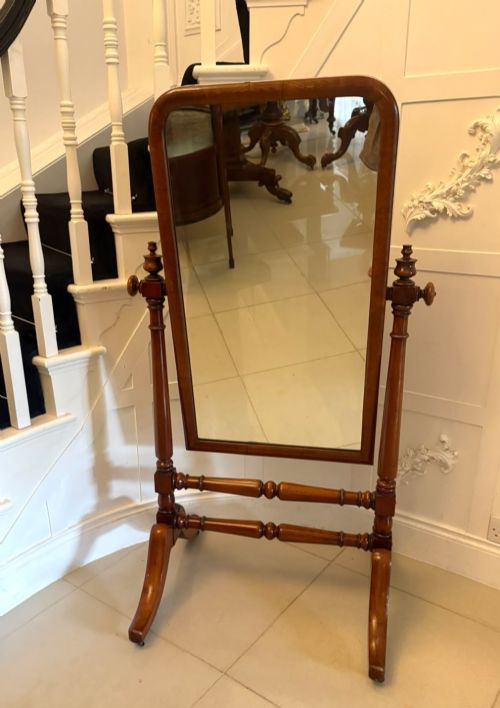
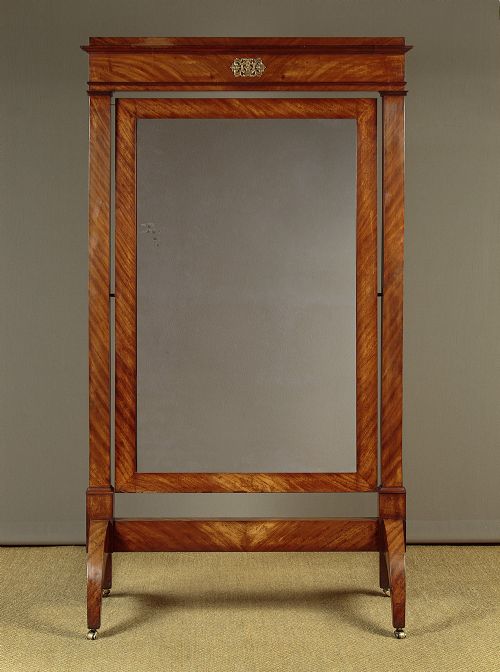
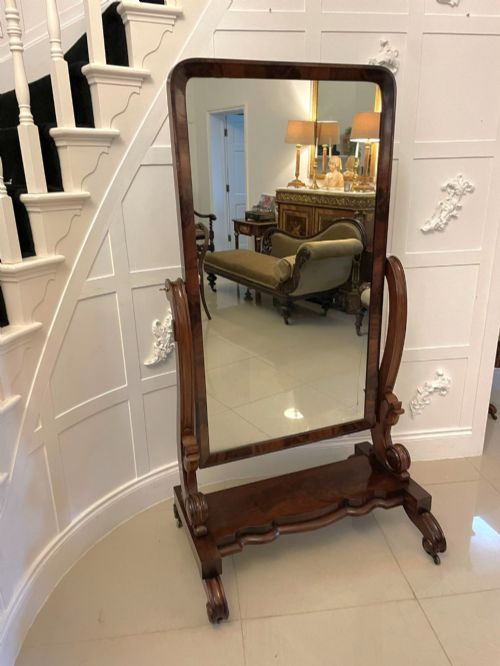
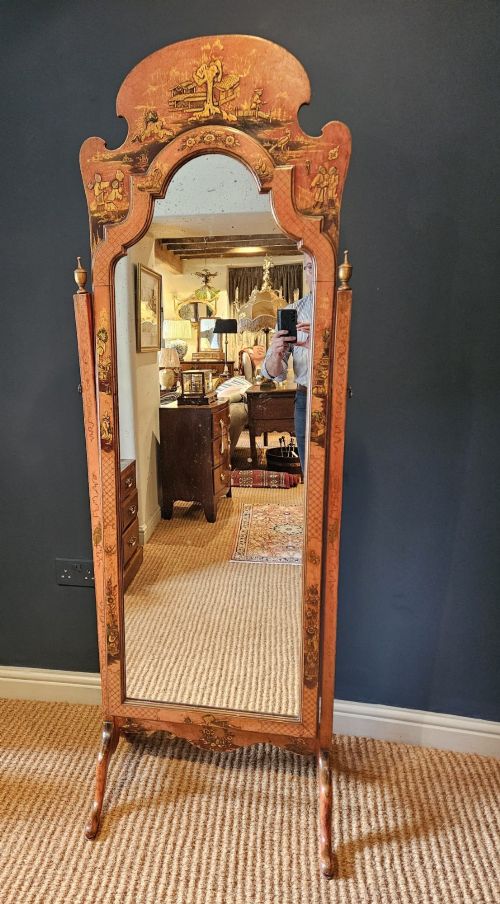
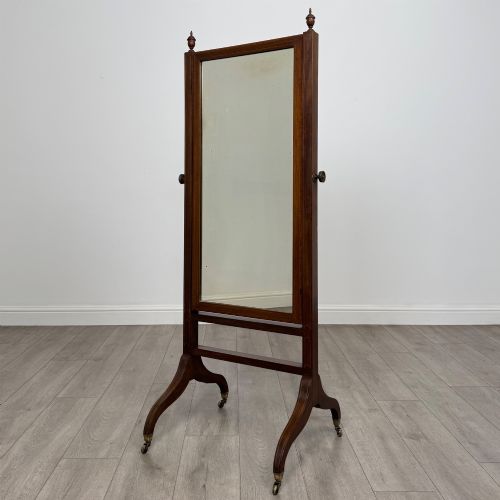
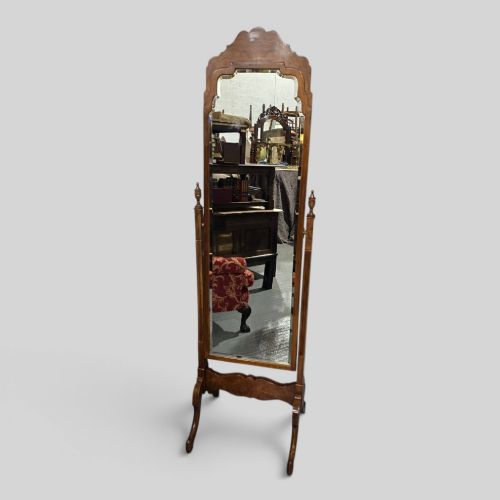
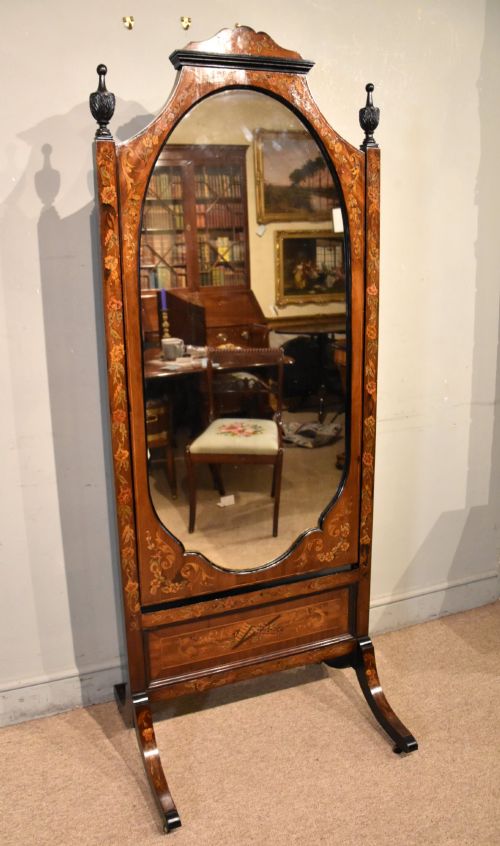
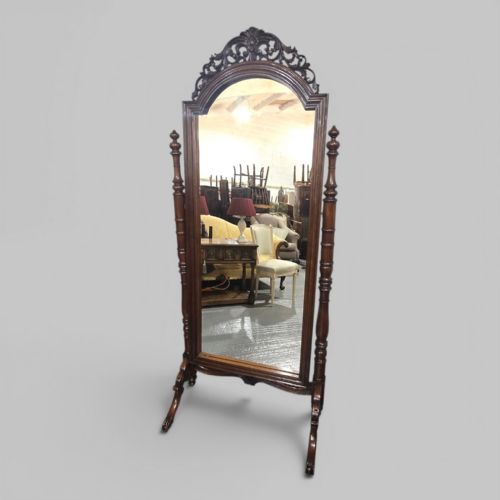
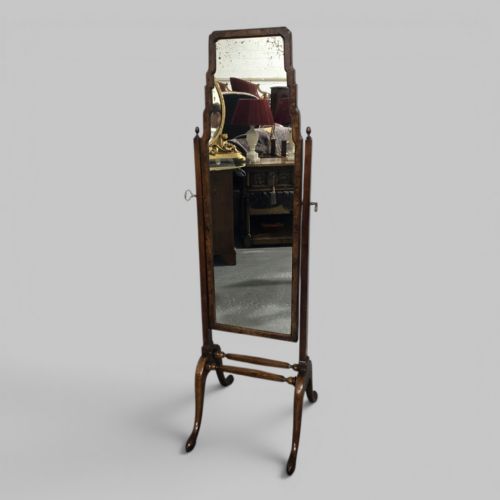
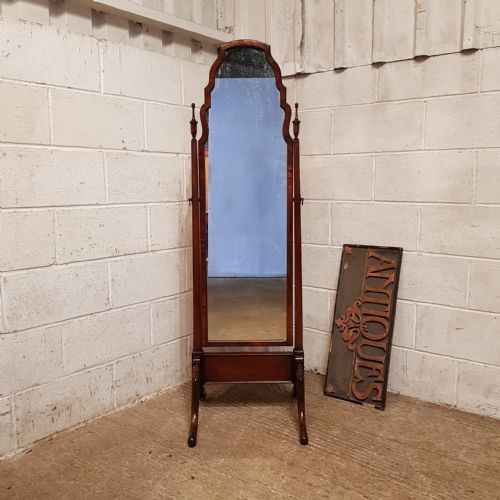
A bedroom full length mirror primarily appears as a cheval mirror, a freestanding glass plate suspended in a pivoting frame that allows the user to tilt the angle of reflection. These tall pieces stand independently on the floor, supported by four legs or a substantial pedestal base, making them distinct from wall-hung alternatives.
The selections available span several distinct periods, with Victorian and nineteenth-century examples forming the core of the offerings alongside Edwardian and nineteen-twenties pieces. Mahogany is the predominant wood for these frames, though walnut, oak, satinwood, and giltwood also appear.
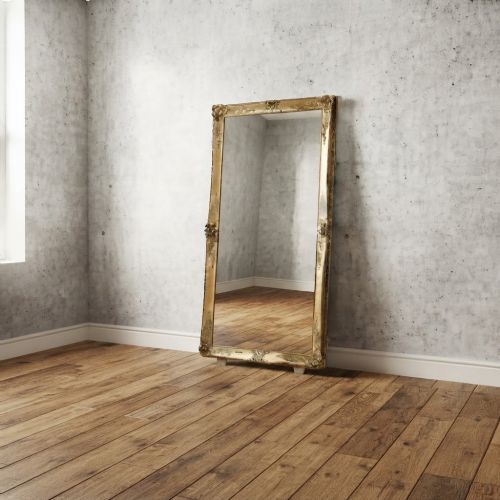
Beyond standard cheval mirrors, the category includes dressing tables fitted with pivoting mirrors and large leaner mirrors designed to rest directly against a wall. The forms range from classical Regency proportions to ornate French Chateau styles and decorative Chinoiserie finishes.
Materials and construction methods
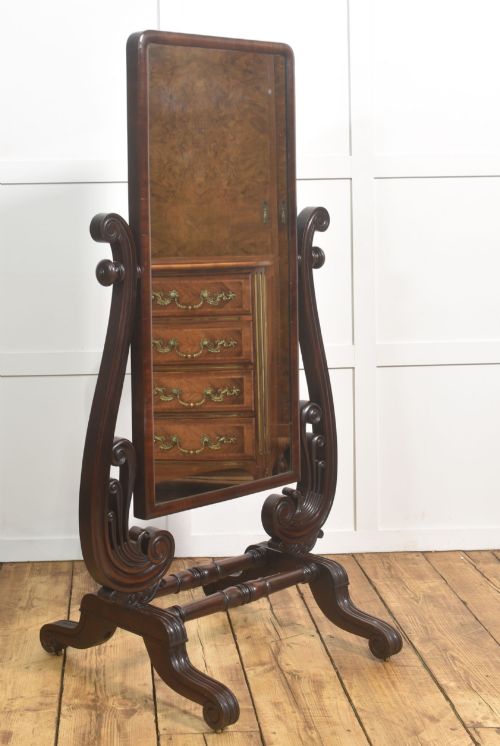
Cabinetmakers constructed the frames using solid timbers and rich veneers, frequently utilising flame mahogany, burr walnut, and figured oak to create depth and visual movement across the wood grain. Brass mounts, pivots, and candle sconces or side arms were standard functional additions on nineteenth-century pieces.
The mirror plates themselves were traditionally silvered glass held securely within rebated wooden frames, often supported by sturdy side standards fitted with adjustable thumbscrews for tilting. Marquetry inlay, carving, and satinwood banding were employed by skilled makers to decorate the surrounds of finer examples.
Dating evidence spans from the Regency era through Victorian craftsmanship into Edwardian and nineteen-twenties interpretations of earlier styles.
Assessing quality in antique mirrors
Quality rests heavily on the selection of timber and the crispness of the cabinetwork, where figured veneers and hand-carved details indicate a higher standard of production. The rigidity of the freestanding frame and the smooth operation of the pivoting brass hardware also distinguish superior examples from utilitarian pieces.
The condition and clarity of the mirror glass contribute significantly to the overall merit of the object, alongside the integrity of the original polish and framing joints. Finer pieces demonstrate careful proportioning in the height of the stand and stability in the base construction.
Edwards and Roberts·Gillows·Waring and Gillow
The Bedroom Full Length Mirror Glossary
- Cheval mirror
- A freestanding full-length mirror hung on vertical pivots within a frame, allowing it to swing back and forth. The word derives from the French for horse, reflecting the four-legged support structure.
- Tilt dressing glass
- A smaller pivoting mirror designed to sit atop a dressing table, though the term also applies to full-height cheval designs with adjustable angle mechanisms.
- Flame mahogany
- A distinctive wood veneer figure created by slicing through the bough of a mahogany tree where it joins the main trunk, producing a flame-like pattern.
- Marquetry
- Decorative inlay work where pieces of different coloured wood veneer are fitted together to form geometric or floral designs on the surface of the frame.
Bedroom Full Length Mirror: Frequently Asked Questions
What is a cheval mirror?
A cheval mirror is a tall, freestanding looking glass suspended between two upright posts on pivots. This clever hinge mechanism allows the entire glass panel to tilt forward or backward.
Such mirrors were designed specifically for full-length viewing in bedrooms and dressing rooms. They require no wall fixings and can be positioned anywhere in a room.
How do I date an antique mirror?
Dating relies on examining the timber, construction joints, and the method used to silver the glass. Earlier nineteenth-century examples often feature solid mahogany frames with heavy brass pivot hardware.
Later pieces from the Edwardian period or the nineteen-twenties introduce different decorative styles like satinwood inlay or Chinoiserie painted finishes. The overall proportions and foot styles also shift across the Victorian and Georgian eras.
Where should I place a freestanding mirror?
Position your mirror near a natural light source to bounce illumination around the room and make the space feel larger. Bedrooms and dressing areas are the traditional and most practical locations.
Ensure the floor surface is level so the freestanding frame remains stable when tilted. Allow sufficient clearance around the base for the swing of the glass plate.
How do I care for antique wood and glass?
Dust the wooden frame regularly with a soft, dry cloth and apply occasional high-quality beeswax to nourish the polished surface. Avoid using modern chemical sprays that can damage historic finishes.
Clean the mirror glass gently using a cloth slightly dampened with water or a mild glass cleaner, taking care not to let liquid seep behind the frame edge into the silvering.