



Battle Scene Wall Art
Battle scene wall art captures historical conflict and military triumphs through historical canvases, fine engravings, and hand-painted porcelain chargers that anchor a room.
Battle Scene Wall Art
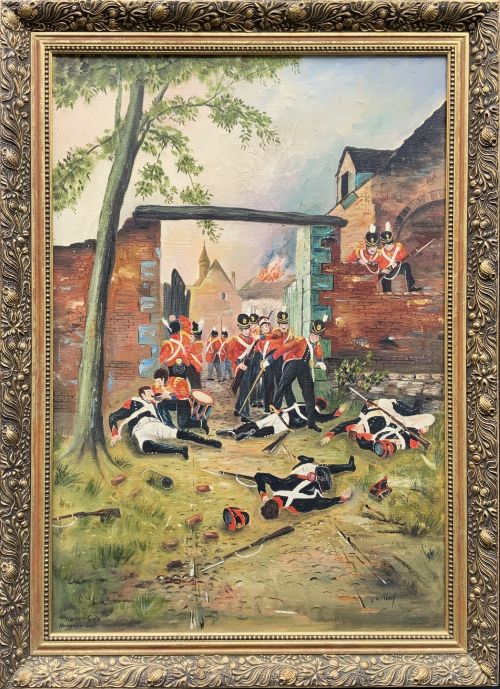
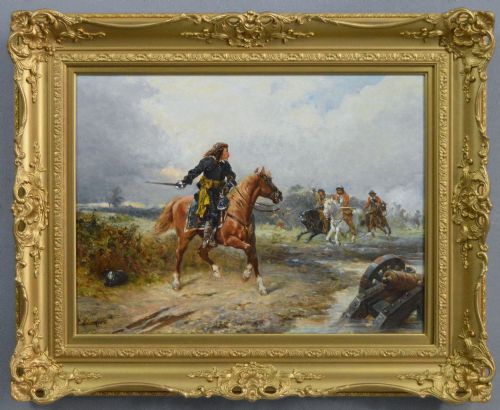
Battle scene wall art encompasses historical depictions of military engagements, cavalry skirmishes, and naval warfare found across various periods. When exploring battle scene wall art, buyers encounter oil on canvas paintings, framed prints, tapestries, and porcelain chargers. These works range from seventeenth-century Dutch master paintings to twentieth-century oil paintings and mid-century realism pieces.
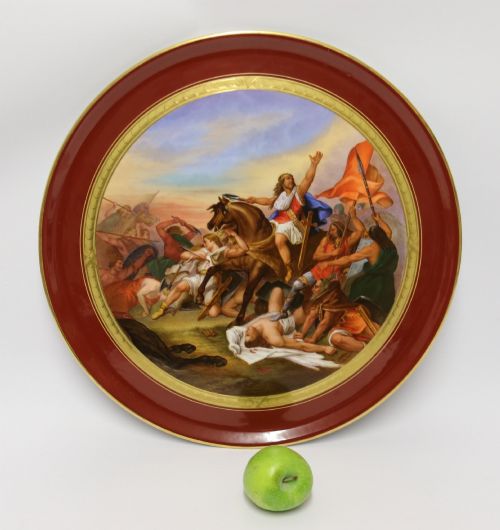
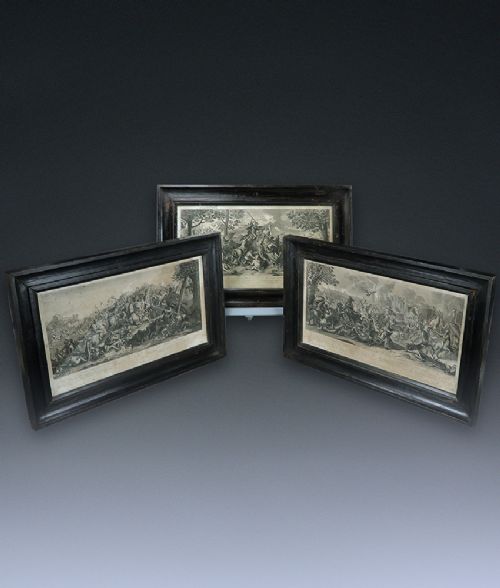
The selections on this page draw heavily from European traditions, featuring French, Italian, and British subjects. Common forms include large oil paintings of cavalry skirmishes, detailed engravings of historical battles, and decorative porcelain plates depicting specific historical events like the Battle of Tolbiac. Each piece records a distinct artistic interpretation of historic conflict, executed through different printmaking, painting, and textile mediums.
Evaluating Quality
Quality in these works rests upon the fidelity of the composition, the skill of the brushwork or engraving line, and the condition of the primary material. Fine oil paintings demonstrate sophisticated handling of human figures and horses in motion, whereas lesser works may show stiff proportions or flat application of pigment. The preservation of the canvas, paper, or porcelain surface directly influences the visual impact of the piece.
The execution of the secondary elements, such as the depth of engraving impressions or the hand-painted detail on porcelain chargers, distinguishes standard production from masterworks. Period frames in gilt wood or giltwood that match the age of the artwork add significant character. The attribution to recorded painters, schools, or printmakers further separates distinct examples within the category.
Battle Scene Wall Art Retail Price Guide 2026
Typical asking prices for battle scene wall art among the pieces listed under this phrase on Sellingantiques today, from the lower quarter to the upper quarter. They describe what is for sale here now, not the wider market.
Listings feature works in oil on canvas, glass, paper, gilt wood, enamel, and hard-paste porcelain across multiple centuries.
The Battle Scene Wall Art Glossary
- Oil on Canvas
- A painting medium where pigments are suspended in drying oil and applied to stretched fabric. This technique allows for rich colour blending and texture.
- Engraving
- A printmaking process where an image is incised into a metal plate with a cutting tool. The resulting lines hold ink to produce sharp, detailed prints on paper.
- Hard-Paste Porcelain
- A dense, durable ceramic composed of kaolin and petuntse fired at high temperatures. It serves as a smooth white surface for hand-painted decorative scenes.
- Giltwood
- Wood carved and coated with a thin layer of gold leaf or gilt powder. This finish provides a reflective, ornate border for frames and decorative objects.
- Cavalry Skirmish
- A military subject depicting a small-scale battle involving mounted soldiers. Artists favour this theme for its dynamic composition and energetic movement.
Battle Scene Wall Art: Frequently Asked Questions
What periods do these pieces come from?
The selection spans multiple centuries, with items originating from the seventeenth, eighteenth, nineteenth, and twentieth centuries. Examples range from seventeenth-century Dutch master oils to nineteenth-century French prints and mid-century paintings.
Each period reflects the prevailing artistic styles and historical interests of its time, from Baroque cavalry scenes to twentieth-century military records.
What framing do these artworks typically have?
Many pieces are housed in traditional frames made from gilt wood, giltwood, or plain wood. These surrounds complement the historical nature of the oil paintings, drawings, and prints.
The framing often matches the era of the artwork itself, providing a complete historical package for display.
How are porcelain plates used as art?
Decorative porcelain chargers feature hand-painted historical scenes fired directly onto the ceramic surface. They function as wall art when hung using specialised plate hangers or displayed on stands.
These large porcelain pieces combine fine ceramic manufacturing with detailed narrative painting.
How do I identify a print from an original painting?
Original paintings display visible brush texture, layered pigment, and canvas weave under close inspection. Prints and engravings present flat ink surfaces, often with plate marks impressed into the paper.
Consulting the listed medium in the description clarifies whether the work is an oil painting, engraving, or hand-drawn ink piece.