



Baroque Revival Chairs
Baroque revival chairs are dramatic seating pieces built to command a room through scale and deep carving.
Baroque Revival Chairs
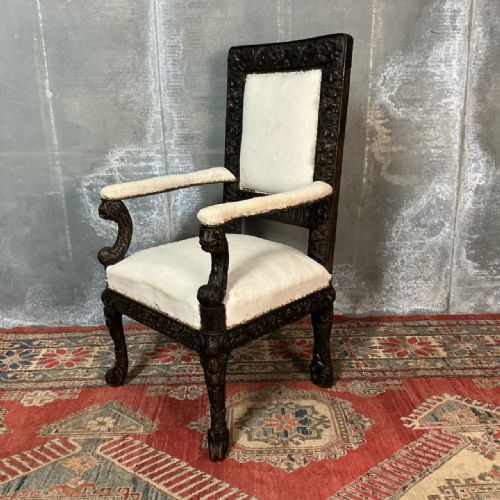
Baroque revival chairs are grand seating forms drawing on seventeenth-century motifs, designed to create an imposing interior presence. When you search for baroque revival chairs, you encounter robust seating ranging from solitary armchairs to full dining sets.
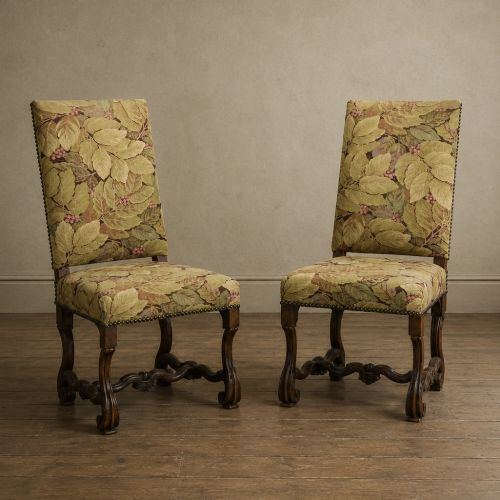
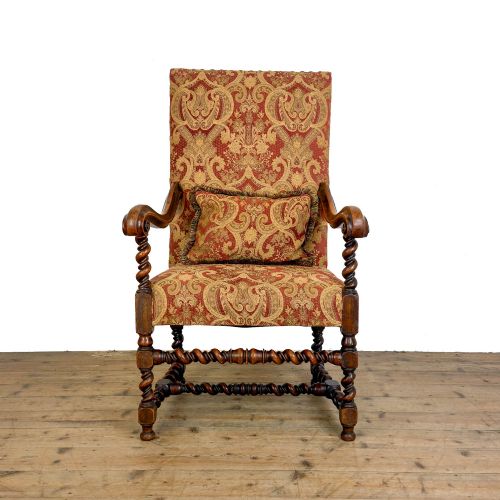
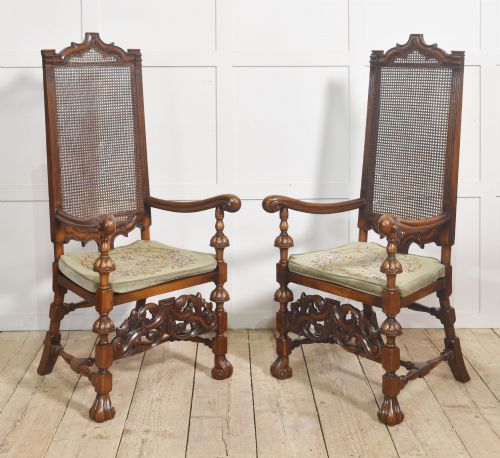
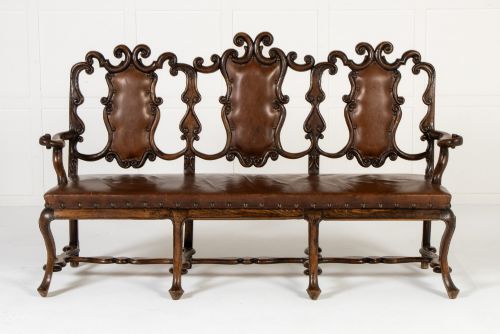
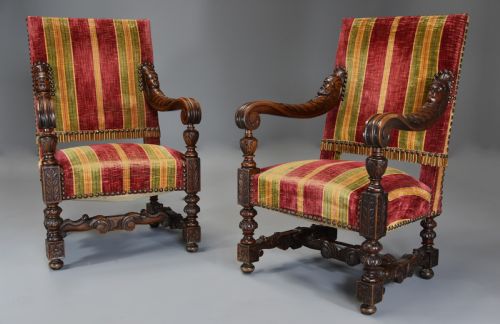
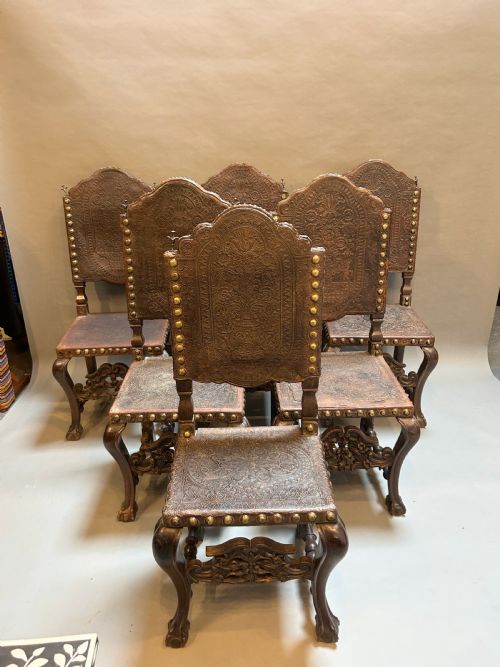
The pieces on this page span the nineteenth century and the Edwardian period, alongside occasional earlier anchor pieces. Walnut and oak dominate the construction, appearing in forms such as open armchairs, elbow chairs, high-back dining chairs, and imposing settees.
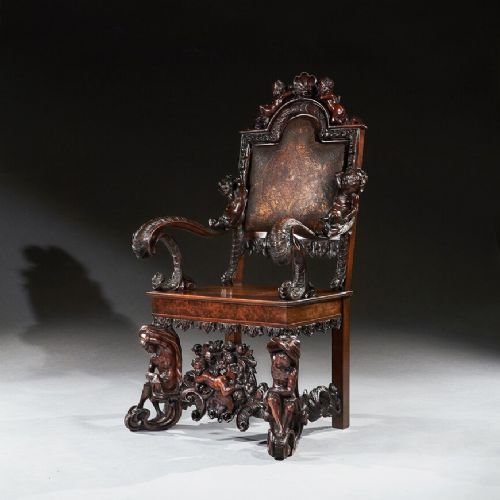
Makers of these revival pieces looked to varied continental influences, producing French Louis XIV styles, Italian models after Andrea Brustolon, and Spanish variants. Side chairs and hall chairs also appear, offering the same heavy carved detailing on a more compact scale.
Construction and Materials
Carpenters built these chairs primarily in solid walnut and oak, selecting dense hardwoods capable of supporting deep, volumetric carving. Frames often feature heavily worked members joined to substantial legs and high backs.
Upholstery materials play a vital role in finishing the pieces, with leather, velvet, fabric, tapestry, and cane integrated into the frames. Brass details and ebonised finishes also appear, adding textural contrast to the carved wooden structures.
Baroque Revival Chairs Retail Price Guide 2026
Typical asking prices for baroque revival chairs among the pieces listed under this phrase on Sellingantiques today, from the lower quarter to the upper quarter. They describe what is for sale here now, not the wider market.
Some chairs demand an audience all to themselves, functioning less as furniture and more as wooden thrones for reading the post.
Judging Quality and Execution
Quality rests in the depth and crispness of the carving, distinguishing standard production from exhibition-quality pieces. Hands of skilled carvers show in undercut foliage, scrolls, and figural elements that possess three-dimensional vigor rather than shallow stamping.
Timber selection and structural integrity separate robust examples from lesser ones. Dense walnut and quarter-sawn oak provide stable frames that support heavy upholstery and sustained use without looseness at the joints.
Andrea Brustolon
The Baroque Revival Chairs Glossary
- Armchair
- A chair with side supports for the arms. These include open armchairs and heavy throne forms.
- Settee
- A long upholstered seat with a back and arms, designed for more than one person. Examples match the carved woodwork of accompanying chair sets.
- Ebonised
- Wood finished to resemble ebony through staining or painting. This technique creates a dark, uniform surface often seen on nineteenth-century revival pieces.
- Elbow chair
- An armchair with a low back and short arms, suitable for dining or desk use. These pieces often repeat the carved motifs of larger armchairs.
Baroque Revival Chairs: Frequently Asked Questions
What defines a baroque revival chair?
These chairs are defined by heavy, ornate carving, scrolled supports, and grand proportions derived from seventeenth-century models. They utilise substantial frames of walnut or oak to project a sense of theatre and weight.
Makers during the nineteenth and early twentieth centuries reinterpreted these historic forms for contemporary interiors, combining vigorous woodwork with traditional upholstery materials like velvet, leather, and tapestry.
How do I distinguish French styles?
French revival pieces often follow Louis XIV patterns, featuring symmetrical carved frames, stretcher bases, and refined upholstery. They tend to emphasise structural balance alongside rich surface decoration.
In contrast, Italian and Spanish variants often incorporate deeper, more aggressive relief carving, sometimes featuring figural elements or elaborate crest rails that reflect regional preferences.
Are these chairs suitable for daily dining?
Dining sets and side chairs from this tradition were built for formal use around large tables. Their solid wood construction makes them durable for regular seating.
Consider the seat height and arm clearance if you plan to pair antique armchairs with modern tables, as nineteenth-century proportions can differ from contemporary standards.
How should I care for carved wood?
Maintain the timber by keeping pieces away from direct heat sources and sudden humidity changes that cause wood to crack. Dust deep carvings regularly with a soft brush to prevent grime accumulation.
Treat exposed walnut or oak surfaces with appropriate furniture wax sparingly, avoiding silicone-based polishes that can degrade historic finishes over time.