





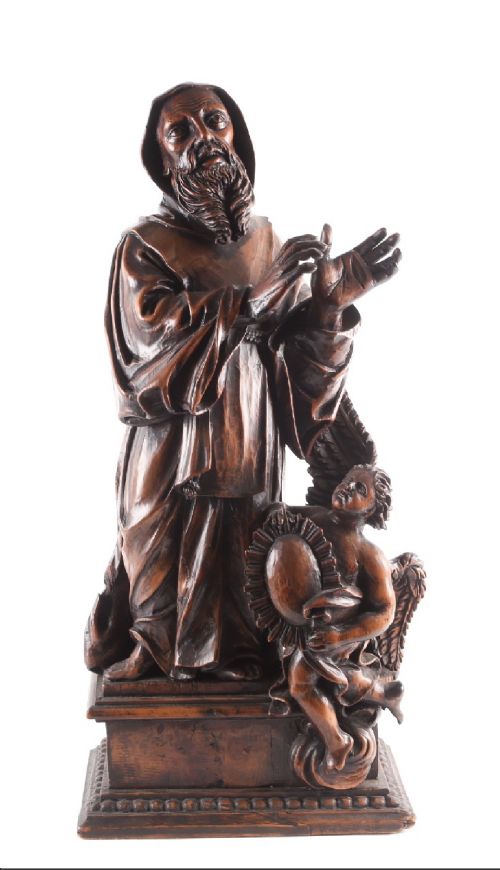
Baroque Putti Figures
Baroque putti figures bring lively theatrical energy and sculptural movement into a room, capturing winged infant forms rooted in classical tradition.
Baroque Putti Figures
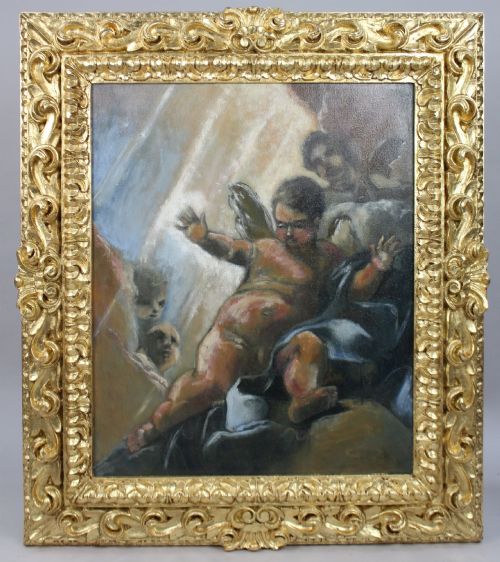
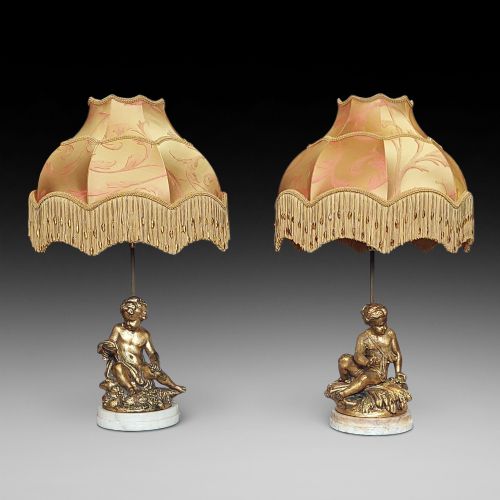
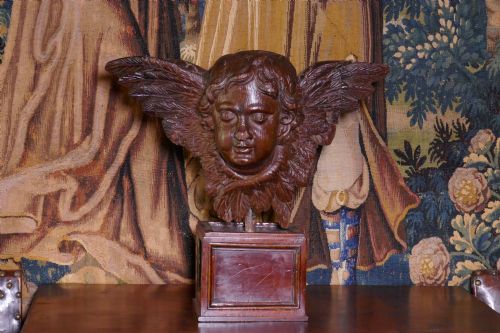
Baroque putti figures encompass carved wooden sculptures, table lamps, wall decorations, and oil paintings depicting winged cherubic forms. These pieces draw from the 17th century onwards, with Italian Baroque revival and Victorian examples frequently appearing alongside older works.
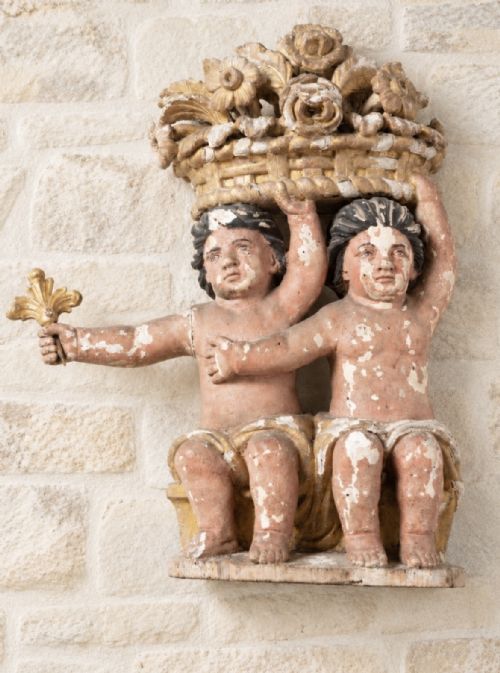
Buyers encounter single figures, matched pairs, and figural groupings mounted on carved wooden clouds or integrated into oil paintings. The selection spans freestanding limewood and oak carvings to alabaster mounted lamps and framed canvas works.
Materials and Construction
Carvers shaped these pieces primarily from woods such as limewood, oak, and general timber using hand chisels and gouges to achieve fluid anatomical forms. Artisans then applied gesso foundations before finishing surfaces with gold leaf, giltwood, or polychrome paint.
Paint layers often combined silvered and coloured pigments to create rich surface depth on garments, wings, and flesh tones. Panel and canvas paintings utilised oil mediums to depict cherubic scenes within decorative frames.
Baroque Putti Figures Retail Price Guide 2026
Typical asking prices for baroque putti figures among the pieces listed under this phrase on Sellingantiques today, from the lower quarter to the upper quarter. They describe what is for sale here now, not the wider market.
Current listings span the seventeenth, eighteenth, and nineteenth centuries, featuring carved wood, alabaster, oil paint, and gold leaf.
Assessing Quality and Execution
The preservation of original surface treatments, including historical gilding and polychrome pigment, maintains the intended theatrical character. Later repaint campaigns or regilding alter the surface authenticity and visual balance of the object.
The Baroque Putti Figures Glossary
- Putto
- A figure of a small winged infant, frequently used in classical and religious art. They appear singly or in groups throughout Renaissance and Baroque compositions.
- Giltwood
- Timber treated with a thin layer of gold leaf or powder over a prepared gesso base. This technique creates a luminous metallic finish popular in church and domestic furnishings.
- Polychrome
- Decoration executed in multiple colours on a single object. Artisans applied these paints to wood or plaster surfaces to heighten realism.
- Limewood
- A close-grained timber favoured by European woodcarvers for its cooperative texture and lack of pronounced grain. It permits intricate, detailed undercutting.
- Gesso
- A plaster-like mixture applied to wooden supports as a smooth foundation for gilding and painting. It provides a stable base for decorative finishes.
Baroque Putti Figures: Frequently Asked Questions
What is a putto?
A putto is a representation of a chubby, winged infant derived from classical art and revived during the Renaissance and Baroque periods. These figures symbolise divine presence and emotional warmth.
In sculptural works, they often animate altarpieces, furniture, and architectural mouldings with playful or contemplative expressions.
Where were these figures placed originally?
Original locations included ecclesiastical settings such as altars, church chapels, and choir stalls where they framed religious scenes. They also decorated grand domestic interiors and household shrines.
Pairs often flanked larger devotional paintings, mirrors, or architectural doorways to create symmetrical focal points.
How do I care for wooden figures?
Wooden sculptures require stable indoor humidity and protection from direct sunlight to prevent timber movement and paint flaking. Dusting should be done gently with a dry, soft brush.
Avoid using liquid cleaners or polishes on historic gilt and polychrome surfaces, as moisture damages fragile historic finishes.
How can I tell the period?
Dating relies on tool marks, timber species, the composition of the gesso ground, and stylistic indicators of the carving. Seventeenth and eighteenth-century pieces display hand tool methods distinct from later revival work.
Wear patterns and the ageing characteristics of underlying materials help confirm the historical context of each piece.