




Baroque Looking Glass
A baroque looking glass brings seventeenth and eighteenth century presence to a room through carved wood, gesso, and gilt.
Baroque Looking Glass
A baroque looking glass is a wall mirror rooted in seventeenth and eighteenth century design traditions, including William and Mary, Italian rococo, and revival styles. These pieces function primarily as wall mirrors designed to catch and reflect light in interior spaces.
The selection on this page centres on wall mirrors executed in carved wood, walnut, oak, and gesso. Buyers encounter various interpretations spanning original seventeenth century frames to later nineteenth century revivals.
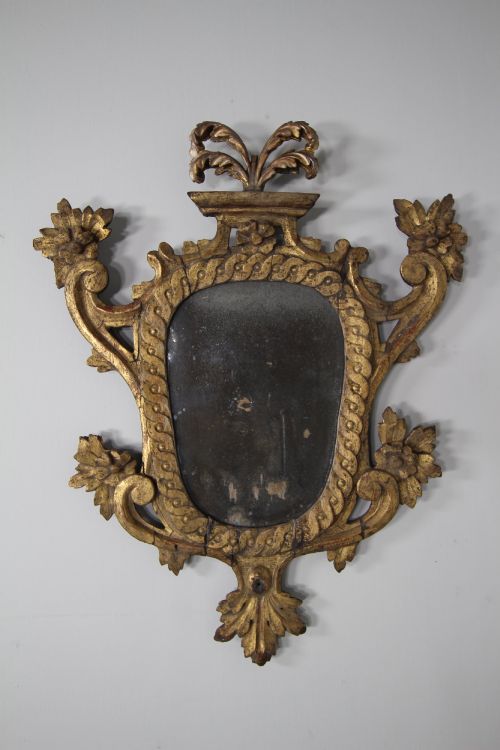
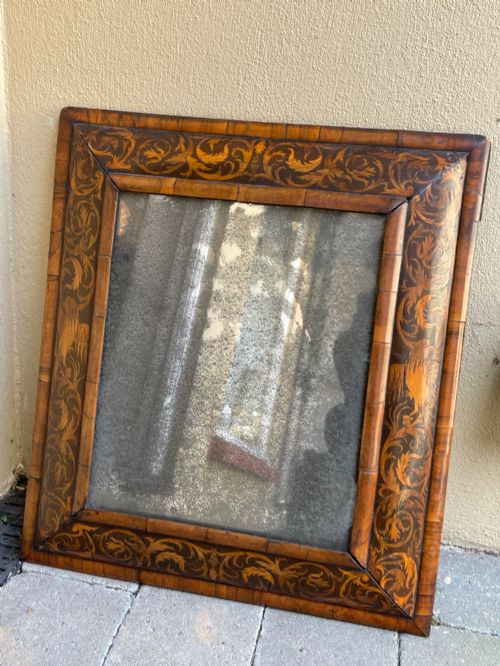
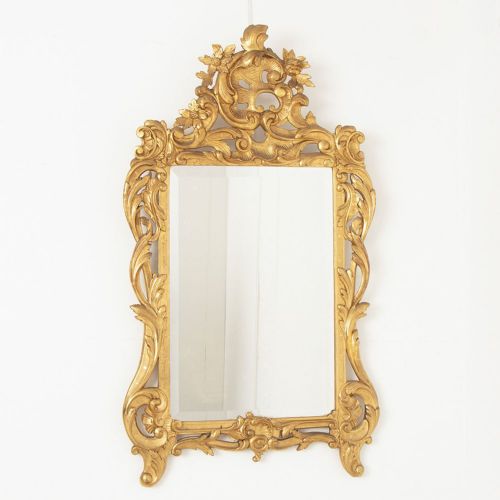
Many examples originate from Italian workshops, displaying crested tops and painted or gilt finishes. Others represent domestic British cabinet work in marquetry inlaid walnut and boxwood.
Materials and construction
Frames are constructed from solid timbers such as oak, walnut, and boxwood, shaped through hand carving. Carved wood elements provide the structural depth necessary for elaborate crests and moulding profiles.
Surfaces are prepared with gesso and finished in gold leaf or silver leaf. Marquetry inlay techniques introduce contrasting wood veneers into cushion frame profiles.
The listings on this site include pieces from the seventeenth, eighteenth, and nineteenth centuries, spanning original periods and Victorian revivals.
Distinctions in quality
Quality rests in the crispness of the hand carving and the integrity of the original giltwood or silver leaf surfaces. Deeper relief work on carved wood frames distinguishes superior examples from simpler mouldings.
The harmony between the glass plate and the surrounding frame indicates the standard of the piece. Period glass plates and intact gesso grounds elevate the standing of a wall mirror.
The Baroque Looking Glass Glossary
- Gesso
- A plaster mix applied to wood frames to create a smooth surface for gilding. This mixture is built up in layers before being carved or stamped.
- Giltwood
- Timber coated with gold leaf applied over a prepared ground. It provides a bright reflective finish characteristic of period frames.
- Marquetry
- Decorative patterns formed by fitted wood veneers laid onto a carcase. Walnut and boxwood are frequently utilised in these geometric designs.
- Crested
- Featuring an ornamental top section above the main mirror frame. Italian mirrors often use this device to add height and drama.
- Cushion mirror
- A frame profile with a rounded, sloping border resembling a cushion. This form appears on seventeenth century walnut and marquetry pieces.
Baroque Looking Glass: Frequently Asked Questions
How do I hang a heavy wall mirror?
These mirrors require robust wall fixings secured directly into masonry or solid studs rather than plasterboard alone. The weight of carved wood and glass demands professional installation.
Ensure the hanging wire or integrated brackets match the load capacity of the frame. Position the piece at a height that balances the proportions of the room.
How do I clean a antique gilt frame?
Dust giltwood surfaces gently with a soft dry brush to remove particles without disturbing the gold leaf. Avoid liquid cleaners and chemical sprays entirely.
Moisture can damage vulnerable gesso grounds beneath the leaf. Consult a conservator if the surface requires deeper cleaning.
What defines a William and Mary mirror?
William and Mary mirrors date around the turn of the eighteenth century and often feature cushion frames. Marquetry inlay using walnut and boxwood is typical of this period.
These pieces show Dutch and continental influences following the English court transition. Their restrained proportions suit panelled interiors.
How do Italian mirrors differ from English ones?
Italian mirrors frequently incorporate elaborate crested tops and painted details alongside giltwood finishes. They tend towards theatrical forms associated with rococo styles.
English equivalents from the same eras often rely on architectural symmetry and timber grains. Walnut and oak form the basis of many British designs.
Can I place a mirror near a fireplace?
Positioning mirrors above mantelpieces is a traditional placement that reflects light across the room. However, excessive heat from active fires can affect old wood and gesso.
Monitor the temperature of the wall surface behind the frame. Ensure the room environment remains stable to protect the timber.