

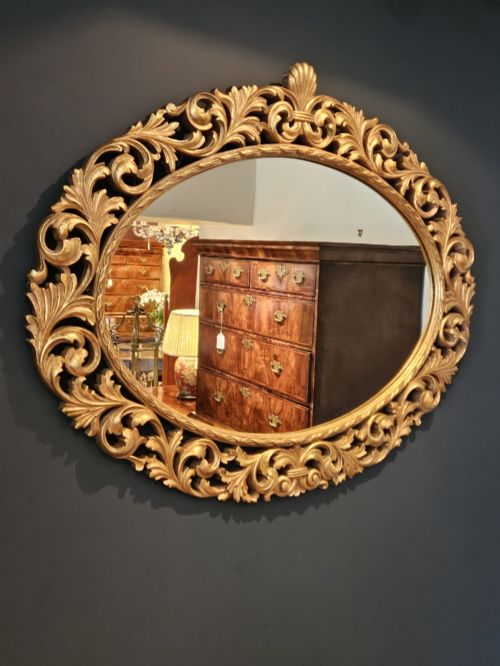
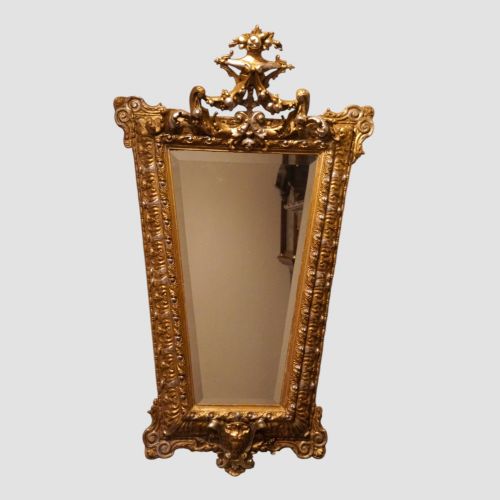
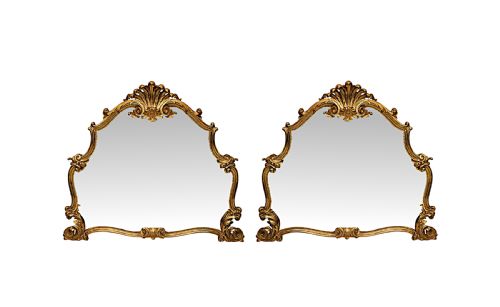
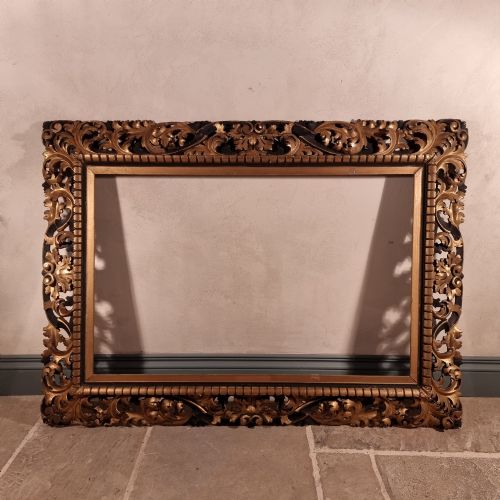
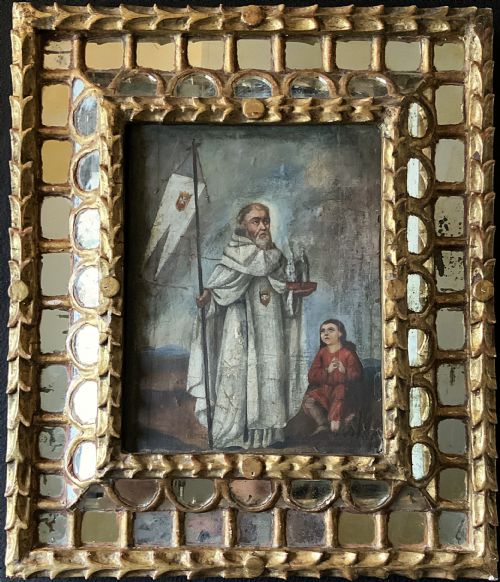


Baroque Gold Frame Mirror
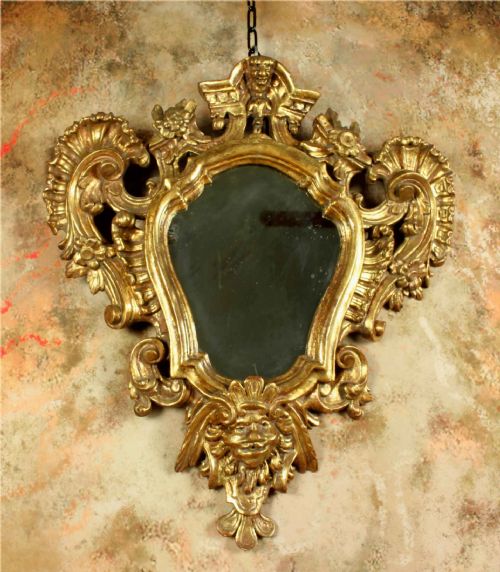
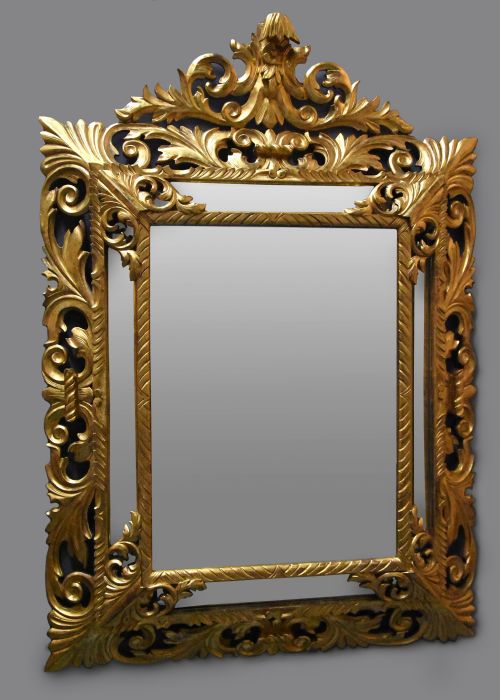
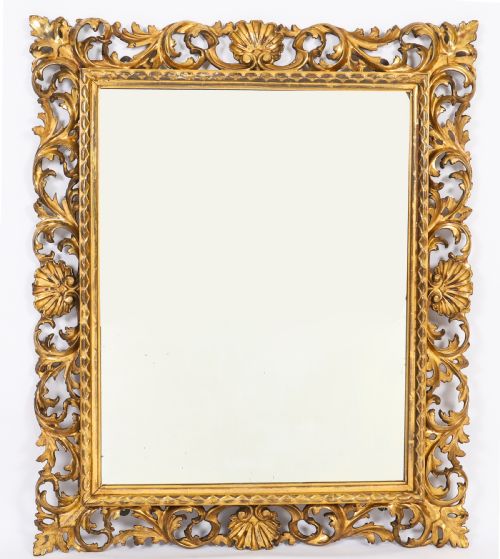
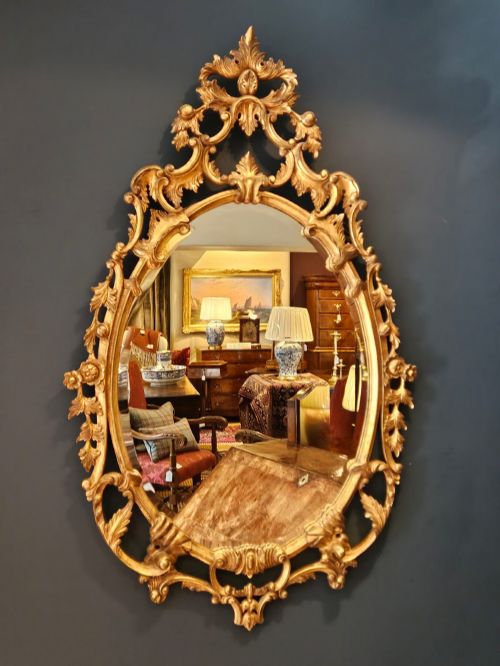
A baroque gold frame mirror brings sculptural theatre into a room, offering heavy carved relief and luminous metal surfaces.
Baroque Gold Frame Mirror
A baroque gold frame mirror functions primarily as a grand wall hanging, overmantel, or pier glass designed to catch light and draw the eye. These pieces emerge in styles spanning Italian baroque, rococo revival, and Florentine carving traditions.
The buyer encounters wall mirrors, cushion mirrors, and picture frames adapted for glass, originating across the seventeenth, eighteenth, and nineteenth centuries. Italian workshops dominate the selection, alongside French and Flemish examples.
Forms range from simple rectangular and oval shapes to trapezoidal formats, decorative masks, and reliquary designs featuring sacred motifs. Many pieces combine substantial timber structures with ornate surface ornamentation.
Materials and construction
Carpenters carved the core structure from solid wood or timber, building deep relief profiles for cushion frames and pierced foliage. Gesso applied over the carved wood provided a smooth bed for subsequent metal leaf application.
Artisans layered gold leaf and silver leaf onto the prepared surfaces, sometimes burnishing the metal to create contrasting matte and reflective areas. Early mirrors utilised original mercury plates, while later iterations incorporated standard silvered glass.
The inventory includes wall mirrors, picture frames, and table mirrors created within Italian, French, and Flemish design traditions.
Assessing quality in carved gilt mirrors
The depth and crispness of the wood carving dictate the distinction between standard and superior pieces. Hand-carved elements executed with sharp undercut details separate master artisan work from softer, moulded gesso decoration.
The integrity of the original gilt surface remains paramount, where intact gold leaf showing gentle age outclasses heavy modern re-gilding. The weight and stability of the timber frame indicate the structural soundness built into the original piece.
The Baroque Gold Frame Mirror Glossary
- Giltwood
- Timber that has been coated with thin sheets of gold leaf over a prepared base. This finish provides the characteristic warm metallic glow seen on period frames.
- Gesso
- A plaster mixture applied to carved wood frames to create a smooth surface for gilding. It holds fine detail well during the carving process.
- Pier Glass
- A tall mirror designed specifically to hang on the wall space between windows. These pieces often matched console tables placed directly below them.
- Cushion Mirror
- A frame profile featuring a rounded, sloping section that swells outward towards the outer edge. This design adds pronounced three-dimensional volume to the wall.
- Mercury Plate
- An early type of mirror glass backed with a tin and mercury amalgam. It produces a mottled, dark reflection distinct from modern silvered glass.
Baroque Gold Frame Mirror: Frequently Asked Questions
How do I date an old gold mirror?
Dating relies on examining the construction methods of the timber frame, the composition of the gesso, and the characteristics of the mirror plate. Early pieces often feature hand-cut joinery and heavy carved relief.
Secondary indicators include the presence of original mercury glass and the wear patterns on the gold leaf. Comparing the stylistic motifs against documented seventeenth, eighteenth, and nineteenth-century design books helps confirm the period.
What is the difference between baroque and rococo frames?
Baroque frames emphasise symmetry, monumental scale, and architectural grandeur with bold architectural carvings and heavy moulding. They project a sense of formal weight and structured ornamentation.
RoCoco frames introduce asymmetrical C-scrolls, shell motifs, and flowing naturalistic foliage. This later style replaces rigid symmetry with playful, dynamic curves and lighter visual movement.
How do I clean an antique gilt mirror?
Dust the carved wooden frame gently using a soft, dry brush to prevent damage to fragile gold leaf surfaces. Avoid commercial liquid cleaners on the gilded areas, as moisture lifts old gesso and leaf.
Clean the glass plate with a microfiber cloth slightly dampened with distilled water or a mild glass cleaner sprayed onto the cloth. Keep liquids away from the edges where the mirror plate meets the frame rabbet.