
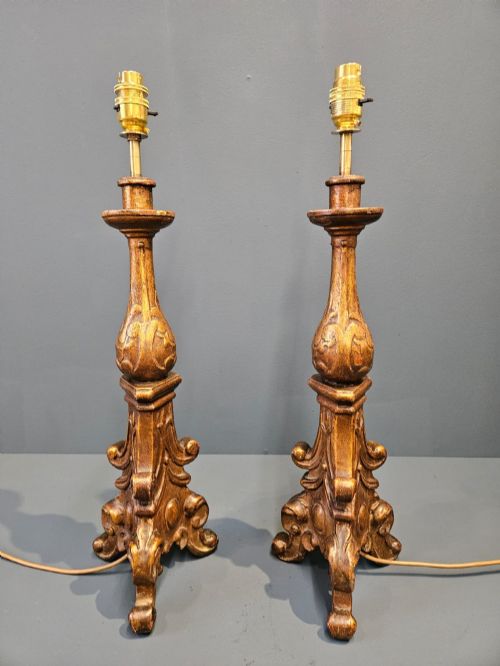


Baroque Giltwood Lights
Baroque giltwood lights bring historic Italian and Spanish warmth to a room through carved timber, gesso and gold leaf.
Baroque Giltwood Lights
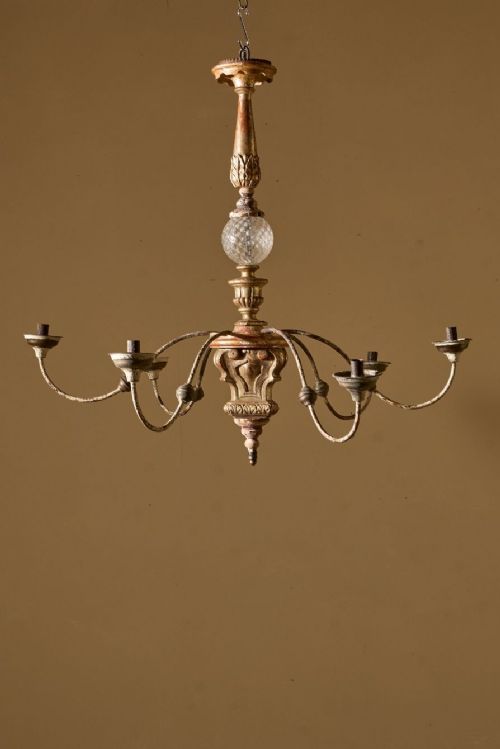
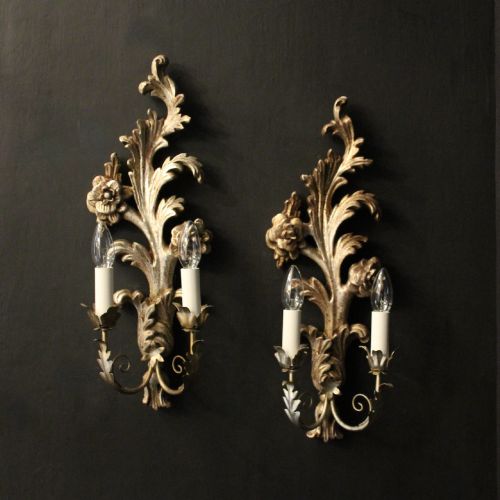
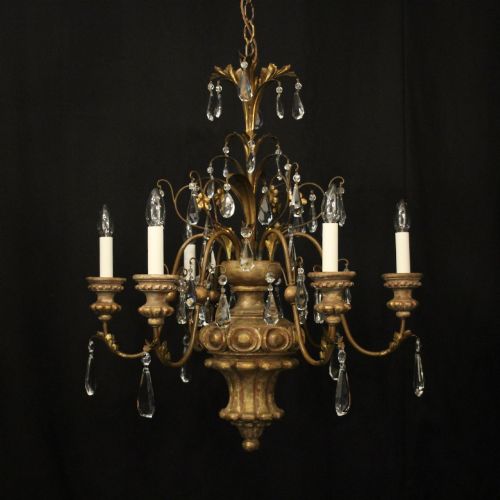
Baroque giltwood lights encompass wall sconces, chandeliers, floor lamps and altar candlesticks spanning from the seventeenth century through to the early decades of the twentieth century. These pieces originate predominantly from Italian workshops, with Florentine and Venetian examples appearing alongside Spanish and English pieces.
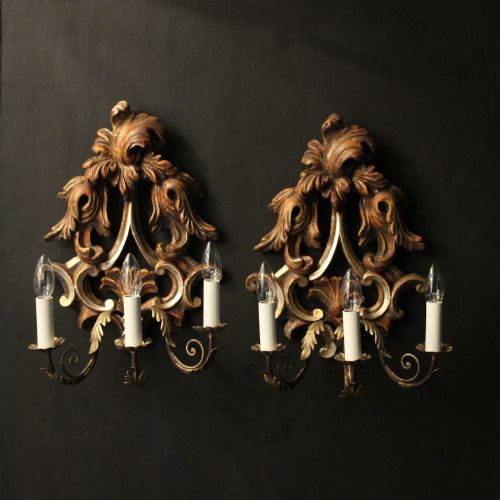
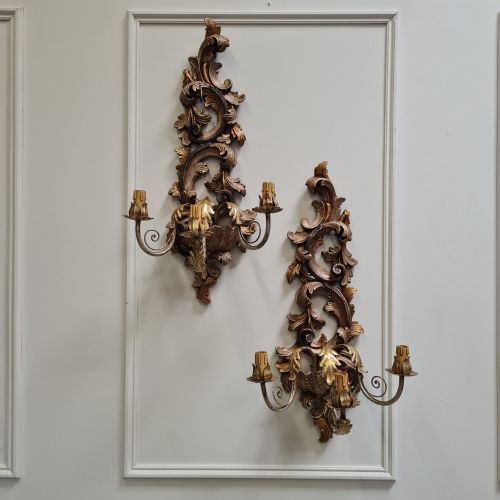
Wall lights and twin-arm wall sconces dominate the selection, frequently taking the form of carved wooden fittings designed for candles or wired for electricity. Buyers will also encounter substantial hanging lanterns, standard lamps and multi-light chandeliers displaying elaborate ornamentation.
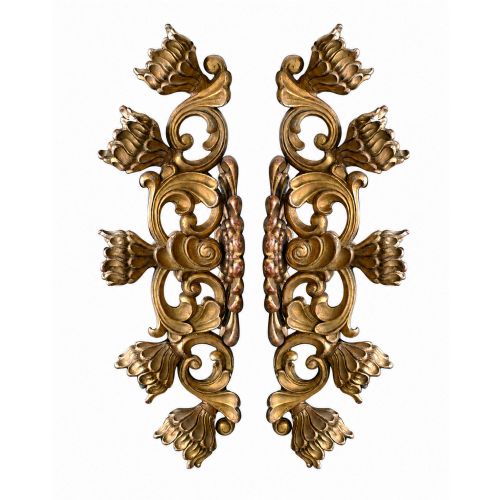
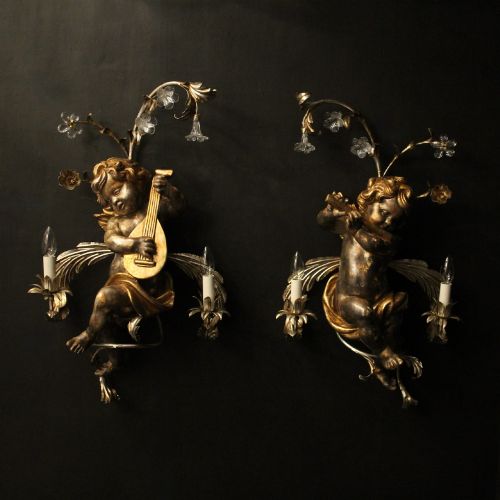
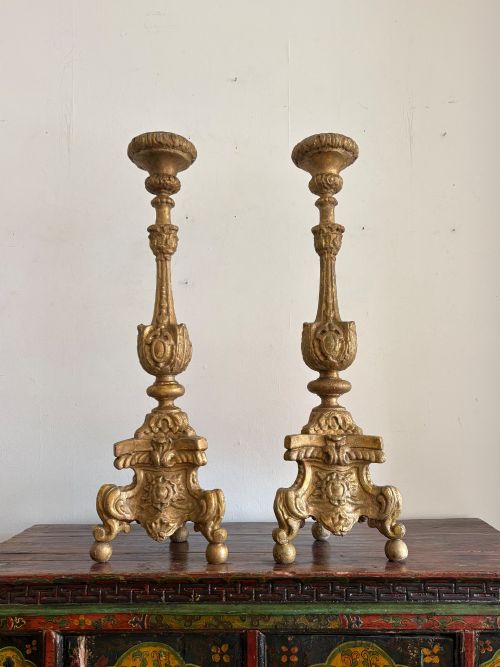
The aesthetic draws heavily on regional Baroque and Rococo traditions, incorporating gilded surfaces, polychrome touches and figural elements such as cherubs. Pieces range from domestic wall fixtures to monumental altar-type candle-holders intended for grand architectural spaces.
How they were made
Artisans built these fittings primarily from carved wood, applying layers of gesso to create a smooth preparatory surface for gilding. Gold leaf was then meticulously laid over the gesso, producing the characteristic luminous finish that defines giltwood.
Certain pieces integrate iron, glass and metal components alongside the timber base, whilst others feature polychrome decoration painted over the gilded surface. Carving was executed by hand, resulting in deep relief work on chandeliers, wall lights and candlestick bases.
Listings feature pieces spanning from the seventeenth century through to the nineteen thirties, encompassing Italian, Spanish and English origins.
What varies in quality
Quality rests in the crispness and depth of the hand-carved detail, distinguishing fluid, deeply undercut foliage and figures from softer, more mechanical moulding. The integrity of the original gesso and gold leaf layer dictates the visual impact of the surface.
Proportion and scale separate domestic fittings from grander architectural or altar pieces, with larger chandeliers and monumental wall sconces demanding greater sculptural ambition. The survival of original polychrome pigments and secondary materials like Murano glass elements adds distinct character.
The Baroque Giltwood Lights Glossary
- Giltwood
- Wood that has been coated with gold leaf or gold powder. This surface treatment provides the reflective warmth characteristic of antique lighting fittings.
- Gesso
- A plaster mixture applied to carved wood as a base for gilding. It allows craftsmen to model sharp decorative details before applying gold leaf.
- Pricket
- A sharp metal spike on a candlestick or chandelier designed to hold a candle in place. They appear frequently on seventeenth and eighteenth century altar pieces.
- Girandole
- An ornamental branched wall light featuring a mirror or highly reflective backplate. The reflective surface multiplies the illumination cast by the candles.
- Appliqué
- A French term used for a wall-mounted light fitting or sconce. These pieces project from vertical surfaces to illuminate interiors.
Baroque Giltwood Lights: Frequently Asked Questions
How do I light these safely?
Many historical pieces arrive wired for modern electricity, whilst others retain their original prickets for wax candles. Professional rewiring ensures historic timber remains protected during use.
Buyers should consult an electrician to verify that vintage fittings meet current safety standards without altering the carved structure.
What rooms suit these lights?
Wall sconces and chandeliers suit dining rooms, hallways and drawing rooms where architectural warmth is desired. Their reflective gilded surfaces enhance natural and artificial light in darker spaces.
Floor lamps and table lamps adapt easily beside seating areas or on sideboards to provide softer ambient illumination.
How do I clean giltwood?
Dusting requires a soft, dry brush or feather duster to prevent disturbing fragile gold leaf and gesso layers. Moisture and chemical cleaning agents must be avoided entirely.
Professional conservators should handle any structural repairs or deep cleaning of historic gilded surfaces.
How do I date these pieces?
Dating relies on stylistic clues, tool marks from hand-carving and the composition of the underlying gesso. Seventeenth and eighteenth-century pieces often display heavier proportions and altar-specific forms.
Later twentieth-century revivals frequently adapt older Florentine or Venetian motifs for electric lighting systems.