






Baroque Decor
Baroque decor brings dramatic movement and rich surface texture into a room through carved timber, heavy gilt, and oil painting.
Baroque Decor
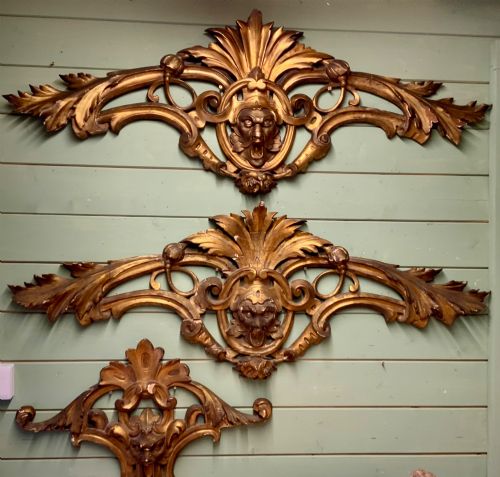
Baroque decor encompasses architectural salvage, oil paintings, and carved sculptures originating across the seventeenth, eighteenth, and nineteenth centuries. These pieces carry the heavy drama and ornate detailing characteristic of European craftsmanship from those periods.
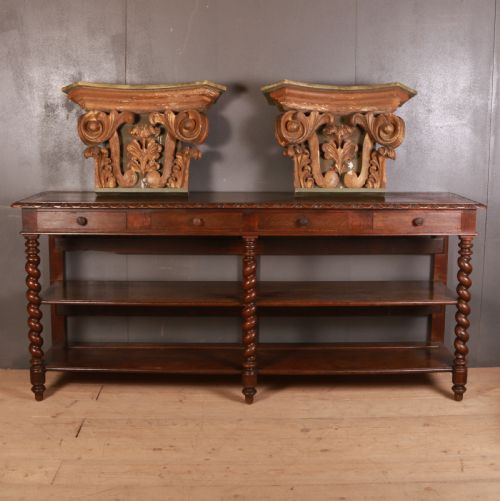
You will most frequently encounter large oil paintings, carved wooden panels, architectural fragments, and theatrical props. The selection ranges from Dutch floral still lifes and portraiture to Italian capitals and French wall carvings.
Each object reflects the theatricality of the style, whether through the sweeping foliage of an oak panel or the sweeping brushwork of a canvas depicting a lady in a landscape.
Materials and construction
The physical presence of these items relies heavily on timber, specifically carved wood, oak, and hardwood. Artisans shaped these materials into intricate panels, shields, and architectural fragments.
Surfaces frequently receive elaborate treatments using gold leaf, gesso, and giltwood. This application of metallic leaf catches the light and accentuates the deep relief work found on frames, capitals, and wall carvings.
Paintings are executed in oil on canvas or oil paint on panel. These works demonstrate traditional layering techniques, visible in portraits and still lifes associated with the Dutch Golden Age and subsequent revival periods.
Baroque Decor Retail Price Guide 2026
Typical asking prices for baroque decor among the pieces listed under this phrase on Sellingantiques today, from the lower quarter to the upper quarter. They describe what is for sale here now, not the wider market.
Listings feature works spanning from the seventeenth century through to nineteen-sixty, encompassing paintings, panels, and architectural salvage.
Distinguishing quality
Quality rests in the depth and precision of the carving. Master carvers achieved crisp undercut details in acanthus leaves and drapery that create genuine shadow and three-dimensional form, whereas lesser work remains shallow and soft.
Original surface integrity defines the better examples. Pieces retaining their early layers of gold leaf or untouched oil paint hold greater visual coherence than those stripped or over-painted in later centuries.
JOHN HAYLS·Nicolas Fouché·Rembrandt van Rijn·Cornelis Van Der Voort·Thomas Murray·Jan Steen
The Baroque Decor Glossary
- Giltwood
- Timber that has been decorated with a thin layer of gold leaf. This technique provides a luminous surface that defines many ornate frames and architectural ornaments.
- Gesso
- A plaster-like mixture applied to wood surfaces as a base for gilding or painting. It allows carvers to achieve sharp edges before laying down gold leaf.
- Capitals
- The uppermost member of a column or pilaster. In this category, they appear as substantial carved elements taken from classical architecture.
- Provenance
- The documented history of ownership or attribution of an artwork. It helps connect a portrait or panel to a specific artist's circle or studio.
- Acanthus
- A conventionalised leaf ornament modelled on the Mediterranean plant of the same name. It forms the primary motif on many seventeenth-century carved wooden panels.
Baroque Decor: Frequently Asked Questions
How do I hang heavy carved wood panels?
Heavy architectural carvings require secure mounting directly into wall studs using appropriate steel brackets suited to the weight of the timber.
Because these pieces often lack modern hanging hardware, consult a professional installer to distribute the load evenly across the structure.
What is the difference between an oil painting and a panel?
Oil paintings are executed on stretched canvas, offering flexibility and deep textural brushwork suited to large figurative scenes and still lifes.
Panels utilise solid wood supports, providing a rigid base often found in smaller decorative elements, headboards, and architectural fragments.
How do I care for giltwood frames?
Giltwood surfaces require gentle dusting with a soft, dry brush to prevent the delicate gold leaf from wearing away over time.
Avoid liquid cleaners and direct sunlight, as moisture and heat damage the underlying gesso and compromise the metallic finish.
Are these pieces from the seventeenth century?
The selection spans multiple eras, including authentic seventeenth-century panels alongside eighteenth-century carvings and later nineteenth-century interpretations.
Check the individual listing details to confirm whether a piece is a period original or a later revival work inspired by the style.