


Baroque Accent Chairs
Baroque accent chairs bring dramatic seventeenth and eighteenth century presence into a room through elaborate carving and rich textiles.
Baroque Accent Chairs
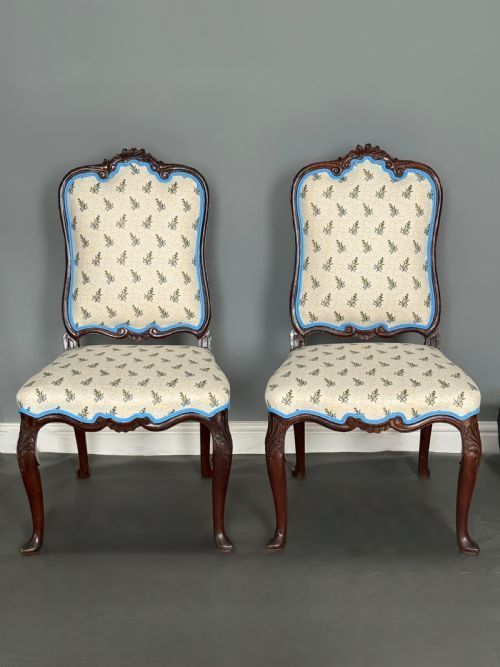
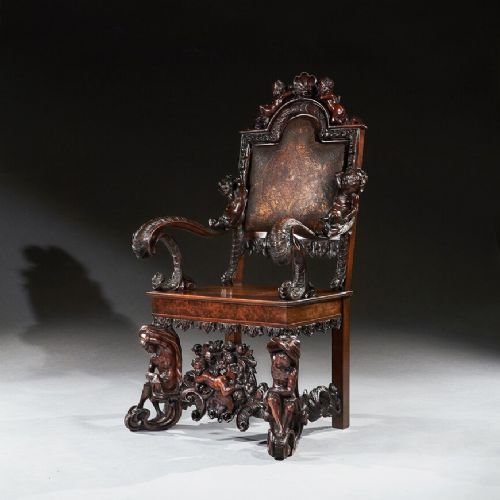
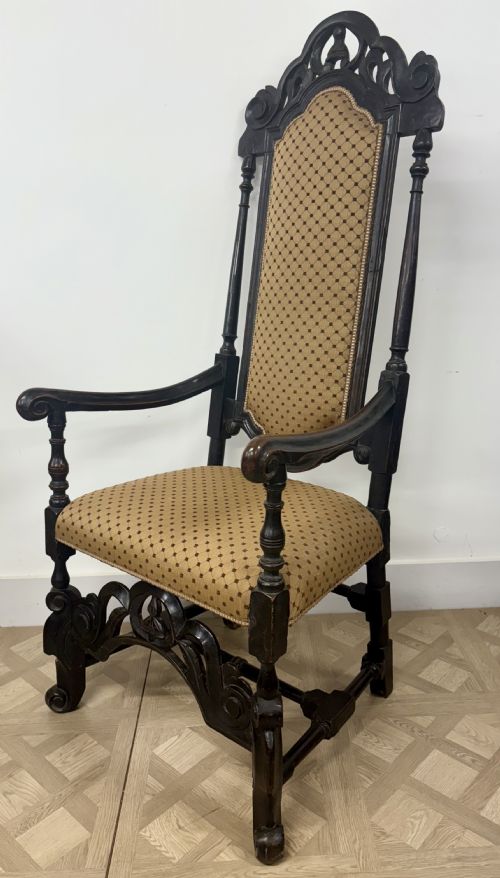
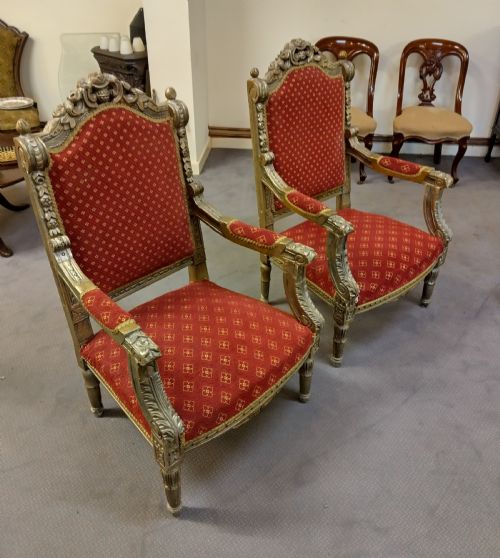
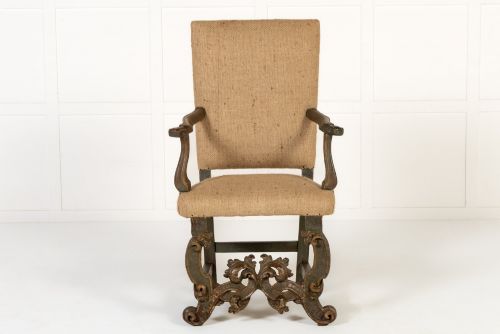
Baroque accent chairs are substantial seating pieces defined by ornate sculptural frames and historical revival styles. When exploring baroque accent chairs, buyers encounter armchairs, side chairs, dining chairs, and hall chairs originating from periods spanning the seventeenth to the twentieth centuries. Italian, French, Dutch, and English interpretations dominate the selection.
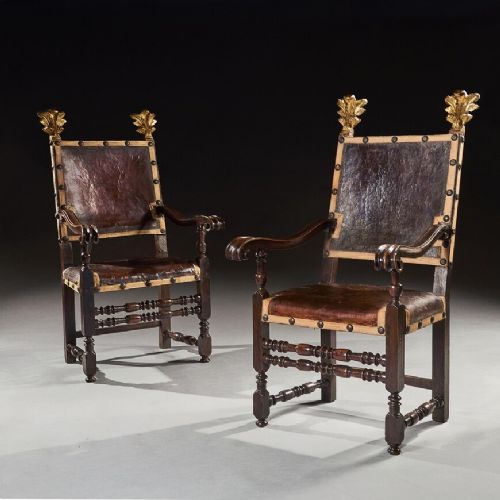
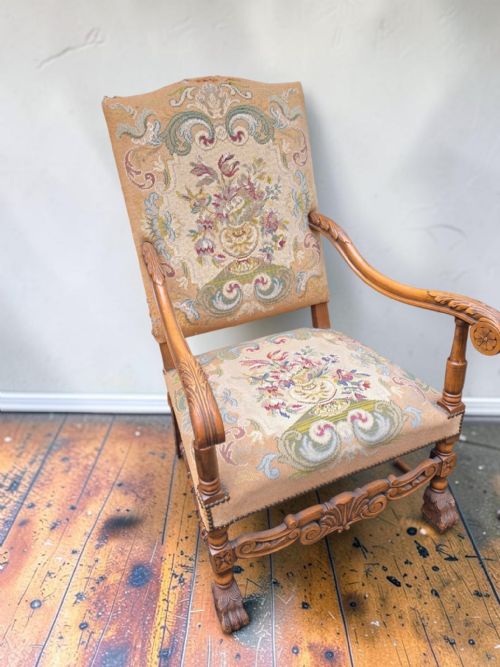
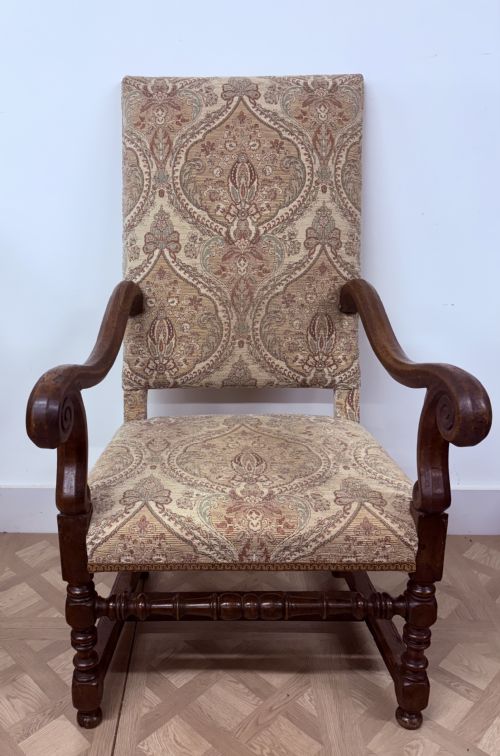
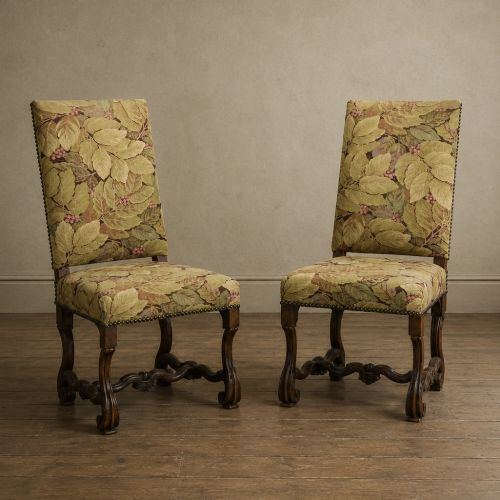
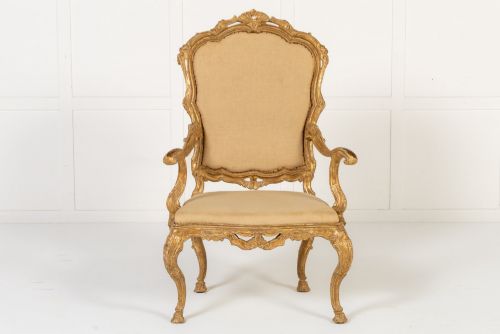
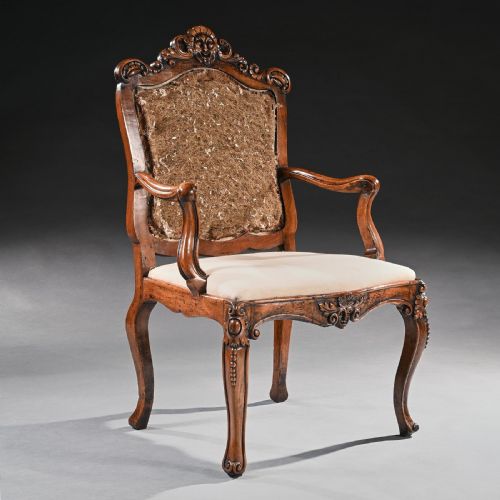
The assortment on this page relies heavily on walnut frames, often paired with velvet, leather, tapestry, or needlepoint upholstery. Giltwood, parcel-gilt finishes, and cane seating also appear frequently across regional workshops and revival periods.
How they were made
Cabinetmakers constructed these frames primarily in solid walnut, oak, and padouk, employing traditional joinery to support heavy ornamentation. Carvers shaped elaborate scrolls, foliage, and figures directly into the timber, sometimes applying silver or gold leaf to the finished wood.
Upholstery techniques involved securing heavy textiles like velvet, needlepoint, and tapestry directly to the frames with brass tacks, or weaving cane panels into the seat and back rests for structural flexibility.
What varies in quality
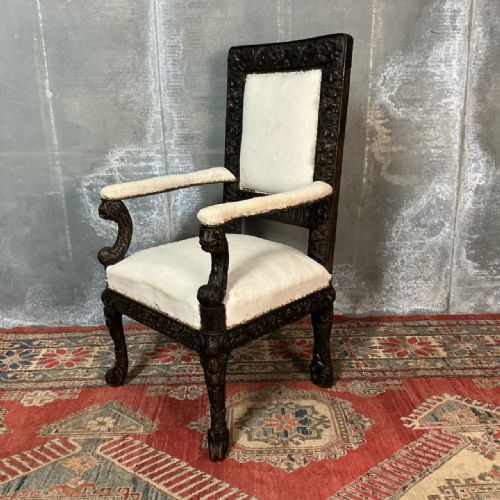
The depth and crispness of the wood carving distinguish exceptional examples from simpler production. Master carvers achieved remarkable dimension in floral motifs and sculptural elements, whereas lesser pieces display softer, shallower detailing.
The selection of primary timber and the integrity of the original construction dictate longevity. Dense walnut frames with precise joinery hold their structural poise far better than hasty revival alternatives.
Andrea Brustolon
The Baroque Accent Chairs Glossary
- Parcel-gilt
- Partially gilded with gold leaf to highlight specific carved details against a dark wood background.
- Giltwood
- Wood that has been coated with a thin layer of gold leaf or gold paint for a brilliant decorative finish.
- Caning
- Woven rattan or cane strips used to form light, supportive panels for chair backs and seats.
- Fauteuil
- An open-armed upholstered armchair with exposed wooden framing, originating in France.
- Needlepoint
- Stitched textile work using wool or silk yarn on a canvas mesh, frequently employed for durable period upholstery.
Baroque Accent Chairs: Frequently Asked Questions
How do I identify a seventeenth century chair?
Seventeenth century pieces often display robust walnut construction with linear turnings, robust stretchers, and heavy brass nailwork securing leather or textile upholstery.
Later revivals from the nineteenth century frequently copy these traits but tend to use machine-cut elements and softer secondary woods.
Where should I place a giltwood armchair?
These large scale gilded seats suit reception rooms or drawing rooms where their reflective surfaces and carved frames command visual attention.
Pair them with understated modern interiors to let the antique craftsmanship stand out clearly.
Are cane seats strong enough for daily use?
Original or restored caning provides flexible support, but period examples require careful weight distribution to prevent snapping.
Many buyers reserve fragile cane chairs for display rather than heavy seating.
What is the difference between Italian and Dutch baroque chairs?
Italian models lean towards sculptural gilding and elaborate carved head rails, reflecting grand ecclesiastical and palatial tastes.
Dutch examples generally favour darker walnut frames with more restrained profiles and substantial proportions.