



Barley Twist Wooden Candlesticks
Barley twist wooden candlesticks bring warm texture and architectural turnings to a room, turning everyday lighting into a focal point.
Barley Twist Wooden Candlesticks
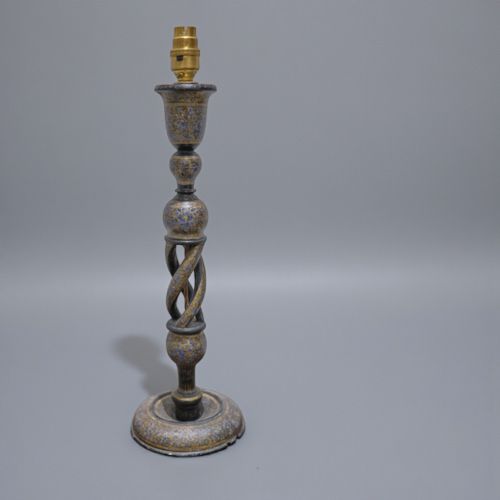
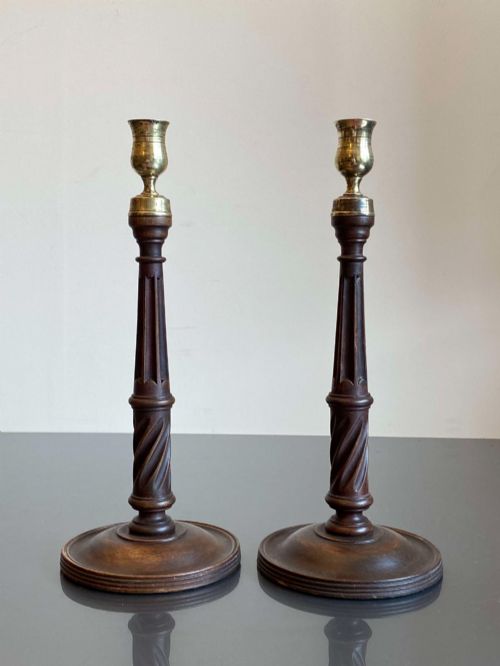
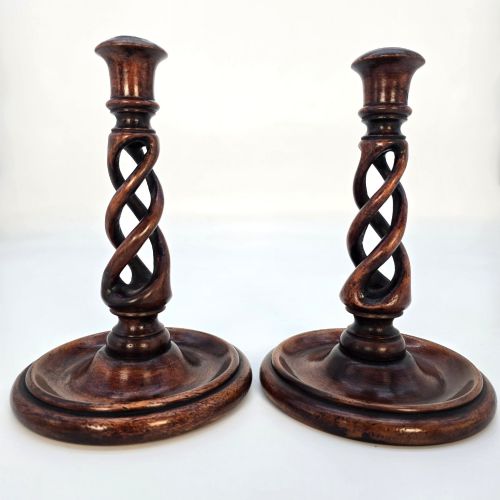
Barley twist wooden candlesticks are turned wooden shafts shaped in a helical spiral, often finished with brass sconces or drip pans to hold tapers securely. When you search for barley twist wooden candlesticks, you encounter pieces designed to bring height and sculptural form to a tabletop or mantelpiece. The examples found here span from the eighteenth century through the early twentieth century, showing how cabinetmakers adapted the spiral motif across multiple eras.
The most common versions on this page are oak and mahogany pairs dating from the Victorian period up to the nineteen-twenties, frequently paired with brass hardware. You also find earlier eighteenth-century fruitwood and walnut examples featuring open twists that reveal light through the spiral centre. These functional decorative objects bridge the gap between plain utility and ornamental craftsmanship.
How they were made
Turners created these helical shafts using lathes and hand chisels, cutting the timber at an angle to produce the signature spiral rhythm. Hardwoods such as oak, mahogany, walnut, and fruitwood provided the structural strength needed to carve deep grooves without splitting the grain.
Metal components were integrated directly into the design, with brass sockets and nozzles fitted to the top to protect the timber from burning wax. Makers balanced the turned wooden bases with weighted interiors or wide footprints to ensure stability when holding heavy candles.
Barley Twist Wooden Candlesticks Retail Price Guide 2026
Typical asking prices for barley twist wooden candlesticks among the pieces listed under this phrase on Sellingantiques today, from the lower quarter to the upper quarter. They describe what is for sale here now, not the wider market.
Materials recorded on this page combine oak, mahogany, walnut, fruitwood, and brass hardware.
What varies in quality
Quality rests in the crispness of the carving and the depth of the helix, where sharper, more undercut twists demand greater skill from the turner than shallow grooves. The choice of timber also dictates the character of the piece, with dense walnut and figured mahogany showing finer grain patterns than plain utility woods.
Proportion defines the visual balance of the candlestick, with superior examples maintaining a harmonious relationship between the turned base, the central spiral column, and the brass top. The integration of the brass fittings into the wood reveals whether the maker prioritized durable construction alongside decorative appeal.
The Barley Twist Wooden Candlesticks Glossary
- Barley twist
- A spiral column carved or turned into wood, resembling the twisted stalks of barley grain. This decorative motif appears widely in seventeenth-century furniture and later revival pieces.
- Sconce
- The metal cup or nozzle at the top of a candlestick that holds the candle in place. On these pieces, brass sconces protect the wooden stem from melting wax and flame.
- Fruitwood
- A dense timber harvested from fruit-bearing trees such as pear or apple, prized for its smooth grain. Makers utilised fruitwood for intricate turning work because it holds fine detail without chipping.
- Open twist
- A spiral turning where the centre is hollowed out or carved entirely through, creating gaps between the strands. This technique requires exceptional joinery and skill to maintain structural integrity.
Barley Twist Wooden Candlesticks: Frequently Asked Questions
How were they used historically?
They provided portable illumination in rooms before the widespread adoption of gas lighting and electricity, sitting on tables, desks, and mantelpieces. Tapered wax or tallow candles were pushed into the metal sockets at the top.
Because they combined utility with decorative presence, pairs were frequently placed symmetrically on sideboards or chests of drawers.
How do I date an oak barley twist candlestick?
Dating relies on examining the timber grain, the method of turning, and the style of the base and brass fittings. Pieces from the eighteenth century typically feature open twists in fruitwood or mahogany, while twentieth-century examples often use heavier oak.
Turnery marks, tool impressions, and the patina of the wood help distinguish Georgian originals from Edwardian and later revivals.
How should I care for wooden candlesticks?
Keep them away from direct heat sources and strong sunlight to prevent the timber from drying out or splitting. Gentle dusting with a dry cloth preserves the natural finish and patina of the wood.
Avoid using water or modern chemical polishes, applying traditional beeswax sparingly if the timber appears dry.