
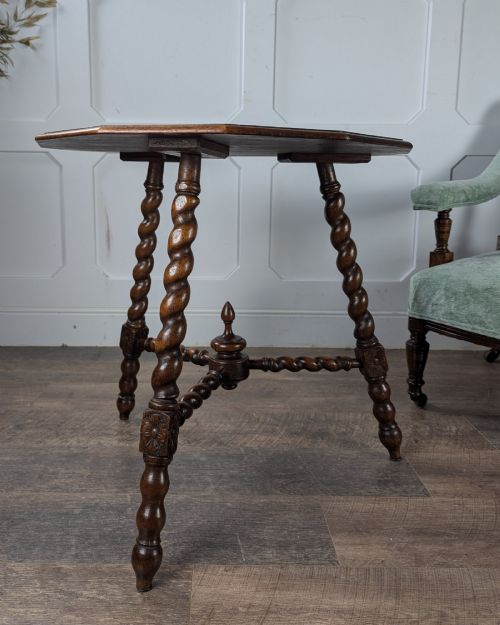
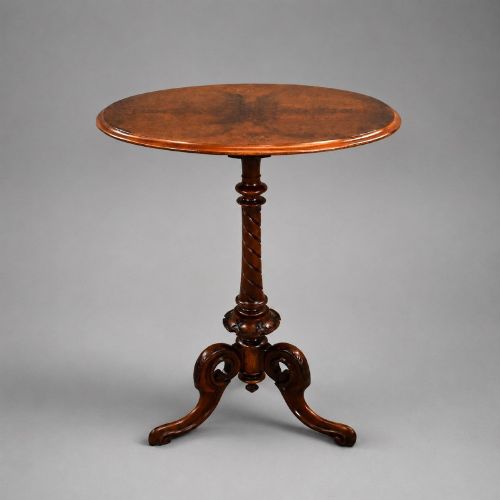
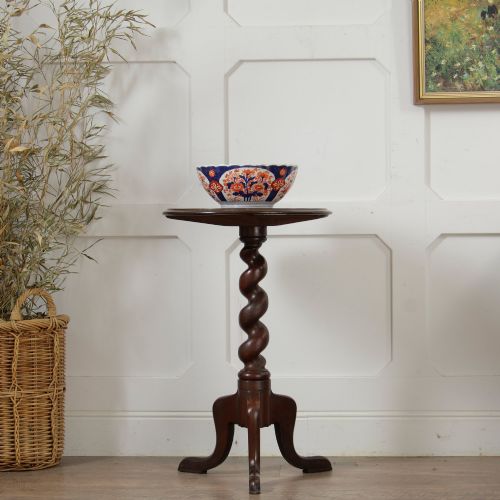
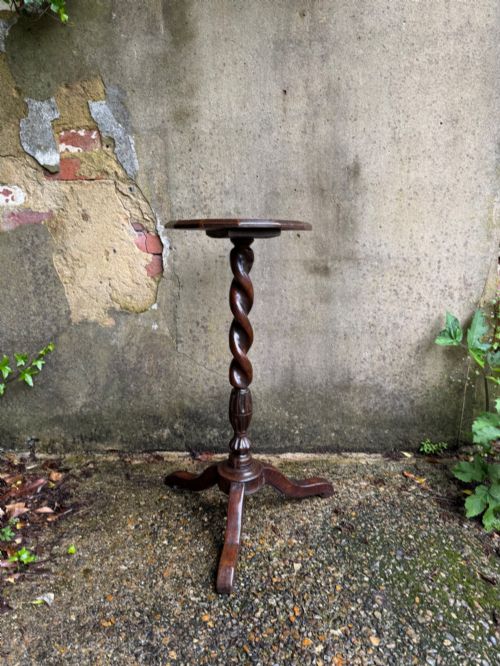
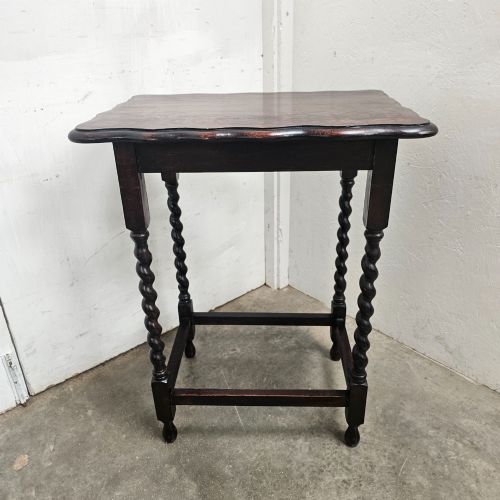


Barley Twist Wine Table
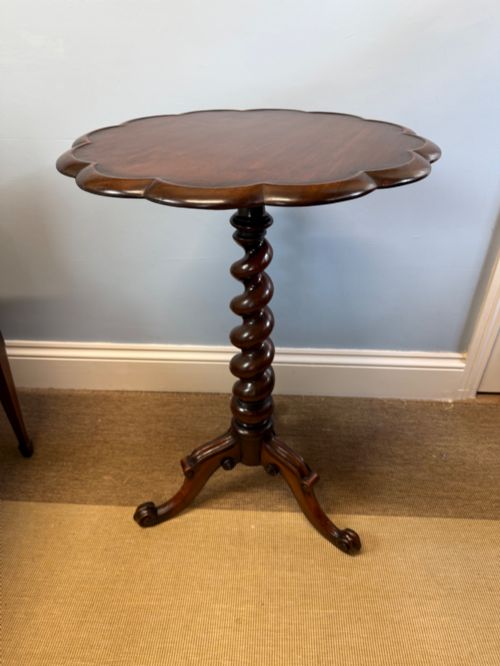
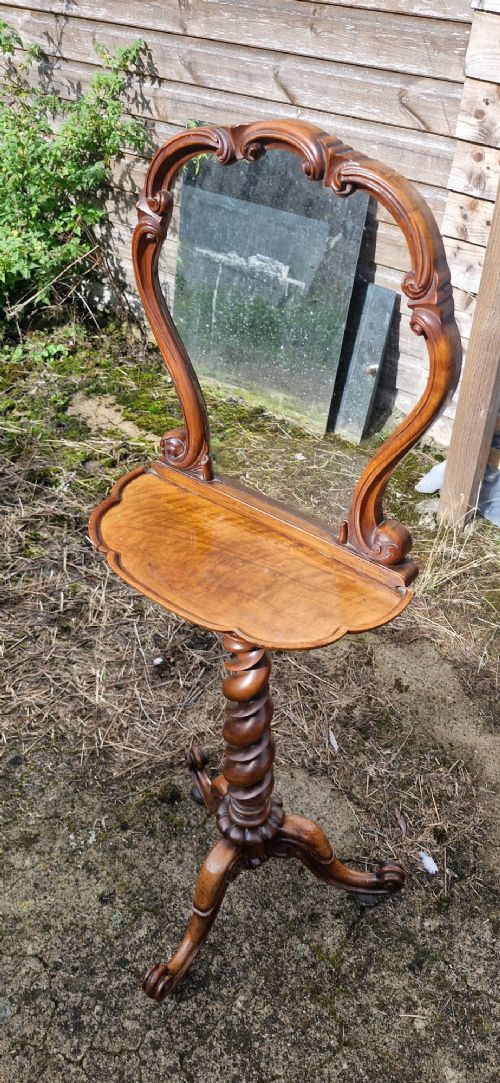
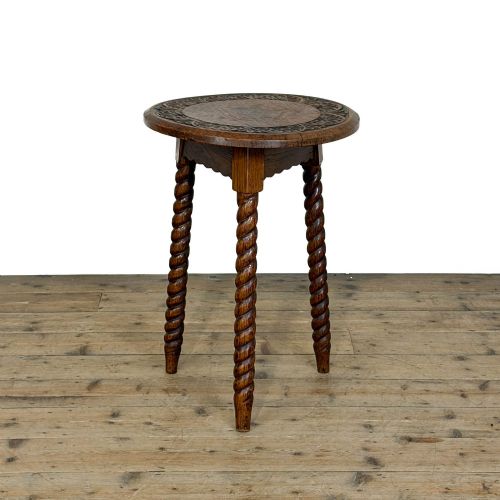
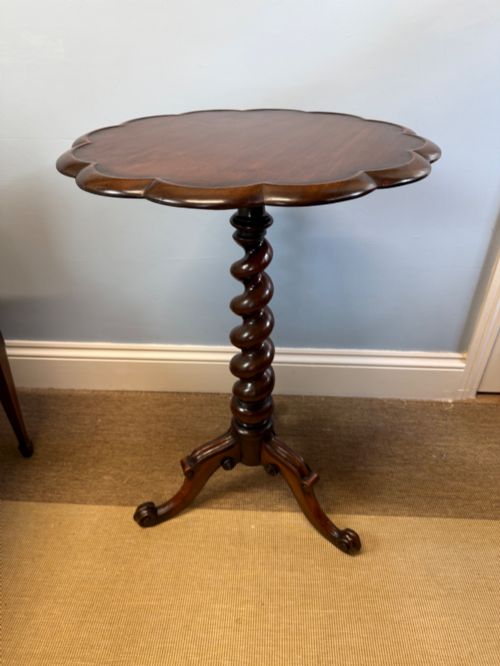
A barley twist wine table offers compact surface space raised on characteristically turned spiral supports, suited for holding a glass or lamp beside a chair.
Barley Twist Wine Table
A barley twist wine table is typically encountered as a compact nineteenth century piece, spanning Victorian and Edwardian periods with occasional examples reaching back to earlier Georgian origins. These items appear primarily under forms such as occasional tables, tripod bases, and dedicated wine tables, often constructed with circular, octagonal, or dish tops.
The defining feature of this search phrase is the spiral turning found on the central pedestal or supporting legs. Alongside these turned members, variants on this page incorporate marquetry, wood inlay, bone details, glass elements, or tilt top mechanisms.
Materials and construction methods
Makers utilised a variety of dense hardwoods, predominantly selecting walnut, mahogany, and oak, alongside burr walnut, burr maple, and elm for decorative figure. Turning the spiral stems required precise lathe work to maintain uniform pitch and depth along the solid timber shafts.
Surface ornamentation involved intricate marquetry, wood inlay, and bone detailing set into the timber tops. Tripod bases and pedestal configurations relied on sturdy joinery to support the weight of the tabletop while keeping the footprint narrow.
Listings feature woods including mahogany, walnut, oak, burr walnut, burr maple, and burr elm across the nineteenth and early twentieth centuries.
Markers of quality
Quality reveals itself in the crispness of the spiral turning and the choice of timber figure, where richly grained burr walnut or flame mahogany elevates the presence of the piece. The stability of the central pedestal and the seamless operation of tilt top or drop leaf mechanisms also distinguish finer items.
Attention to detail in secondary elements, such as inlaid marquetry, precise joinery, and well-executed tripod feet, separates standard utility items from masterwork examples produced by established workshops.
The Barley Twist Wine Table Glossary
- Barley twist
- A turned wooden column resembling the spiral shape of a barley sugar stick. This decorative carving is characteristic of seventeenth century revival furniture popular during the Victorian era.
- Tripod table
- A small freestanding table supported by three legs radiating from a central pillar. This design ensures stability on uneven floors.
- Teapoy
- A small cabinet or stand originally designed to hold containers of tea. These pieces often feature lidded compartments and rest on decorative pedestals.
- Marquetry
- The art of applying pieces of veneer to a structure to form decorative patterns. Craftsmen utilised various coloured woods to create intricate pictorial designs on tabletops.
- Tilt top
- A tabletop hinged to the pedestal allowing it to swing into a vertical position when not in use. This mechanism saved space in smaller rooms.
Barley Twist Wine Table: Frequently Asked Questions
What is a barley twist wine table?
A barley twist wine table is a small occasional stand defined by spiral turned wooden supports. These pieces provide a compact surface designed to hold a single glass or lamp.
Most surviving examples date from the nineteenth century, reflecting Victorian and Edwardian craftsmanship. They combine practical utility with decorative turned architecture.
How were these tables used originally?
These tables served primarily to hold beverages, lighting, or small decorative objects within a reception room. Their portable nature allowed servants to move them easily beside seating areas.
Certain variations incorporated tilt top mechanisms for convenient storage against a wall when not in use. Others functioned as display stands for lamps or curiosities.
How do I date a Victorian table?
Dating relies on examining construction techniques, timber choices, and stylistic markers recorded in the piece. Victorian examples often feature solid mahogany, walnut, or oak combined with turned barley twist stems.
Earlier pieces from the mid nineteenth century frequently exhibit hand-cut joinery and flame grain veneers. Later Edwardian or 1920s versions show standardised machine turning and distinct secondary woods.
Where should I place a wine table?
These tables suit narrow spaces, corners, or beside armchairs where floor area is restricted. Their compact footprint allows them to function as lamp stands or side tables in sitting rooms.
Because many feature decorative marquetry or figured wood tops, placing them away from direct sunlight preserves the natural timber and inlay. Their modest scale makes them adaptable to various interior layouts.