



Barley Twist Whatnot Shelf
A barley twist whatnot shelf brings tiered display space and turned timber movement into a room.
Barley Twist Whatnot Shelf
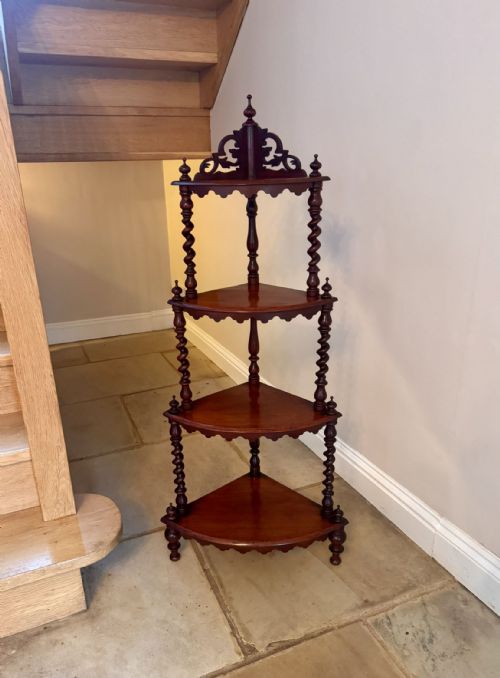
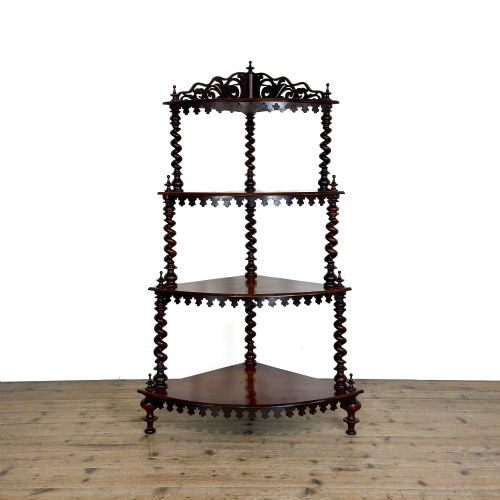
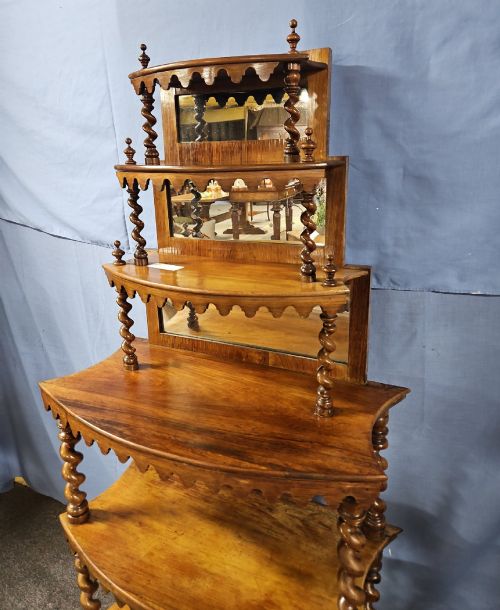
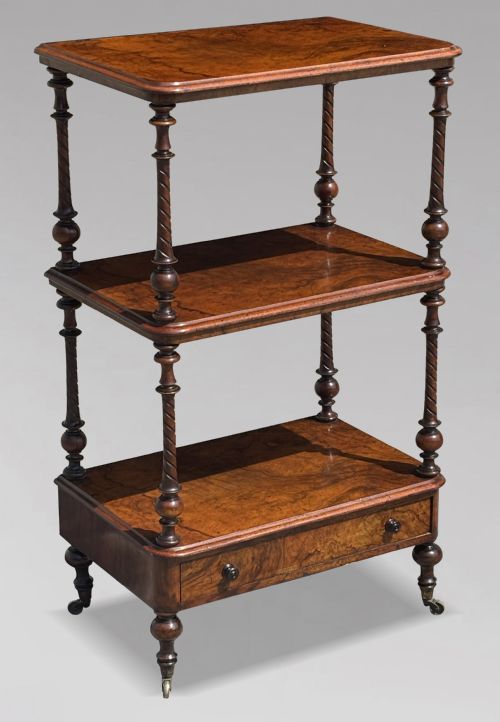
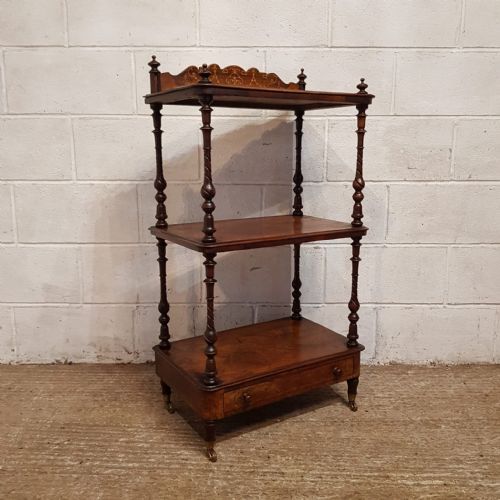
A barley twist whatnot shelf is an open tiered stand designed to hold books, ornaments and decorative objects within domestic interiors. When searching for a barley twist whatnot shelf, a buyer encounters predominantly Victorian pieces alongside Regency, William IV and Anglo-Indian examples.
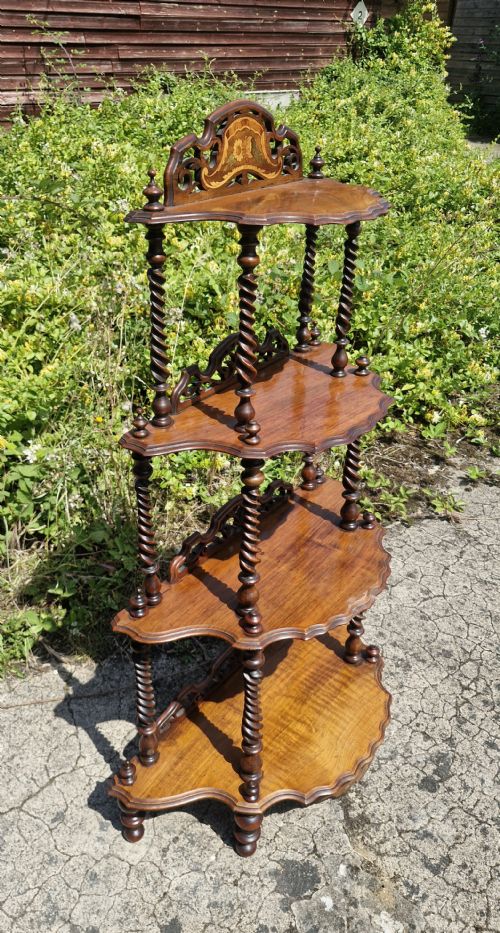
The form appears in various configurations, including multi-tiered vertical stacks, corner units, demi-lune console tables and variants combined with a Canterbury compartment. Most pieces date from the nineteenth century, utilising dense hardwoods shaped with stacked uprights and open shelves.
Materials and construction methods
Cabinetmakers constructed these tiered stands using solid timbers including walnut, burr walnut, mahogany, rosewood, padouk and teak. Selected pieces incorporate brass fittings, glass panels, mirror glass inserts and decorative wood inlay to accent the tiered framework.
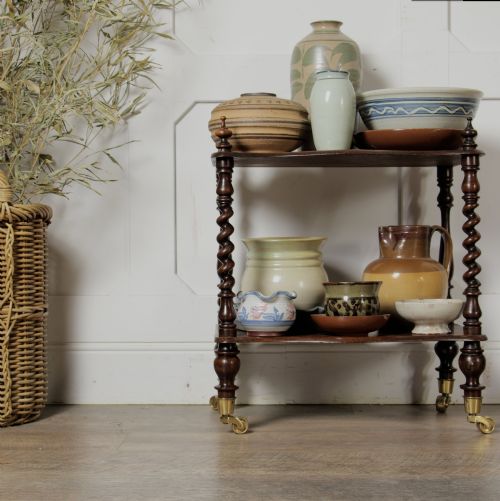
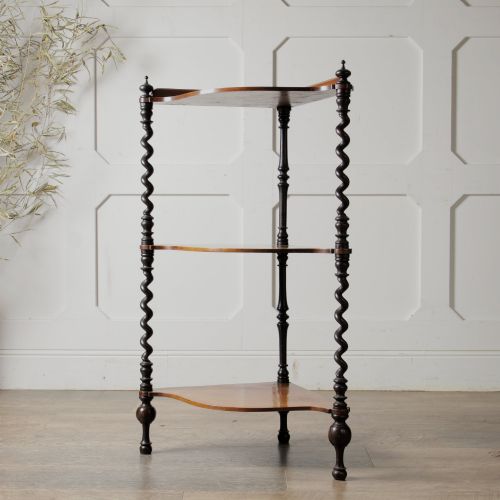
Uprights feature hand-turned spiral profiles known as barley twists, supporting horizontal shelves fixed at regular intervals. Joinery techniques connect the upright columns securely to each tier, creating stable multi-level display units intended for freestanding or corner placement.
Barley Twist Whatnot Shelf Retail Price Guide 2026
Typical asking prices for barley twist whatnot shelf among the pieces listed under this phrase on Sellingantiques today, from the lower quarter to the upper quarter. They describe what is for sale here now, not the wider market.
Some uprights twist so sharply they look ready to unscrew themselves right off the shelf.
What distinguishes finer examples
Quality rests in the selection of timber veneers and the crispness of the turned spiral uprights. Burr walnut and figured rosewood with rich grain patterns elevate a piece above standard mahogany or plain walnut iterations.
The Barley Twist Whatnot Shelf Glossary
- Etagere
- A piece of furniture consisting of a set of open shelves for displaying small objects. The term is frequently used interchangeably with whatnot.
- Barley twist
- A turned wooden column carved in a spiral twist resembling a stalk of barley. This decorative woodworking detail is characteristic of nineteenth-century furniture.
- Canterbury
- A low stand with partitioned sections originally designed for holding sheet music or folios. Some tiered stands incorporate this compartment beneath the open shelves.
- Demi-lune
- A half-moon shape used for console tables and corner fitments. This curved silhouette allows units to sit flush against a wall or fit neatly into room corners.
Barley Twist Whatnot Shelf: Frequently Asked Questions
What is a barley twist whatnot shelf used for?
These tiered stands served historically to display porcelain, silver, books and decorative ornaments in principal rooms. Today they function effectively in modern interiors for organising collections and displaying plants or lamps.
The open structure allows items to be viewed from multiple angles while occupying minimal floor space. Corner configurations make efficient use of awkward room junctions.
How do I identify a Victorian whatnot?
Victorian examples date from the nineteenth century and typically employ dense timbers such as walnut, rosewood and mahogany. Construction details often include turned spiral supports and multi-tiered horizontal shelving.
Many pieces feature subtle wood inlay or brass castors on the feet. Stylistic indicators align with nineteenth-century cabinetmaking traditions seen across English and colonial workshops.
Where should I place a corner whatnot?
A corner whatnot fits into unused room junctions to provide vertical display space without blocking walkways. They anchor empty wall angles in studies, hallways and drawing rooms.
Ensure the unit is level and secure against the wall if displaying heavy ceramic or glass objects. Placement away from direct heat sources protects the timber and veneer surfaces.
What is the difference between an etagere and a whatnot?
Both terms describe multi-tiered open shelving units intended for display, though etagere often implies a French influence or lighter decorative framing. Whatnot is the traditional English term recorded widely across nineteenth-century inventories.
In practice, makers and dealers used both names interchangeably for identical forms. The specific timber and tier count matter more than the historical terminology.